
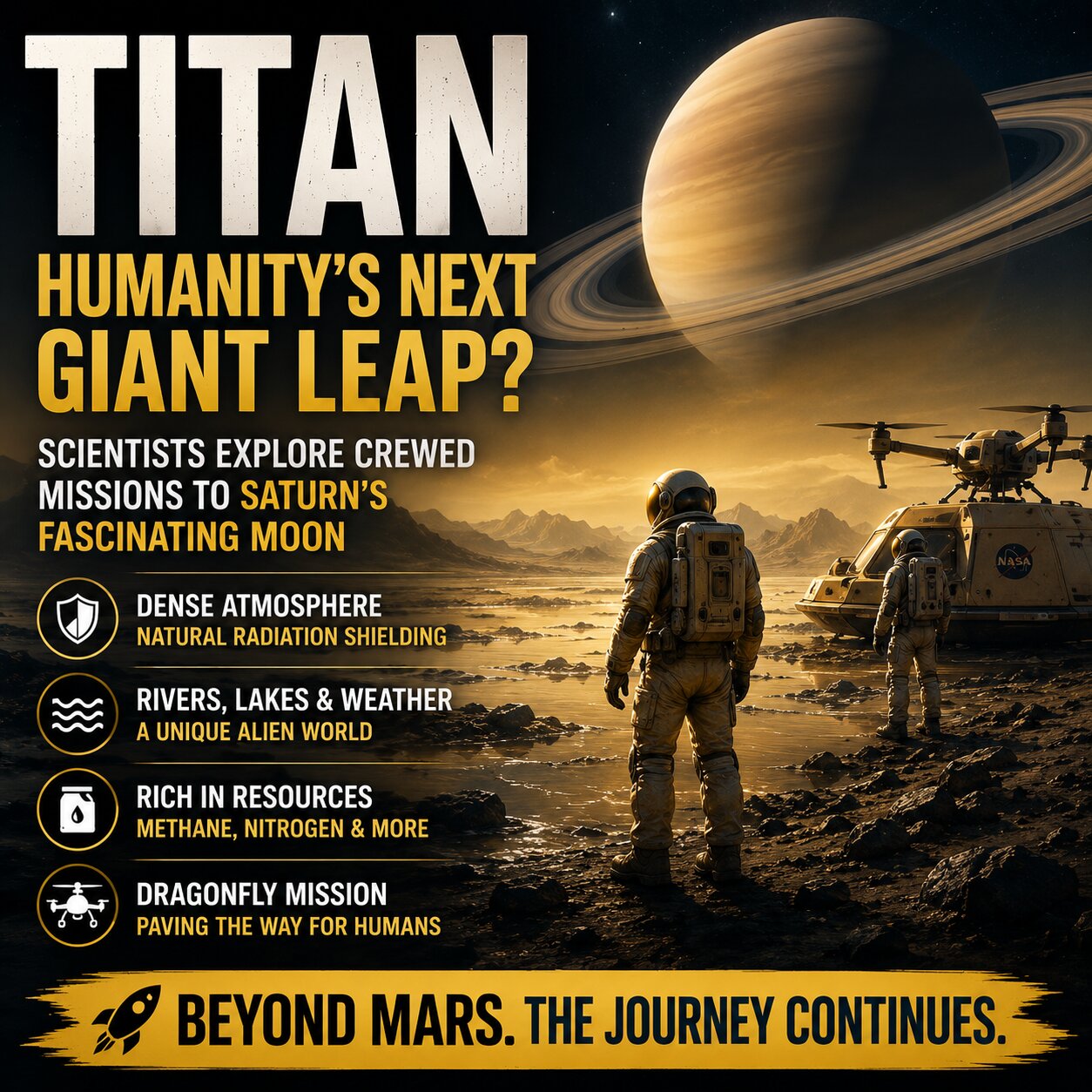

Following decades of discussion about returning to the Moon and eventually sending astronauts to Mars, scientists are beginning to look even farther into the Solar System. At the recent Humans to Titan Summit 2026, researchers explored an ambitious question: could Titan, Saturn‘s largest moon, eventually become a destination for human explorers?
While such a mission remains many decades away, experts believe the conversation is worth having now. Advances in propulsion, life support and robotics continue to move humanity closer to exploring worlds once thought completely unreachable.
Titan is no ordinary moon. With rivers, lakes, weather systems and a thick atmosphere, it is one of the most Earth-like environments beyond our planet, even if its surface temperatures are unimaginably cold.
Why Titan Is Capturing Scientists’ Attention
Unlike many moons in the Solar System, Titan possesses a dense atmosphere composed primarily of nitrogen. This thick blanket provides natural protection against much of the harmful space radiation that astronauts would otherwise face on worlds with little or no atmosphere.
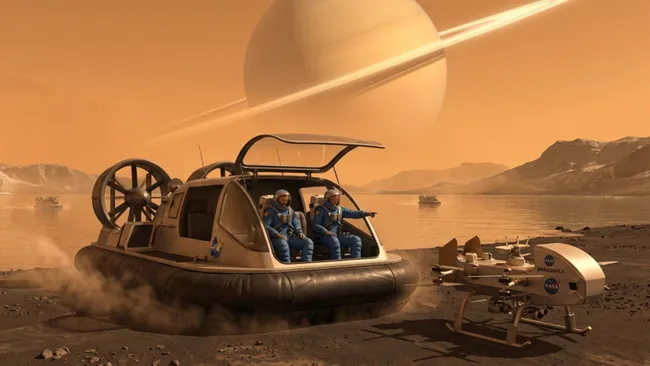
Titan is also the only moon known to have stable lakes and rivers on its surface. However, these are not filled with water. Instead, they consist of liquid methane and ethane, creating a completely alien version of Earth’s weather cycle.
Scientists believe these unique conditions make Titan one of the most scientifically valuable destinations for future exploration.
Rather than asking whether humans can physically reach Titan, researchers are increasingly focused on determining how future missions might realistically be achieved.
Dragonfly Will Pave the Way
Before astronauts ever set foot on Titan, NASA’s Dragonfly mission is expected to dramatically improve our understanding of the moon.
Scheduled to launch no earlier than 2028, Dragonfly will use a nuclear-powered rotorcraft capable of flying between multiple locations across Titan’s surface. During its mission, it will analyse surface materials, investigate Titan’s chemistry and search for clues about the building blocks of life.
The information collected by Dragonfly will prove invaluable when assessing future human exploration.
Its findings may also help scientists identify suitable landing sites, understand environmental hazards and evaluate the resources available to future explorers.
Why Titan Could Be Ideal for Future Exploration
Although Titan lies nearly 1.4 billion kilometres farther from the Sun than Earth, it offers several surprising advantages for long-term exploration.
Researchers highlighted several benefits during the summit, including:
- A dense atmosphere that offers natural radiation shielding.
- Abundant methane and nitrogen that could support future resource utilisation.
- Lower gravity that may simplify certain surface operations.
- Opportunities to explore other Saturnian moons from a future Titan base.
- A fascinating environment that could reveal how life develops in different conditions.
These advantages have encouraged scientists to begin thinking beyond Mars when planning humanity’s long-term future in space.
A Vision for the Next Century
No one expects a crewed mission to Titan anytime soon. The enormous travel distance, extended mission durations and technological challenges remain significant obstacles that will require decades of innovation to overcome.
However, the Humans to Titan Summit was never intended to produce an immediate mission plan. Instead, it aimed to establish a long-term vision that inspires new technologies, international cooperation and continued exploration throughout the Solar System.
Just as lunar missions paved the way for Mars, many researchers now believe Titan could become the next great destination for humanity. Whether that journey begins in decades or generations, the conversation has officially started, reminding us that the spirit of exploration has always reached beyond today’s limitations toward tomorrow’s possibilities.

