Astronomy may be on the verge of a major breakthrough. A recent gravitational wave signal detected by LIGO could be the first real evidence of primordial black holes, mysterious objects believed to have formed during the Big Bang itself. If confirmed, this discovery could reshape our understanding of the universe and even solve one of its biggest mysteries: dark matter.
Unlike traditional black holes formed from dying stars, these ancient objects would have existed since the very beginning of time. That makes them not just fascinating, but potentially fundamental to how the universe is structured today.
A Signal That Should Not Exist
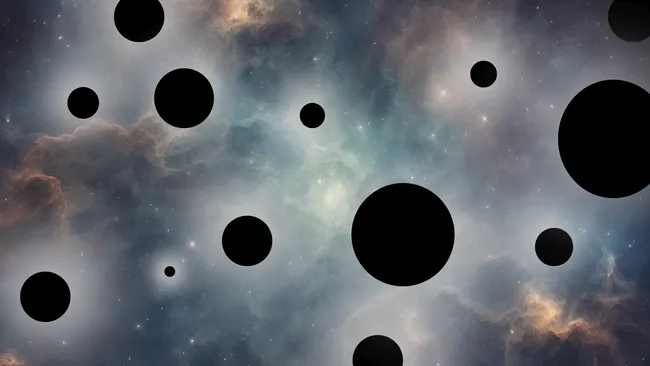
The discovery comes from an unusual gravitational wave signal detected by the Laser Interferometer Gravitational-Wave Observatory. What makes this signal so intriguing is the mass involved.
Typically, black holes detected by LIGO are several times more massive than our Sun. However, this signal appears to involve at least one object with a mass smaller than the Sun, something that does not fit standard models of stellar evolution.
This has led researchers to consider a more exotic explanation. Instead of being formed from collapsing stars, this object may be a primordial black hole created shortly after the Big Bang due to density fluctuations in the early universe.
What Makes Primordial Black Holes Special
Primordial black holes are very different from the ones we usually hear about. They are not born from supernova explosions but from tiny variations in the density of matter in the newborn universe.
Because of this, they can exist in a wide range of sizes, from asteroid-mass objects to bodies as large as planets.
For decades, scientists have debated whether these objects actually exist. First proposed by Stephen Hawking in the 1970s, they have remained purely theoretical until now. This new signal could be the first real hint that they are not just mathematical ideas.
Could This Explain Dark Matter?
One of the most exciting implications of this discovery is its connection to dark matter.
Dark matter makes up about 85 percent of all matter in the universe, yet it remains completely invisible. Scientists can only detect it through its gravitational effects on galaxies and cosmic structures.
Primordial black holes could be the missing piece. Since they do not emit light and interact primarily through gravity, they fit many of the properties expected of dark matter.
Some researchers now suggest that these ancient black holes could account for a significant portion, or even all, of dark matter.
Why Scientists Are Still Cautious
Despite the excitement, researchers are not declaring victory just yet.
There is still a possibility that the signal detected by LIGO could be noise or interference rather than a real cosmic event. Confirming the existence of primordial black holes will require multiple detections and consistent data.
Future upgrades to gravitational wave observatories, including LIGO, Virgo, and upcoming missions like LISA, will provide more sensitive instruments to test these theories.
This means the current finding is best seen as a strong hint rather than definitive proof.
A New Chapter in Cosmic Discovery
If confirmed, primordial black holes could change everything. They would not only confirm a decades-old theory but also provide a direct link to the earliest moments of the universe.
More importantly, they could finally answer the question of what dark matter really is.
For now, the universe has whispered a clue through ripples in spacetime. Whether that whisper becomes a confirmed discovery will depend on what scientists hear next.