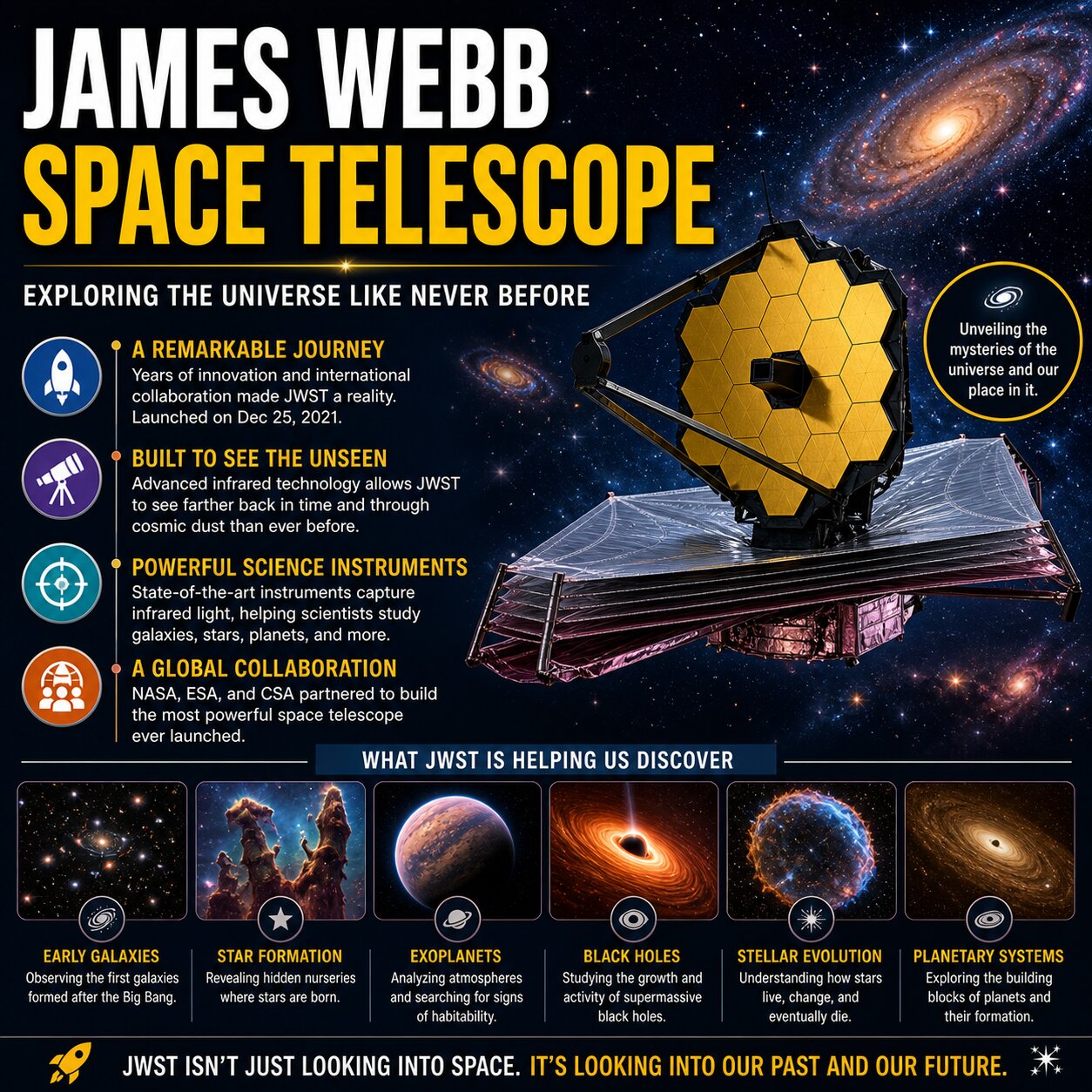

The James Webb Space Telescope is one of the most advanced scientific instruments ever created for space exploration and astronomical research. Designed as the successor to the Hubble Space Telescope, it has transformed humanity’s understanding of the universe by observing distant galaxies, stars, planets, and cosmic phenomena with extraordinary detail.
Since its launch, the James Webb Space Telescope has delivered breathtaking discoveries and some of the most detailed images ever captured in astronomy. Scientists use it to study the origins of galaxies, the birth of stars, the atmospheres of exoplanets, and the evolution of the universe itself.
The James Webb Space Telescope represents decades of international collaboration, engineering innovation, and scientific ambition aimed at unlocking some of the universe’s greatest mysteries.
The history behind the James Webb Space Telescope
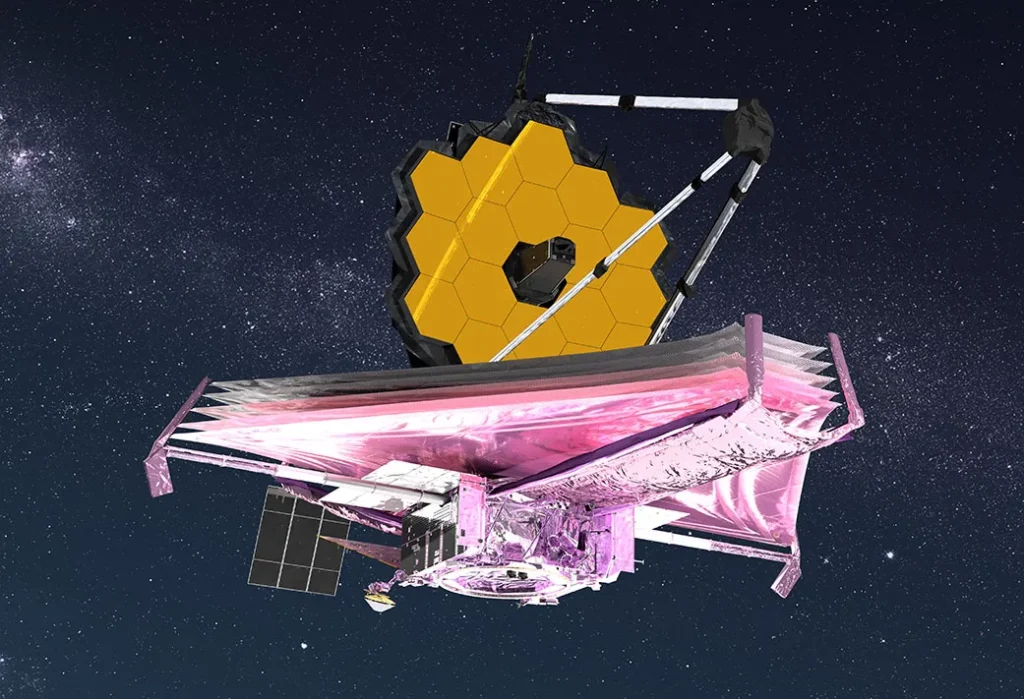
The James Webb Space Telescope project began during the 1990s as scientists planned the future of space-based astronomy beyond the Hubble era. The telescope was named after James E. Webb, the NASA administrator who played a major role in supporting the Apollo programme and advancing space science during the 1960s.
Unlike Hubble, which primarily observes visible and ultraviolet light, the James Webb Space Telescope was designed mainly for infrared astronomy. Infrared observations allow scientists to see through cosmic dust clouds and observe extremely distant objects whose light has shifted into infrared wavelengths over billions of years.
The telescope was developed through collaboration between NASA, the European Space Agency (ESA), and the Canadian Space Agency (CSA). Building the observatory required years of technological development and testing because of its enormous complexity.
After multiple delays and engineering challenges, the James Webb Space Telescope finally launched aboard an Ariane 5 rocket on 25 December 2021 from French Guiana.
Its successful deployment marked one of the most important milestones in modern astronomy.
How the James Webb Space Telescope works
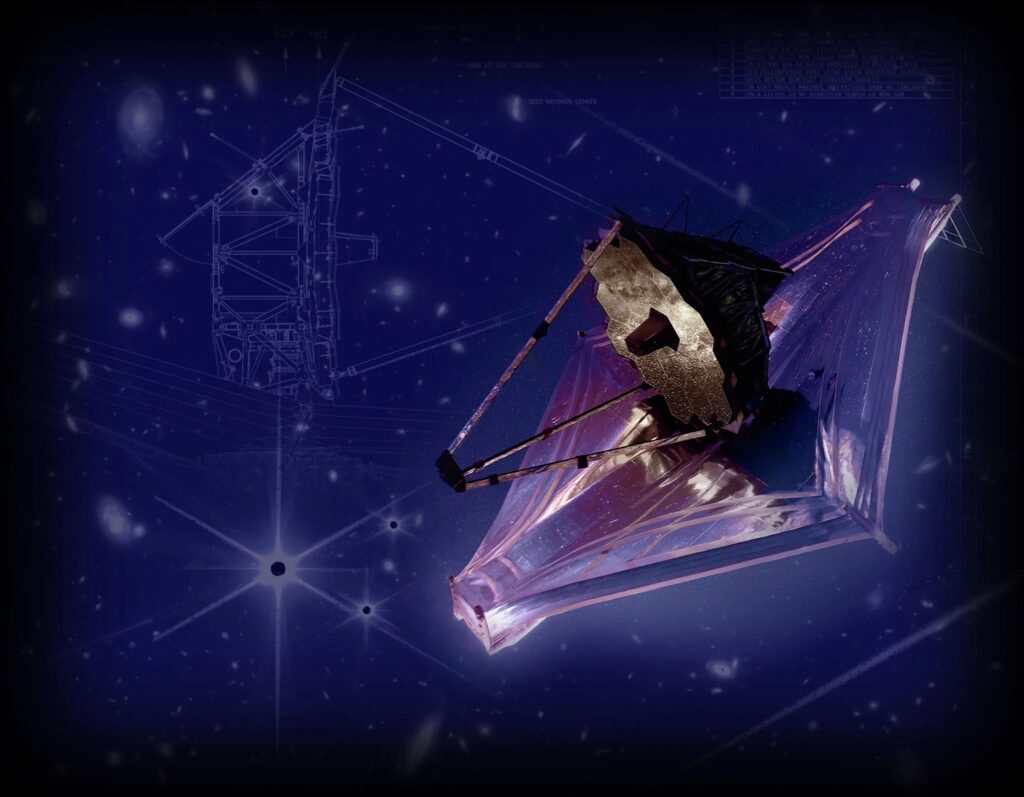
The James Webb Space Telescope operates very differently from traditional optical telescopes. It uses a massive segmented mirror system and highly sensitive infrared instruments to capture faint light from distant cosmic objects.
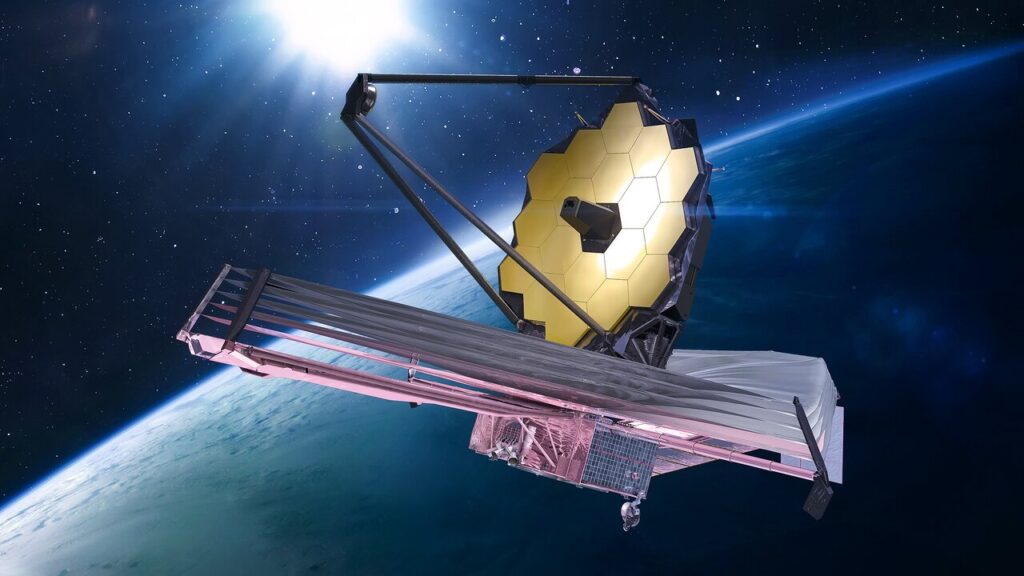
The telescope’s primary mirror measures 6.5 metres across and consists of 18 gold-coated hexagonal mirror segments. These mirrors collect far more light than Hubble, allowing the James Webb Space Telescope to observe incredibly distant and faint objects.
One of its most recognisable features is the giant sunshield. This five-layer shield protects the telescope from heat and sunlight, keeping the instruments cold enough for infrared observations.
Some of the major scientific instruments aboard the James Webb Space Telescope include:
- Near Infrared Camera (NIRCam)
- Near Infrared Spectrograph (NIRSpec)
- Mid-Infrared Instrument (MIRI)
- Fine Guidance Sensor and Near Infrared Imager
- Coronagraph systems for exoplanet observations
- Spectroscopy tools for atmospheric analysis
- Deep field observation capabilities
The James Webb Space Telescope orbits around the Sun near the second Lagrange point, commonly called L2, approximately 1.5 million kilometres from Earth.
This location provides stable observing conditions and allows uninterrupted views of deep space.
Major discoveries from the James Webb Space Telescope
The James Webb Space Telescope has already revolutionised astronomy with remarkable discoveries across multiple scientific fields.
One of its biggest achievements involves observing some of the earliest galaxies ever detected. These galaxies formed only a few hundred million years after the Big Bang, helping scientists better understand how the early universe evolved.
The telescope has also produced stunning images of star-forming nebulae, revealing details hidden behind dense cosmic dust clouds that older telescopes could not penetrate.
Exoplanet research has become another major focus for the James Webb Space Telescope. Scientists use spectroscopy to analyse the atmospheres of distant planets, searching for water vapour, carbon dioxide, methane, and other important chemical signatures.
Some discoveries and research areas include:
- Early galaxy formation
- Black hole activity
- Exoplanet atmospheres
- Star birth regions
- Stellar evolution
- Supernova remnants
- Brown dwarf studies
- Planetary system formation
The James Webb Space Telescope continues providing valuable scientific data that may reshape many existing theories about the universe.
Why the James Webb Space Telescope matters
The James Webb Space Telescope is important because it expands humanity’s ability to observe the universe in ways never previously possible.
Its infrared capabilities allow astronomers to peer deeper into cosmic history and study objects invisible to older observatories. By examining ancient galaxies, scientists can better understand how matter organised itself after the Big Bang.
The telescope also supports the growing search for potentially habitable exoplanets. By analysing atmospheric compositions, scientists may eventually identify worlds with conditions suitable for life.
Beyond scientific discoveries, the James Webb Space Telescope inspires millions of people worldwide through its breathtaking imagery and technological achievements.
The project demonstrates how international cooperation, science, and engineering can combine to achieve extraordinary goals.
Looking deeper into the universe’s future
The James Webb Space Telescope has already changed modern astronomy, yet its mission is only beginning. Scientists expect decades of discoveries as the observatory continues exploring galaxies, stars, planets, and cosmic structures across the universe.
Its ability to study ancient light, hidden stellar nurseries, and distant planetary atmospheres provides humanity with an unprecedented window into space and time itself.
As technology and research continue evolving, the James Webb Space Telescope will likely remain one of the most important scientific instruments ever launched into space. Its discoveries may answer long-standing questions about the origins of the universe while also revealing entirely new mysteries waiting to be explored.