

Scientists studying Jupiter’s moon Ganymede have identified several promising regions that may contain cryovolcanic activity, raising exciting possibilities for future exploration by the European Space Agency’s Jupiter Icy Moons Explorer (JUICE) mission.
Ganymede is already considered one of the most fascinating worlds in the Solar System. Not only is it the largest moon orbiting any planet, but it is also larger than Mercury and possesses its own magnetic field. Beneath its icy surface, scientists believe a massive subsurface ocean may exist, potentially containing more water than all of Earth’s oceans combined.
Now, new research suggests that frozen geysers or cryovolcanic vents may provide access to material from deep below the moon’s icy crust. These regions could eventually help scientists search for organic compounds and possible biosignatures linked to habitability in the outer Solar System.
Why Ganymede fascinates scientists
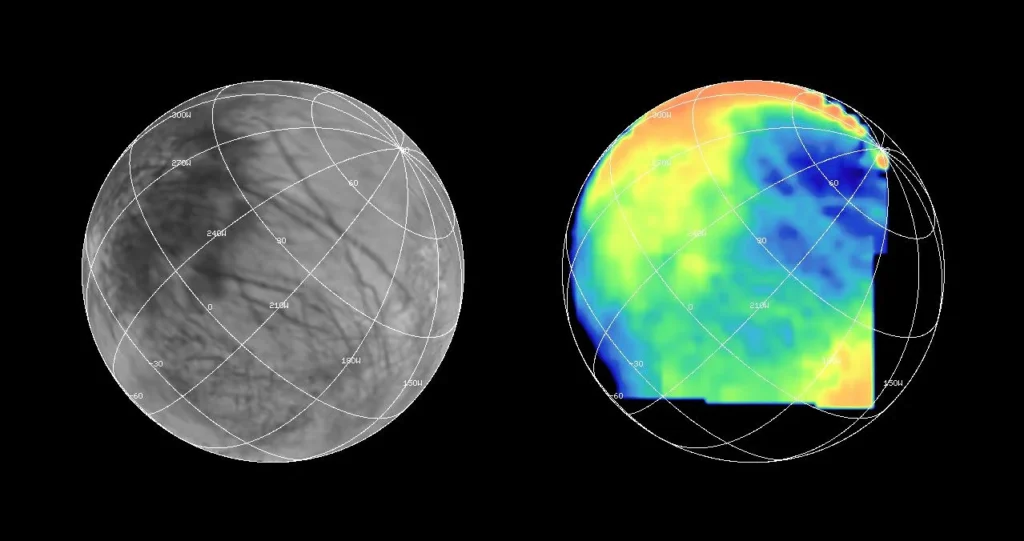
Ganymede has remained a major scientific mystery ever since NASA’s Voyager probes first explored the Jupiter system decades ago. Later observations by the Galileo spacecraft revealed additional evidence suggesting that the moon contains a vast hidden ocean beneath layers of thick ice.
Unlike traditional volcanoes on Earth that erupt molten rock, cryovolcanoes release water, volatile compounds, and icy material through cracks in frozen surfaces. These eruptions are believed to be driven by internal heating caused by tidal interactions between Jupiter and its moons.
Scientists are especially interested in cryovolcanic regions because they may transport material from the hidden ocean below to the surface. If organic compounds or chemical traces related to biological processes exist within Ganymede’s ocean, frozen geysers could potentially preserve evidence within the surface ice.
The moon’s unique magnetic field also makes it stand out among planetary bodies. Ganymede remains the only moon in the Solar System known to generate its own intrinsic magnetic field, adding further intrigue to its internal structure and geological activity.
New study identifies promising cryovolcanic regions
An international team of researchers led by Dr Anezina Solomonidou of the Hellenic Space Center recently identified several potential cryovolcanic regions using reprocessed data from NASA’s Galileo mission.
The team analysed observations from the spacecraft’s Near-Infrared Mapping Spectrometer (NIMS), which explored the Jupiter system between 1995 and 2003. By studying unusual depressions and geological structures on the surface, researchers identified four major paterae that may represent ancient cryovolcanic vents.
These depressions could become priority exploration targets for the JUICE mission once the spacecraft arrives in the Jupiter system later this decade.
Researchers believe future observations using JUICE’s advanced instruments may help determine whether these structures truly formed through cryovolcanic activity.
Some of the key scientific goals include:
- Investigating possible cryovolcanic vents
- Studying Ganymede’s subsurface ocean
- Searching for organic molecules
- Analysing surface ice composition
- Understanding ocean world evolution
- Exploring potential habitability conditions
If confirmed, these regions may provide some of the best opportunities yet to study material originating from deep beneath Ganymede’s frozen crust.
How the JUICE mission will explore Jupiter’s icy moons
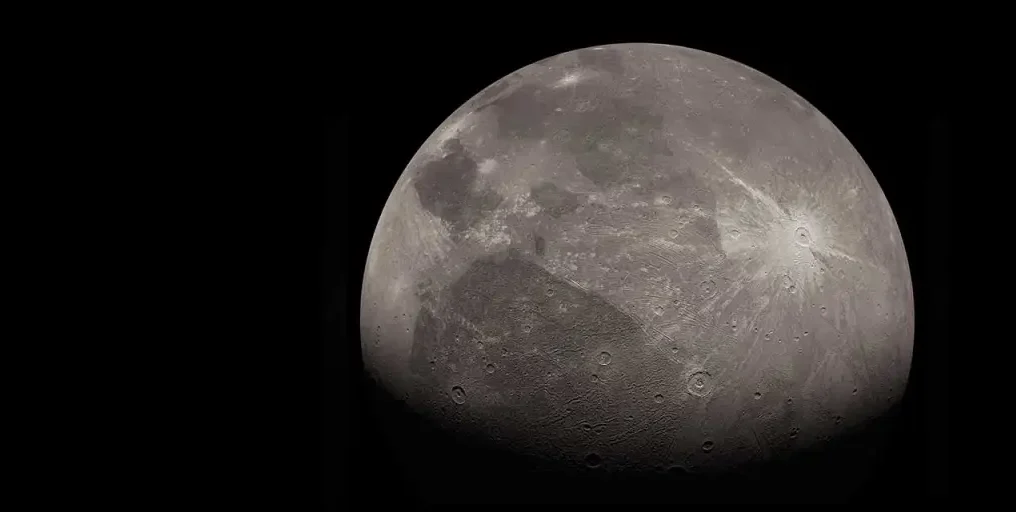
The European Space Agency launched the JUICE mission in April 2023 as part of one of humanity’s most ambitious attempts to study the icy moons orbiting Jupiter. The spacecraft is currently travelling through deep space and is expected to arrive at Jupiter in 2031.
JUICE will primarily focus on Ganymede, Europa, and Callisto, three moons believed to contain massive underground oceans beneath their icy surfaces. The spacecraft carries multiple scientific instruments designed to study surface chemistry, ice composition, magnetic fields, and internal structures.
Two important instruments expected to investigate these potential geyser regions include:
- MAJIS (Moons And Jupiter Imaging Spectrometer)
- JANUS imaging system
Together, these instruments will provide detailed observations of the moon’s surface features, helping scientists determine whether cryovolcanic processes are active or occurred in the past.
NASA’s Europa Clipper mission, which focuses primarily on Europa, will also contribute valuable information about Jupiter’s ocean worlds. Combined, both missions could dramatically improve humanity’s understanding of potentially habitable icy moons across the Solar System.
Frozen Worlds and the Search for Life
The possibility of cryovolcanic activity on Ganymede adds another exciting chapter to the growing study of ocean worlds in our Solar System. Hidden beneath thick layers of ice may lie environments capable of supporting complex chemistry and perhaps even simple forms of life.
As ESA’s JUICE mission continues its long journey towards Jupiter, discoveries like these help scientists prioritise the most promising locations for exploration. If frozen geysers on Ganymede truly connect to its hidden ocean below, they could offer a rare glimpse into one of the Solar System’s most mysterious environments.