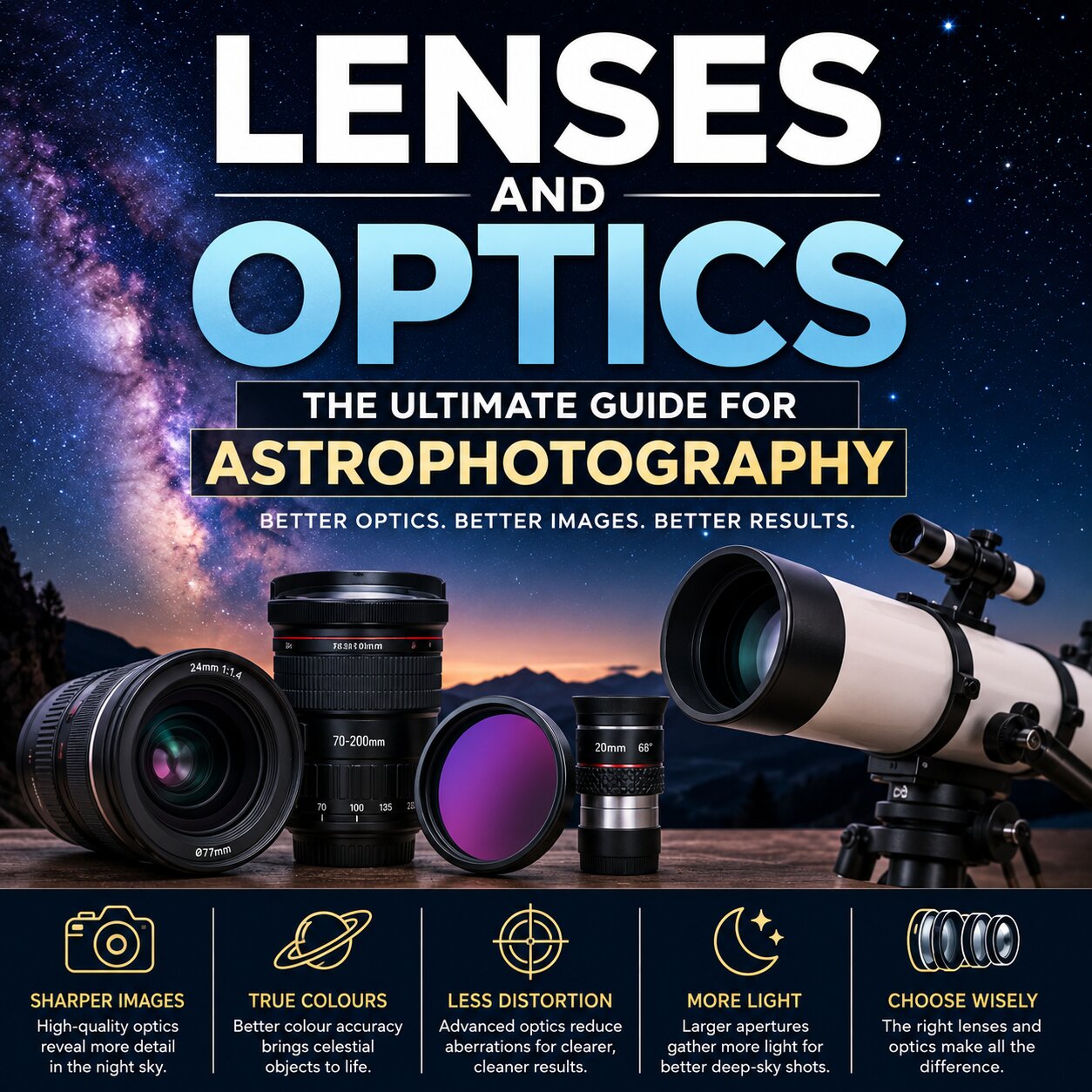

Lenses and optics play a critical role in astrophotography and astronomical observation. Whether you are capturing wide-field images of the Milky Way, photographing distant galaxies, or observing planets through a telescope, the quality of your optics can significantly affect image sharpness, clarity, colour accuracy, and light-gathering ability.
For beginners entering the world of astrophotography, understanding lenses and optics can feel overwhelming due to the wide variety of equipment available. Camera lenses, telescope optics, focal lengths, aperture sizes, and optical designs all influence the final image.
Learning the fundamentals of lenses and optics helps astronomers and astrophotographers make smarter equipment choices while improving the quality of their night sky imaging.
What are lenses and optics in astronomy?
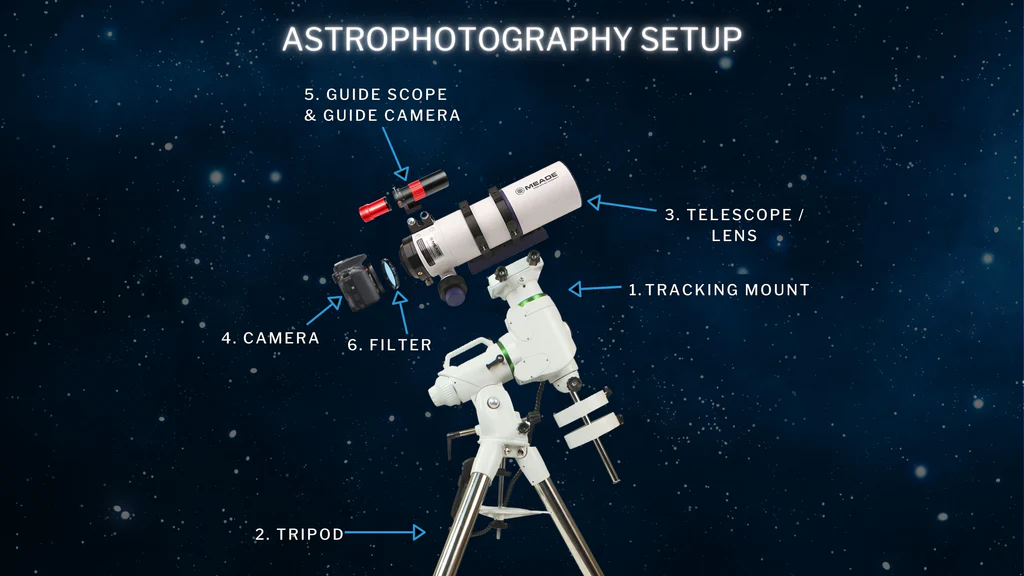
In astronomy and astrophotography, lenses and optics refer to the components that gather and focus light from celestial objects. These systems can include camera lenses, telescope lenses, mirrors, filters, and eyepieces designed to improve image quality and viewing performance.
The main purpose of lenses and optics is to collect as much light as possible while producing clear and accurate images of celestial objects. Since many targets in space are extremely distant and faint, optical quality becomes incredibly important.
Why optics matter in astrophotography
Astrophotography depends heavily on light gathering and image precision. High-quality lenses and optics improve sharpness, contrast, colour accuracy, and overall image clarity.
Good optics can help reduce problems such as blurry stars, colour fringing, edge distortion, and unwanted reflections. Poor-quality optical systems often struggle with faint objects and may produce softer or distorted images.
Because astrophotography frequently involves long exposures in dark environments, even small improvements in lenses and optics can make a major difference in the final results.
Camera lenses for astrophotography
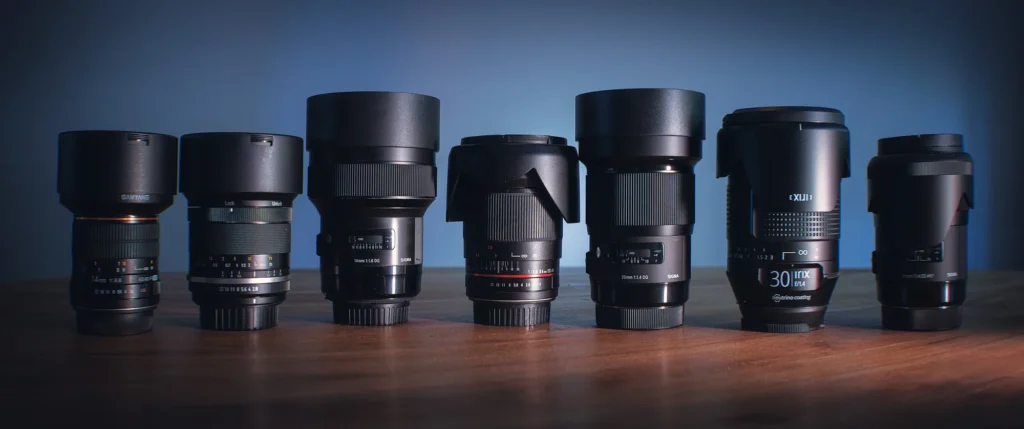
Many beginners start astrophotography with lenses and optics using DSLR or mirrorless camera lenses. Wide-angle lenses are especially popular for capturing the Milky Way, meteor showers, auroras, and night landscapes.
Fast lenses with lower f-stop values allow more light to reach the camera sensor, helping photographers capture brighter night sky images with shorter exposure times.
Telephoto lenses provide greater magnification and are useful for photographing the Moon, larger nebulae, and certain deep-space objects. However, longer lenses usually require more stable mounts and better tracking systems to avoid motion blur caused by Earth’s rotation.
Telescope optics and imaging systems
Dedicated telescopes offer more advanced imaging capabilities for serious astrophotography.
Refractor telescopes use glass lenses to focus light and are highly valued for their sharp and high-contrast images. They are especially popular among astrophotographers because of their reliable image quality and relatively low maintenance requirements.
Reflector telescopes use mirrors instead of lenses. These systems often provide larger apertures at lower prices, making them excellent for deep-space observation and imaging. However, they usually require more maintenance and occasional optical alignment.
Catadioptric telescopes combine lenses and mirrors into compact systems. Designs such as Schmidt-Cassegrain telescopes are widely used for planetary imaging and visual observation due to their long focal lengths and portable construction.
Understanding focal length and aperture
Focal length affects both magnification and field of view. Shorter focal lengths produce wider views of the sky, making them ideal for Milky Way photography and large nebulae. Longer focal lengths create greater magnification, which helps when imaging planets, galaxies, or smaller deep-space targets.
Aperture refers to the size of the optical opening that gathers light. Larger apertures collect more light, allowing astronomers to see fainter objects and capture more image detail.
However, larger optics also increase the size, weight, and cost of the equipment, which is why balancing portability and performance becomes important when selecting astrophotography gear.
Common optical problems in astrophotography
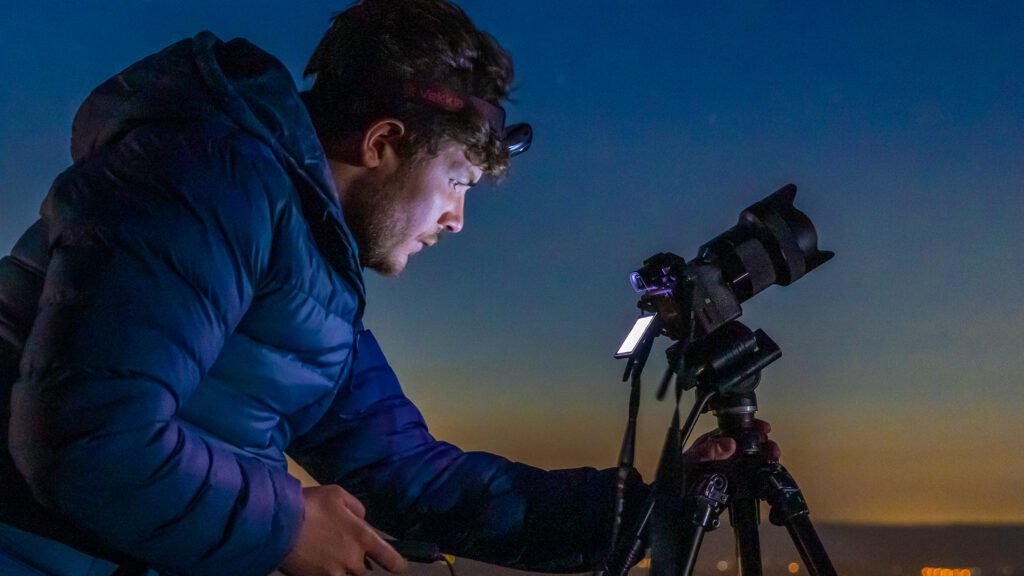
Even advanced lenses and telescopes can experience optical imperfections. Chromatic aberration may create coloured edges around stars, while coma distortion can cause stars near the edges of an image to appear stretched.
Field curvature is another issue that sometimes causes stars at the centre of an image to appear sharp while edge stars look soft or out of focus.
Modern lens coatings, premium optics, and corrective accessories help reduce many of these problems significantly.
Optical filters and image enhancement
Filters are widely used in astrophotography to improve image quality and reduce unwanted light interference.
Light pollution filters help astrophotographers work in urban areas by reducing the glow from artificial lighting. Narrowband filters isolate specific wavelengths of light emitted by nebulae, allowing for clearer deep-space imaging.
Moon filters reduce brightness during lunar observation, while specialised solar filters make safe solar imaging possible.
Choosing the right optics for beginners
Beginners should focus on simple and reliable equipment that matches their experience level and astrophotography goals.
A common beginner setup includes a DSLR or mirrorless camera, a fast wide-angle lens, a sturdy tripod, and possibly a basic star tracker. This combination allows new astrophotographers to learn camera settings, exposure techniques, and night sky composition without immediately investing in large telescopes.
As experience grows, many astrophotographers gradually expand into dedicated telescope systems and more advanced optical accessories.
The future of astronomical optics
Astronomical optics continue evolving rapidly thanks to advances in lens coatings, adaptive optics, AI image processing, and sensor technology. These developments are helping both professionals and hobbyists capture clearer and more detailed images of space.
Projects such as the James Webb Space Telescope demonstrate how powerful modern optics can revolutionise our understanding of the universe.
Better optics create better astrophotography experiences
Understanding lenses and optics is essential for anyone interested in astrophotography or astronomical observation. From camera lenses and telescope systems to filters and focal lengths, every optical component influences image quality and viewing performance. By learning how these systems work and choosing equipment carefully, astronomers can capture more detailed and breathtaking views of the universe while continuing to improve their astrophotography skills over time.