
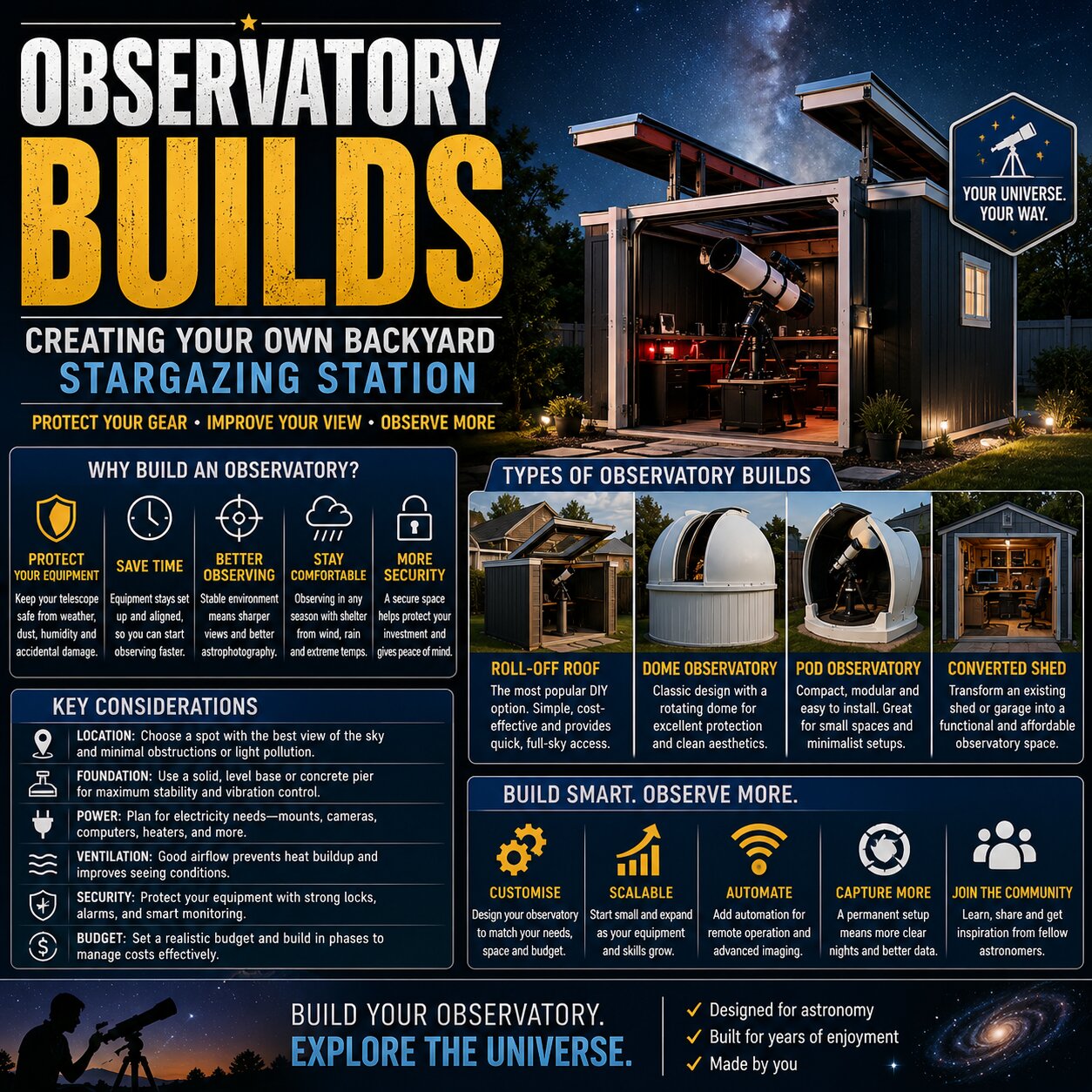

For many astronomy enthusiasts, observing the night sky eventually becomes more than a hobby involving portable telescopes and quick evening sessions. As equipment collections grow and astrophotography setups become more advanced, permanent observatory builds start becoming an exciting long-term goal. A dedicated observatory can transform the astronomy experience by providing better equipment protection, faster setup times, and far more comfortable observing conditions.
Modern observatory builds range from simple backyard telescope shelters to highly advanced motorised domes equipped with automation systems and remote-control capabilities. Whether designed for casual visual observing or serious astrophotography, observatories create a stable and dedicated environment for exploring the universe.
While building a personal observatory may sound intimidating at first, many amateur astronomers successfully create affordable and highly effective observatory builds using practical DIY approaches.
Why Observatory Builds Are Popular Among Amateur Astronomers
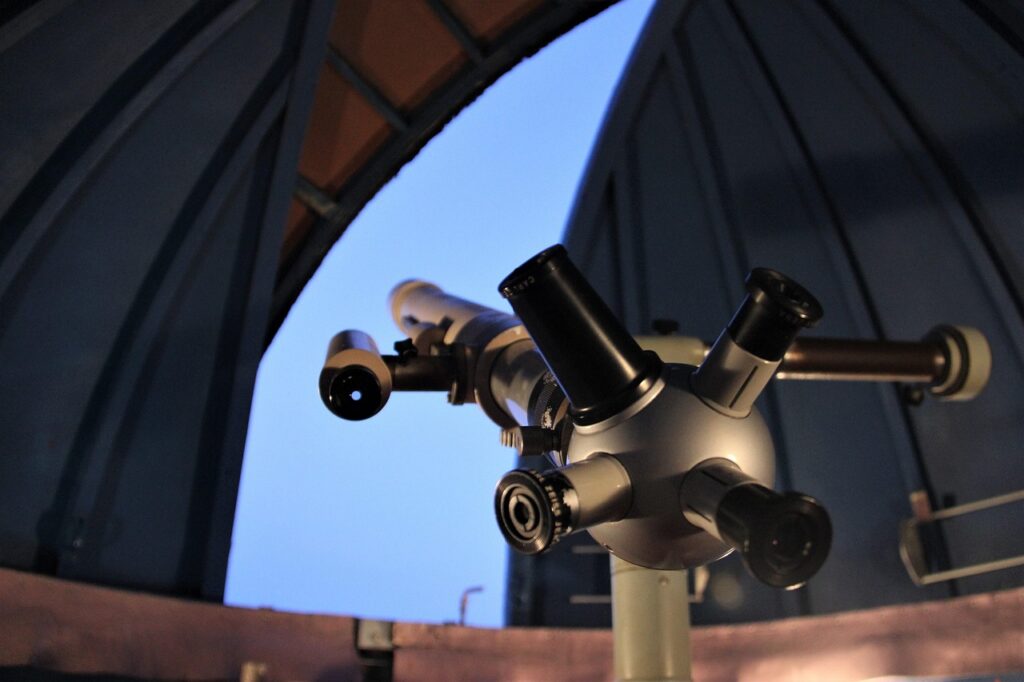
One of the biggest challenges in astronomy is setup time. Transporting telescopes outdoors, balancing mounts, aligning equipment, connecting cameras, and calibrating systems can take considerable effort before observations even begin. Observatory builds solve much of this problem by allowing equipment to remain permanently assembled and aligned.
This convenience encourages more frequent observing sessions. Instead of spending an hour preparing equipment, astronomers can simply open the observatory and begin observing within minutes.
Equipment protection is another major benefit. Telescopes, mounts, computers, and astrophotography gear are expensive investments. Observatory builds shield sensitive equipment from moisture, dust, wind, sunlight, and accidental damage while providing a secure storage environment.
Stable observing conditions also improve imaging quality. Permanent telescope mounts installed on solid foundations reduce vibrations and maintain precise alignment for long-exposure astrophotography.
Comfort matters as well. Observing during cold winter nights or humid conditions becomes far easier when astronomers have shelter from wind, weather, and environmental distractions.
Popular Types Of Observatory Builds
There are several different observatory builds commonly used by amateur astronomers, each suited to different budgets, spaces, and observing goals.
Roll-off roof observatories remain one of the most popular DIY options. These structures resemble small sheds where the roof slides away during observing sessions. Roll-off roof observatory builds are relatively affordable, mechanically simple, and easy to construct using standard building materials.
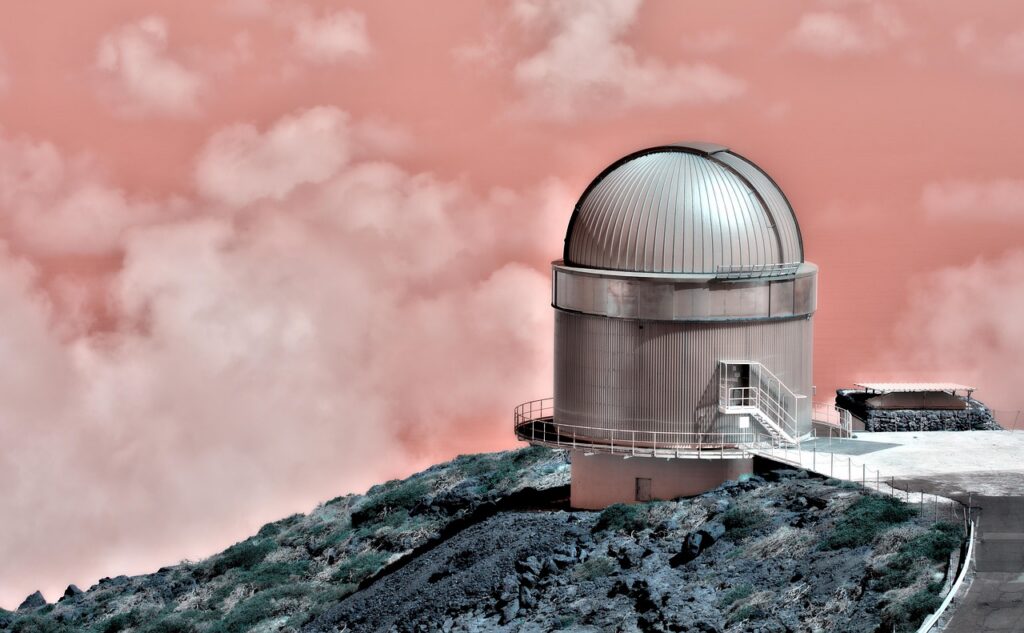
Dome observatories provide a more traditional professional appearance. Their rotating domes protect telescopes from wind while allowing precise openings toward selected viewing directions. Although dome observatory builds often cost more, they offer superior weather protection and thermal stability.
Pod observatories have become increasingly popular among hobbyists seeking compact and modular solutions. These pre-manufactured structures are easier to install than fully custom observatories and require less construction experience.
Some astronomy enthusiasts even convert existing garden sheds or garages into functional observatory builds. With careful modifications, these structures can support telescopes, imaging systems, and computer-controlled equipment effectively.
Portable observatories also exist for travellers and temporary installations. While less permanent, they still provide protection and organisation for field astronomy setups.
Important Considerations Before Starting Observatory Builds
Planning is critical for successful observatory builds. One of the first considerations is location. The observatory should ideally have the clearest possible view of the night sky while minimising obstructions from trees, buildings, and artificial lighting.
Stable ground is essential for telescope mounts. Many observatory builds use isolated concrete piers that prevent vibrations from affecting telescope tracking during imaging sessions.
Power access becomes increasingly important as observatories grow more advanced. Modern setups often require electricity for mounts, cameras, cooling systems, computers, dew heaters, and automation systems. Internet connectivity may also be useful for remote control and software updates.
Ventilation and temperature management should not be overlooked. Poor airflow can create heat distortions that negatively affect observing quality. Many observatory builds include ventilation systems or insulated designs to improve thermal stability.
Security is another important factor. Expensive astronomy equipment should remain protected from theft, weather damage, and wildlife intrusion.
Budget planning also matters greatly. Observatory builds can range from modest DIY projects to highly advanced automated facilities costing thousands. Defining observing goals early helps avoid overspending on unnecessary features.
The Future Of DIY Observatory Builds

Technology is rapidly changing how amateur astronomers approach observatory builds. Automation systems now allow telescopes to track objects, open roofs, monitor weather conditions, and capture astrophotography data remotely with minimal human intervention.
Smart observatories connected to mobile apps and cloud-based astronomy software are becoming increasingly common. Some hobbyists even operate fully remote observatories located in dark-sky regions far from their homes.
Affordable 3D printing, CNC machining, and modular construction systems are also making observatory builds more accessible to beginners. Online astronomy communities frequently share DIY plans, construction guides, and creative solutions that help reduce costs.
As astrophotography continues growing in popularity, permanent observatories are becoming valuable tools for enthusiasts seeking better image quality and more efficient observing workflows.
Building A Personal Gateway To The Universe
Observatory builds represent far more than simple backyard structures. They create dedicated spaces where astronomy enthusiasts can deepen their connection with the night sky while protecting valuable equipment and improving observing efficiency.
Whether constructing a simple roll-off roof shelter or a sophisticated automated dome, observatory builds allow amateur astronomers to spend less time preparing equipment and more time exploring the cosmos.
For many stargazers, building an observatory becomes part of the astronomy journey itself — combining engineering, creativity, and scientific passion into a personal gateway to the universe.
Explore more astronomy DIY guides and space technology features at Casual Astronomer.

