
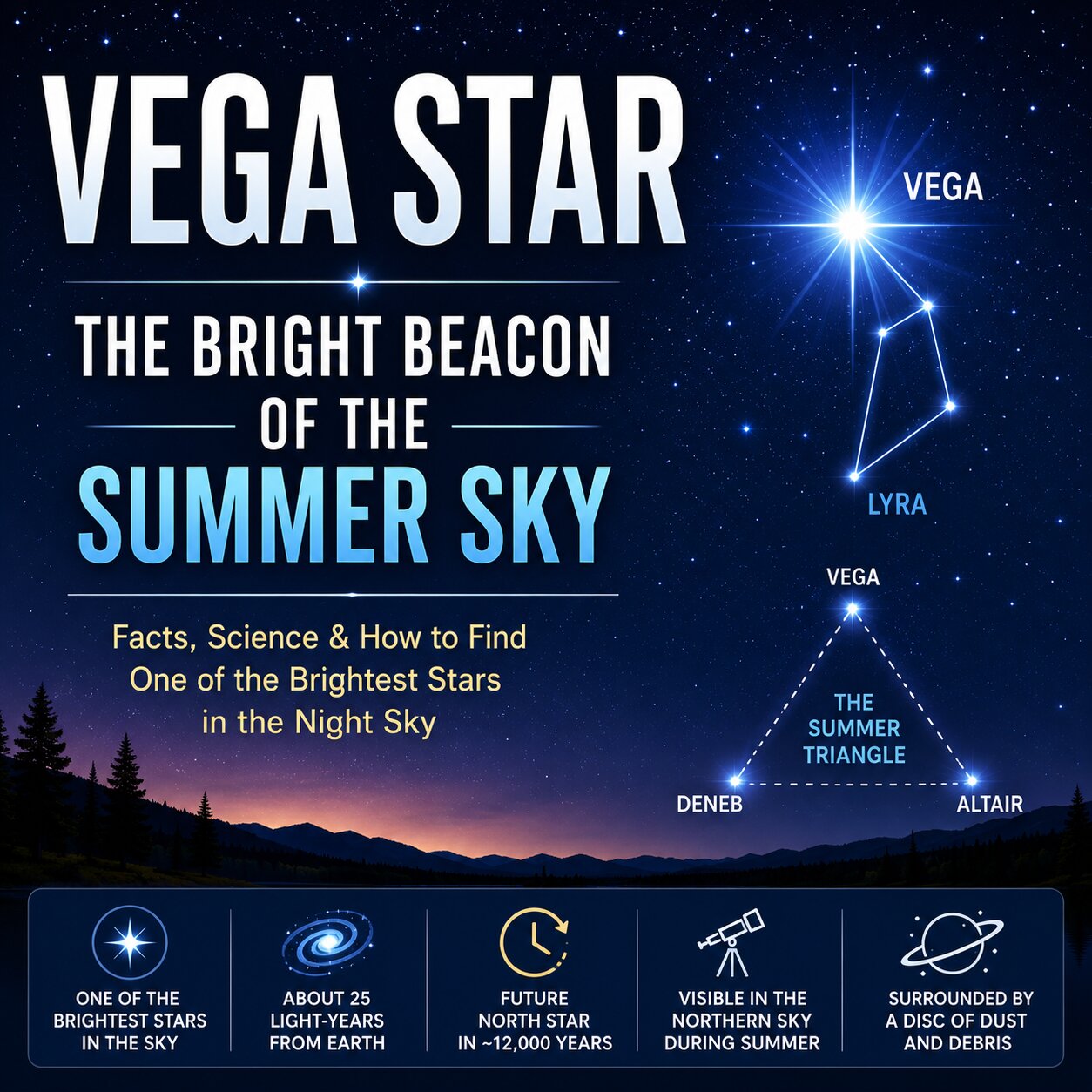

The Vega star is one of the most famous stars in Earth’s night sky. Known for its brilliant blue-white glow, Vega has fascinated astronomers, travellers, and skywatchers for thousands of years. It is one of the brightest stars visible from Earth and plays an important role in both astronomy and navigation.
Located in the constellation Lyra, Vega is easy to spot during certain times of the year and forms part of one of the sky’s most recognisable patterns, the Summer Triangle. Its beauty, brightness, and scientific importance make it a perfect star for beginners learning about the universe.
What is the Vega star?
The Vega star is a massive blue-white star located around 25 light-years from Earth. It is significantly larger and brighter than our Sun, producing far more energy and heat.
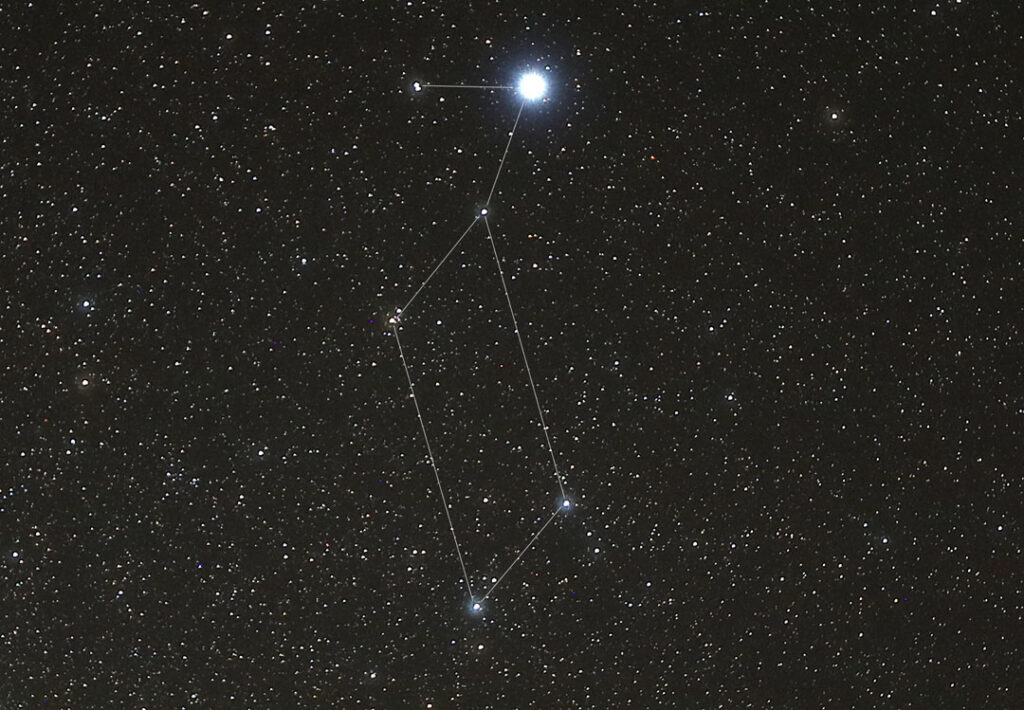
Vega belongs to the constellation Lyra, which represents a harp in ancient mythology. Despite Lyra being a relatively small constellation, Vega shines so brightly that it dominates the surrounding area of the sky.
Astronomers classify Vega as an A-type main-sequence star. This means it is still actively converting hydrogen into helium in its core, much like our Sun, although at a much faster rate.
Because Vega burns hotter and more intensely, it will not live nearly as long as the Sun. Scientists estimate that Vega is only around 450 million years old, making it much younger than our 4.6-billion-year-old Sun.
Why Vega is so bright in the night sky
The Vega star appears extremely bright for two major reasons. First, it naturally produces an enormous amount of light. Second, it is relatively close to Earth compared to many other bright stars in the galaxy.
Vega is approximately 40 times more luminous than the Sun. Its surface temperature reaches around 9,600 degrees Celsius, giving it its distinctive blue-white appearance.
For observers on Earth, Vega often becomes one of the first stars visible after sunset during the northern summer months. Under dark skies, it can easily stand out even in areas with moderate light pollution.
Its brightness also made Vega historically important in astronomy. For many years, astronomers used Vega as a reference point for measuring the brightness of other stars.
Vega and the Summer Triangle
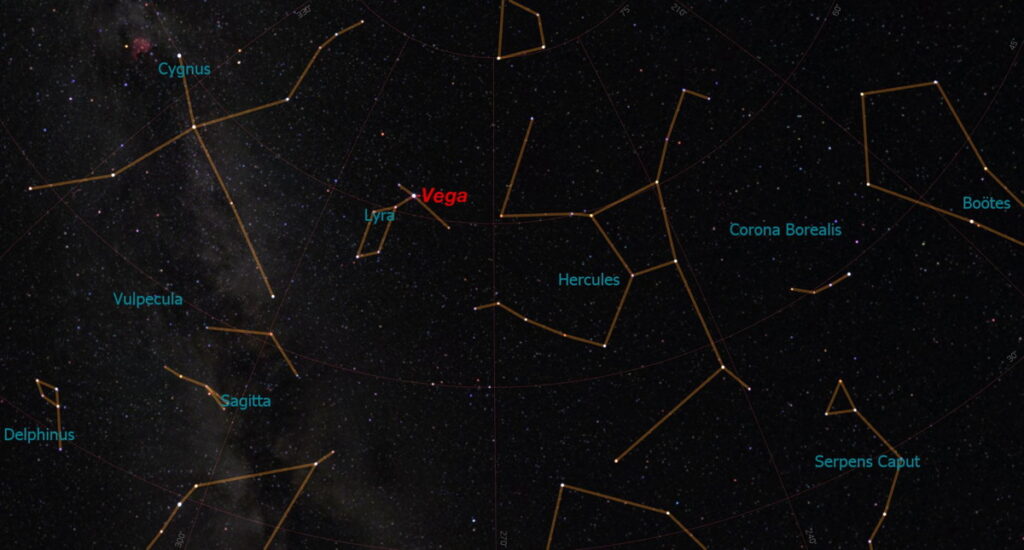
One of the reasons the Vega star is so popular among beginner astronomers is because it forms part of the famous Summer Triangle.
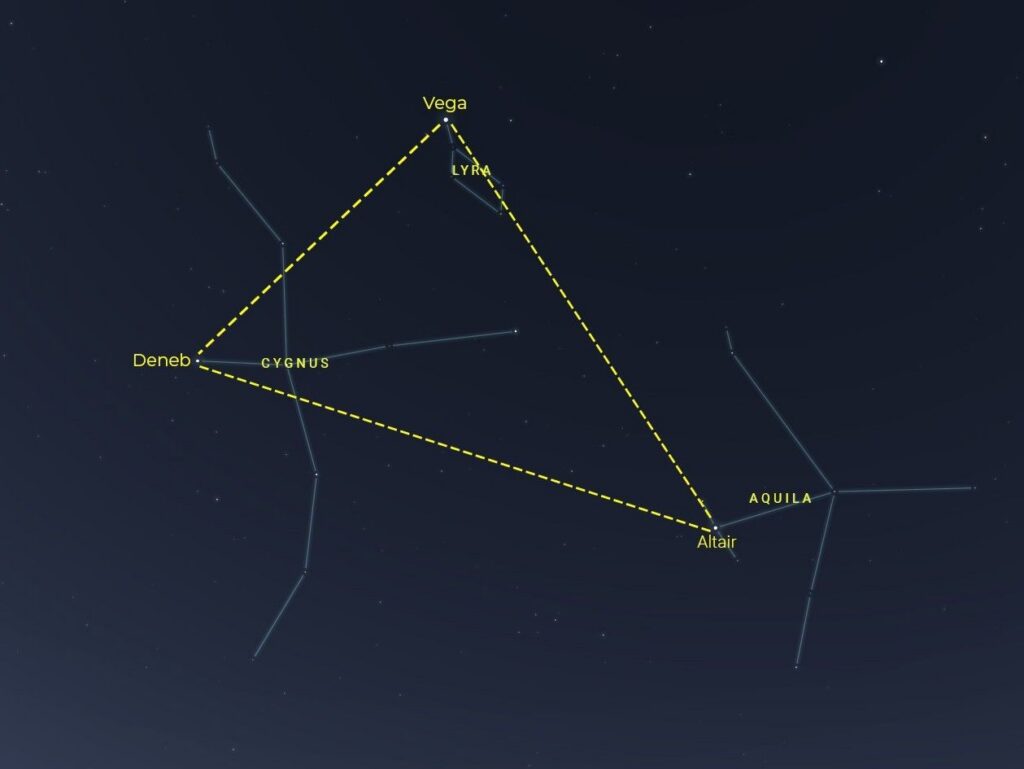
The Summer Triangle is not an official constellation but rather an asterism formed by three bright stars:
- Vega in Lyra
- Deneb in Cygnus
- Altair in Aquila
Vega is usually the brightest and easiest of the three to locate. Once you find it, spotting the other two stars becomes much simpler.
This triangle dominates the northern summer sky and is visible for many months of the year in the Northern Hemisphere. Even observers in parts of the Southern Hemisphere can often see Vega low on the horizon during winter months.
Will Vega become the future North Star?
vega star guide for beginners
One fascinating fact about the Vega star is that it will eventually become Earth’s North Star.
At the moment, Polaris sits almost directly above Earth’s North Pole. However, Earth slowly wobbles on its axis over thousands of years in a process called axial precession.
Because of this gradual wobble, the position of the North Pole changes over time. Around 12,000 years from now, Vega will move into the position currently occupied by Polaris and become the new North Star.
Ancient civilisations thousands of years ago may also have seen Vega closer to the northern pole than we do today.
This demonstrates how dynamic the night sky truly is, even though stars often appear fixed to human observers.
Key facts about the Vega star
vega star guide for beginners
The Vega star has many characteristics that make it one of the most studied stars in astronomy.
Here are some key facts:
- Located around 25 light-years from Earth
- Part of the constellation Lyra
- A blue-white A-type main-sequence star
- Around 40 times brighter than the Sun
- Part of the Summer Triangle
- Future North Star in roughly 12,000 years
- One of the first stars ever photographed
These details highlight why Vega remains one of the most important stars for both science and education.
The scientific importance of Vega
The Vega star has contributed greatly to modern astronomy. Because it is bright, relatively nearby, and easy to observe, scientists have used it extensively to study stellar physics.
Vega was one of the first stars photographed after the Sun. It also became one of the earliest stars whose spectrum was analysed in detail, helping astronomers understand the chemical composition of stars.
Scientists have also discovered a massive disc of dust surrounding Vega. This suggests the possible formation of planets or planetary debris within the system.
Studies of Vega continue today using powerful observatories and space telescopes. Astronomers still use it as an important benchmark for measuring brightness and calibrating scientific instruments.
A shining jewel in Earth’s skies
The Vega star remains one of the most recognisable and scientifically important stars visible from Earth. Its brilliant light, role in the Summer Triangle, and future status as the North Star make it an exciting target for beginner and experienced astronomers alike.
Whether you are learning how to identify constellations, exploring stellar evolution, or simply enjoying a clear night sky, Vega offers a perfect reminder of the beauty and scale of the universe surrounding our planet.

