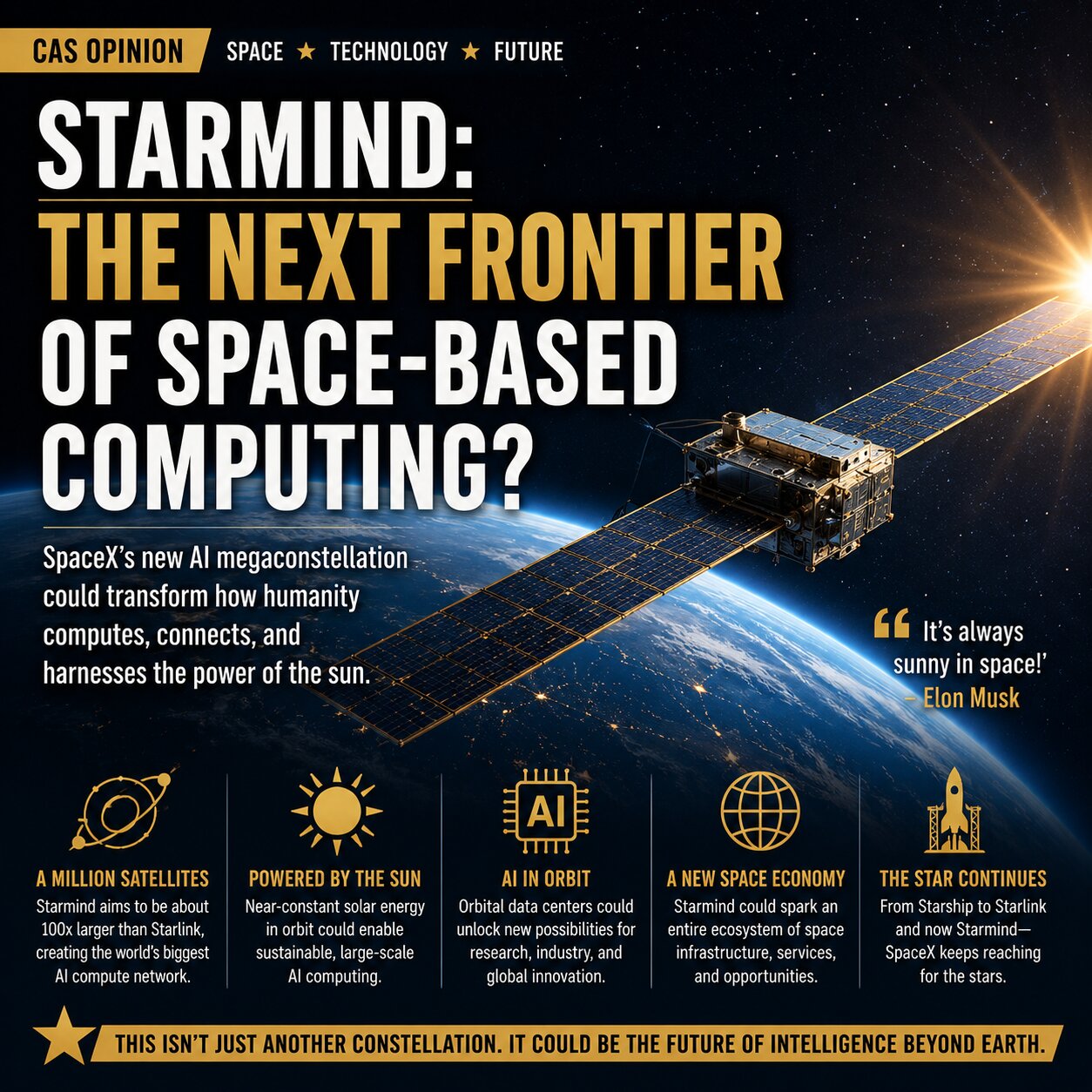

Space exploration has long been driven by rockets, spacecraft, and satellites designed to observe our planet or explore the Solar System. Now, the focus appears to be shifting towards something entirely different: computing power in orbit. With the unveiling of the name Starmind for SpaceX‘s proposed AI satellite constellation, the conversation is moving beyond internet connectivity and into the possibility of building vast computing infrastructure in space.
While the project remains in development, the concept itself raises fascinating questions. Could future data centres orbit Earth instead of occupying vast buildings on the ground? Could abundant solar energy in space power artificial intelligence on an unprecedented scale? Whether these ambitions are realised or not, the announcement reflects how rapidly the relationship between space technology and AI continues to evolve.
Rather than viewing Starmind as simply another satellite constellation, it may represent the beginning of an entirely new category of space infrastructure.
Why Space-Based Computing Makes Sense
One of the biggest challenges facing artificial intelligence is the enormous amount of electricity required to train and operate advanced models. Modern AI systems consume significant power while also producing large amounts of heat that must be managed by complex cooling systems.
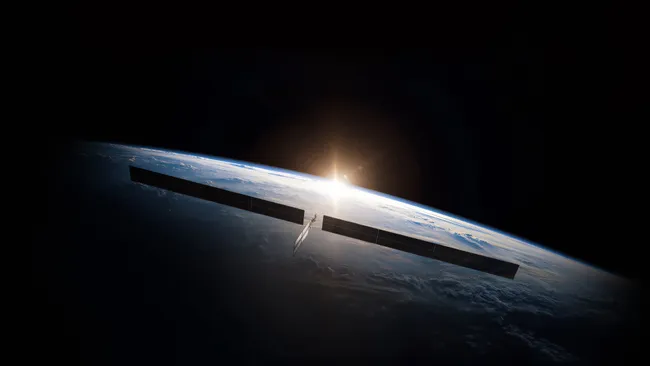
Space offers an intriguing alternative. Satellites in suitable orbits receive almost continuous sunlight, providing a consistent energy source through large solar arrays. Without weather, seasonal variations, or atmospheric interference, orbital platforms could potentially generate electricity far more consistently than many Earth-based facilities.
Although transmitting data efficiently between orbit and Earth remains a major engineering challenge, advances in laser communications, satellite networking, and onboard processing suggest that space-based computing may eventually complement terrestrial data centres rather than replace them.
The concept remains ambitious, but the underlying engineering principles are becoming increasingly plausible.
More Than Just Another “Star”
SpaceX has built a recognisable naming convention over the past decade, with projects such as Starlink, Starship, Starshield, Starfall, and Starbase all sharing a common identity. Starmind naturally extends that family while hinting at a much broader vision.
Unlike communication satellites or launch systems, the proposed constellation focuses on computation itself. Instead of moving people, cargo, or internet traffic, its purpose would be to process enormous quantities of information using dedicated orbital computing platforms.
If successful, this could eventually support scientific research, climate modelling, autonomous systems, financial analysis, medical discoveries, and future AI applications that demand computing resources beyond what current infrastructure can provide.
Whether Starmind ultimately reaches the proposed scale or evolves into something different, it demonstrates that the next space race may involve processors and algorithms as much as rockets.
Challenges That Cannot Be Ignored
Despite the excitement surrounding orbital AI infrastructure, significant obstacles remain before such a vision becomes reality.
Among the most important challenges are:
- Launching and deploying large numbers of satellites
- Managing orbital congestion responsibly
- Minimising space debris risks
- Providing reliable high-bandwidth communications
- Developing autonomous maintenance capabilities
- Handling hardware failures in orbit
- Addressing cybersecurity concerns
- Balancing environmental and regulatory considerations
- Managing the enormous financial investment required
- Coordinating international space governance
Each of these issues will require continued innovation if space-based computing is to become a practical reality.
A Future Worth Watching
Whether Starmind becomes one of the largest engineering projects ever attempted or simply serves as an important stepping stone, it highlights how quickly our expectations of space technology are changing. Satellites are no longer limited to communications, navigation, or Earth observation. Increasingly, they may become active participants in global computing networks.
History has shown that many ambitious space concepts initially seem impossible before gradually becoming commonplace. Reusable rockets, commercial space stations, and global satellite internet were all once viewed as distant dreams. Orbital AI infrastructure may eventually join that list.
For astronomers, engineers, and technology enthusiasts alike, Starmind is less about its name and more about what it represents: a future where humanity increasingly uses space not only to explore the universe, but also to expand the limits of computing itself.