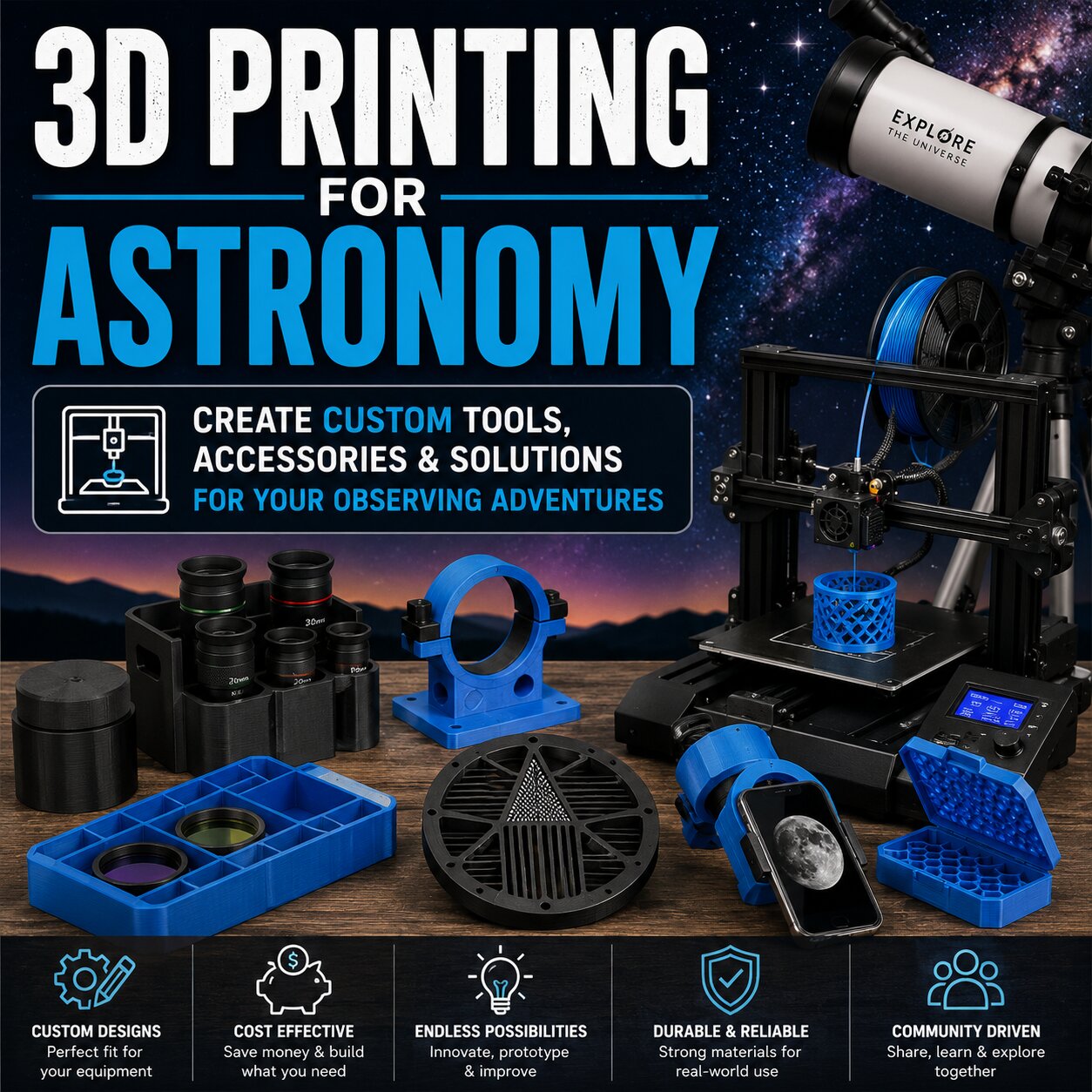

The growing accessibility of desktop 3D printers has opened exciting new possibilities for amateur astronomers. From custom telescope accessories to equipment organisers and observatory components, 3D printing for astronomy allows enthusiasts to create practical solutions tailored to their specific needs.
Many astronomy accessories can be expensive, difficult to source, or unavailable for older equipment. With modern 3D printing technology, hobbyists can design, modify, and manufacture parts at home while reducing costs and increasing customisation options.
As printers become more affordable and design communities continue to grow, 3D printing for astronomy is rapidly becoming an essential skill for dedicated stargazers and telescope builders.
Why Astronomers Are Embracing 3D Printing
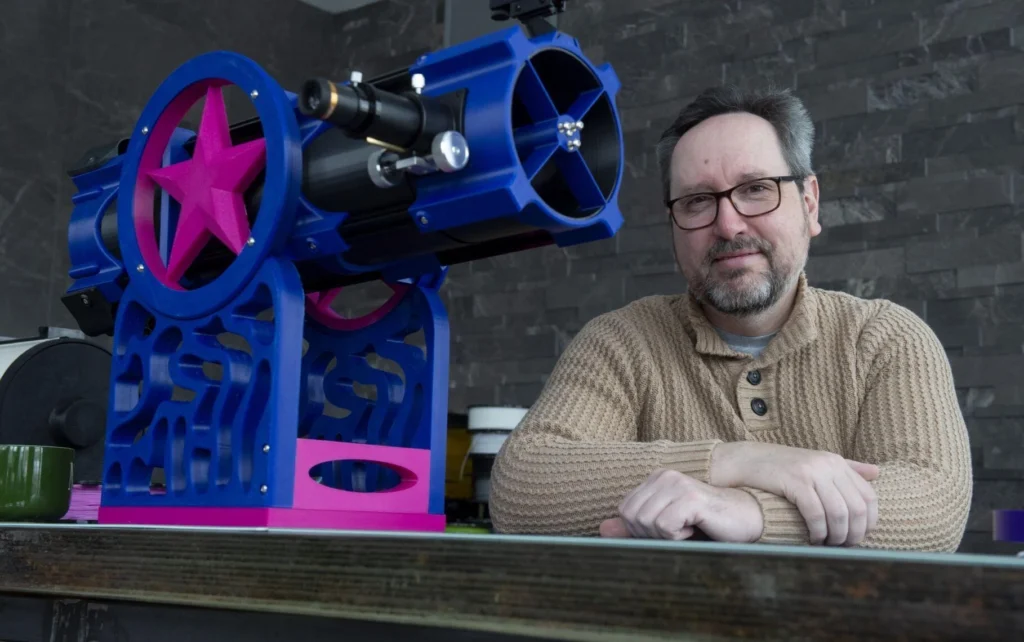
Astronomy often involves highly specialised equipment that may require unique adapters, mounting systems, or organisational tools. Commercial products do not always meet every observer’s requirements.
3D printing allows astronomers to create components specifically designed for their telescopes, cameras, and observing setups. Small modifications that would previously require machining can now be produced in a matter of hours.
The ability to prototype designs quickly also encourages experimentation. Users can test different solutions, refine them, and print updated versions without significant expense.
This flexibility makes 3D printing an attractive addition to many astronomy workshops.
Popular Astronomy Projects for 3D Printing
Many practical astronomy accessories can be created using consumer-grade 3D printers.
- Bahtinov focusing masks for precise telescope focusing.
- Eyepiece storage racks and organisational trays.
- Finder scope brackets and mounting adapters.
- Dew shield extensions for telescopes.
- Cable management clips and routing systems.
- Filter holders and storage cases.
- Smartphone adapters for astrophotography.
- Telescope dust covers and protective caps.
- Observatory control panel enclosures.
- Custom mounting plates for cameras and accessories.
These projects range from beginner-friendly prints to more advanced designs requiring careful measurement and testing.
Materials and Design Considerations

Successful 3D printing for astronomy depends on selecting appropriate materials and understanding environmental conditions.
PLA is often suitable for indoor accessories and storage components, but outdoor equipment may benefit from more durable materials such as PETG or ASA. These materials provide improved resistance to sunlight, temperature fluctuations, and moisture.
Designers should also consider structural strength, weight distribution, and mechanical stresses. Components supporting cameras or optical equipment require careful engineering to ensure stability and safety.
Precision is particularly important when creating focusing aids, adapters, or mounts where even small dimensional inaccuracies can affect performance.
Fortunately, modern design software and community-created models make it easier than ever to produce accurate and reliable astronomy accessories.
The Future of Amateur Astronomy Manufacturing
As 3D printing technology continues to improve, amateur astronomers are gaining unprecedented control over the equipment they use. What once required specialised manufacturing can now be achieved in a home workshop with a relatively modest investment.
The global astronomy community actively shares printable designs, improvements, and innovations, creating a collaborative environment where ideas spread quickly and continuously evolve.
For telescope owners, astrophotographers, and observatory builders, 3D printing for astronomy offers a powerful combination of creativity, affordability, and practical problem-solving. Whether producing a simple dust cap or designing a complex mounting system, the technology enables enthusiasts to build customised solutions that enhance their observing experience and support their exploration of the night sky.