
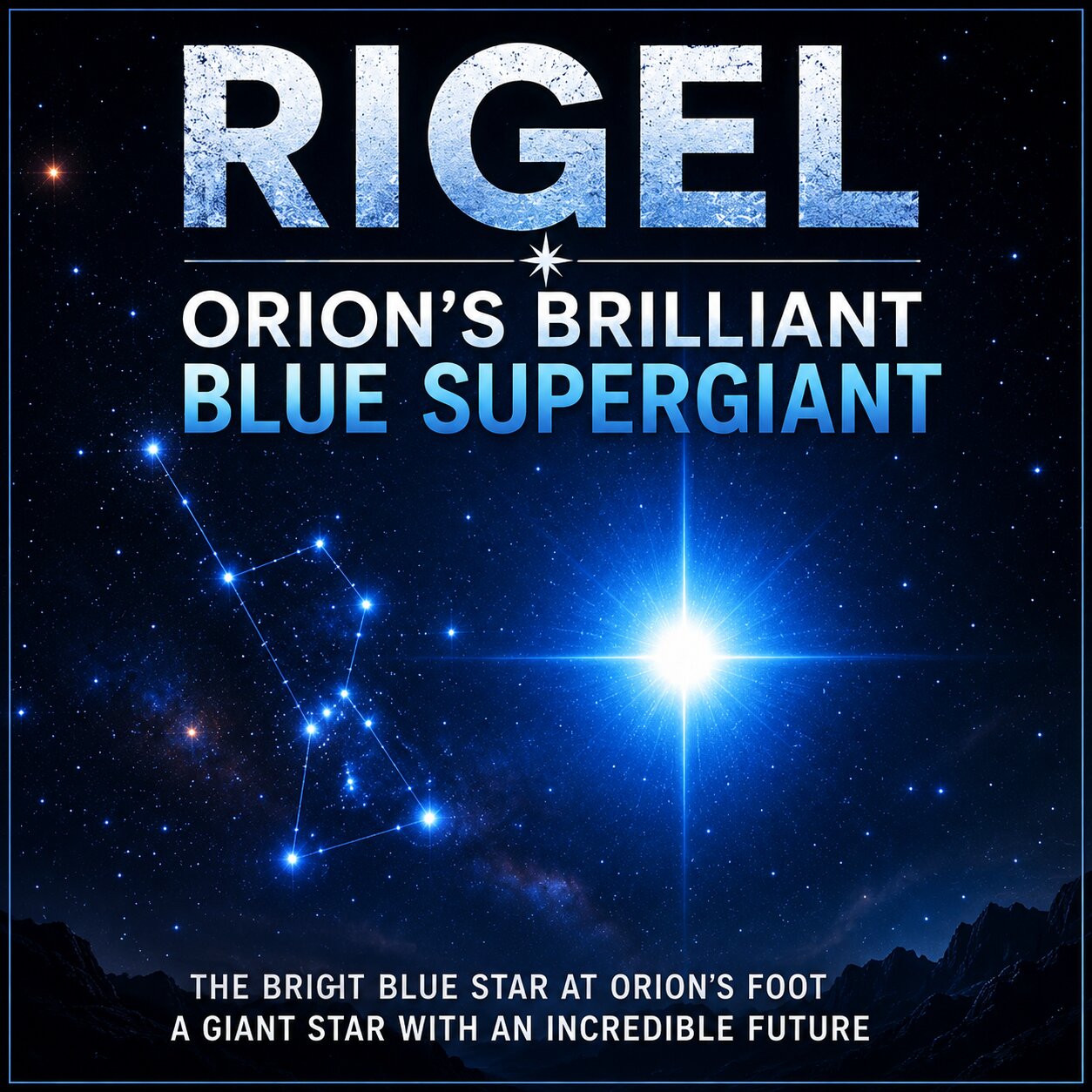

Rigel is one of the brightest stars visible from Earth and serves as the brilliant blue-white foot of the constellation Orion. Easily recognised in the night sky, Rigel stands in striking contrast to the reddish glow of Betelgeuse, which marks Orion’s opposite shoulder. Together, these two stars showcase different stages of stellar evolution while making Orion one of the most recognisable constellations for stargazers around the world.
Located approximately 860 light-years from Earth, Rigel is a blue supergiant whose immense size, temperature, and luminosity make it one of the most impressive stars visible without a telescope.
A Stellar Giant of Extraordinary Power
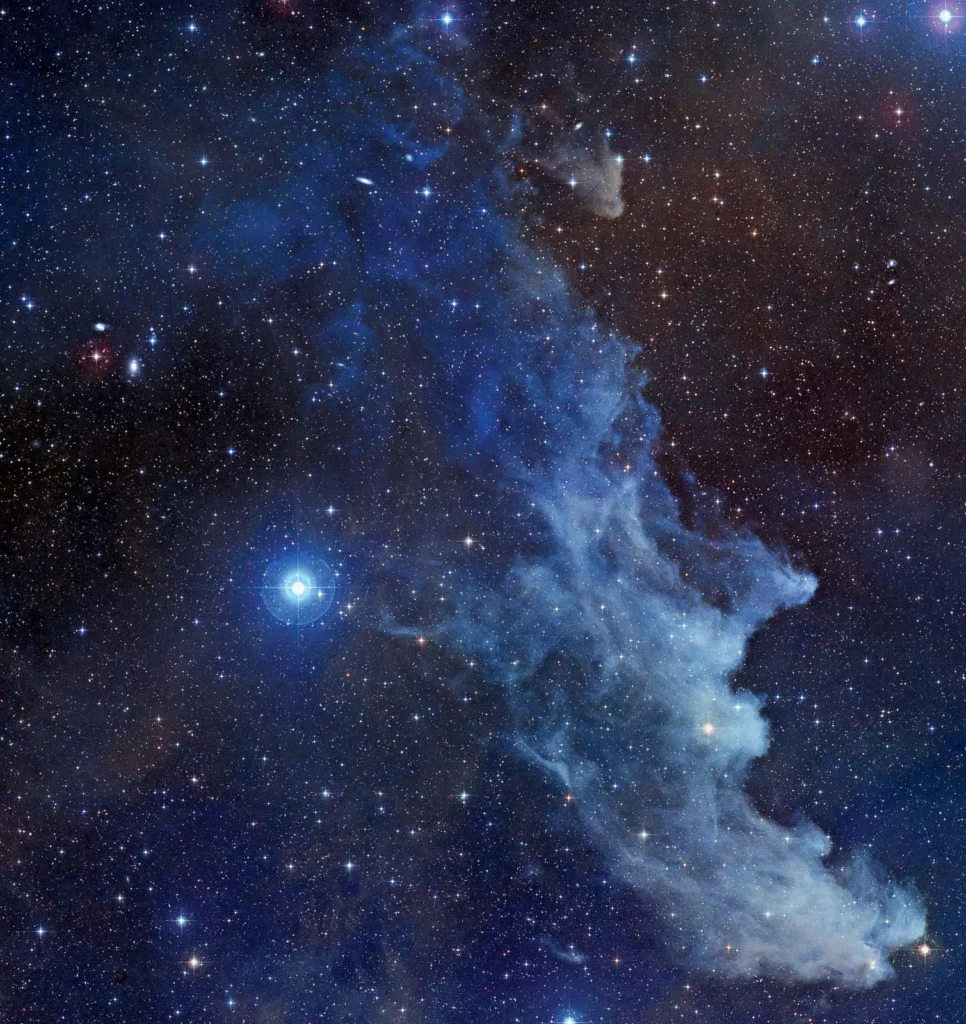
Although Rigel appears as a single bright point of light, it is vastly different from our Sun. It is estimated to be around 70 times larger in radius and tens of thousands of times more luminous.
Its brilliant blue-white colour comes from an extremely high surface temperature of approximately 12,000 Kelvin, more than twice the temperature of the Sun.
Because of its enormous energy output, Rigel shines brightly despite its tremendous distance from Earth.
More Than Just One Star
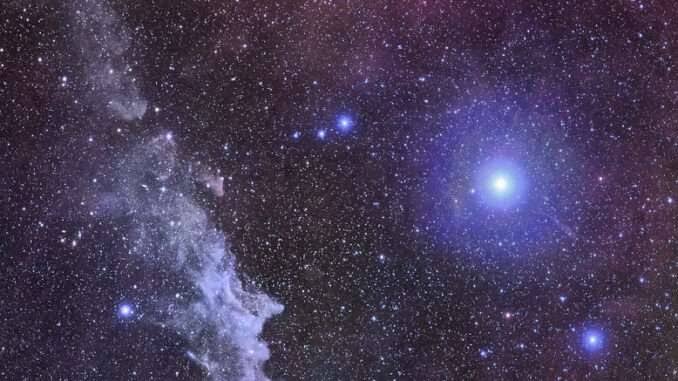
Rigel is actually part of a multiple star system. While the primary blue supergiant dominates the system, it is accompanied by smaller stellar companions that orbit nearby.
These companions are difficult to observe without specialised equipment because the primary star outshines them so dramatically.
Astronomers continue studying the Rigel system to better understand how massive stars form and evolve alongside companion stars.
Fascinating Facts About Rigel
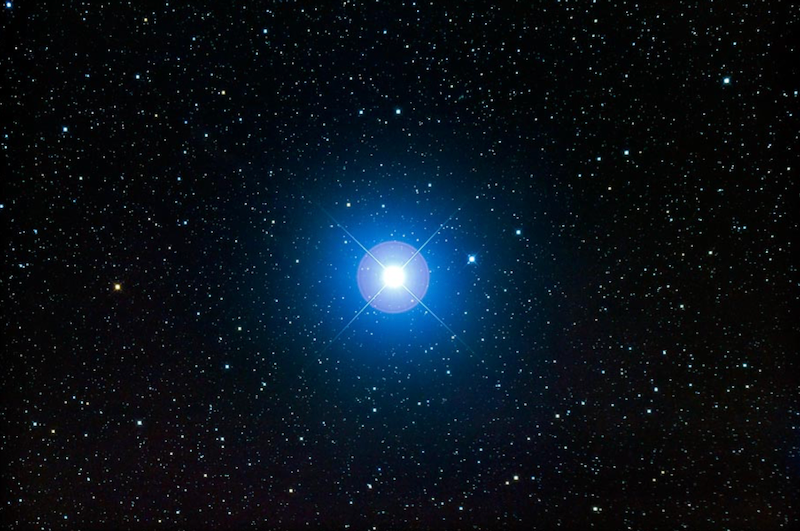
Rigel remains one of the most studied stars in the night sky because of its remarkable characteristics:
- Located approximately 860 light-years from Earth.
- A blue supergiant in the constellation Orion.
- One of the brightest stars visible from Earth.
- Surface temperature of roughly 12,000 Kelvin.
- Around 70 times the Sun’s radius.
- Part of a multiple star system.
These features make Rigel an excellent example of the incredible diversity found among the stars in our galaxy.
A Glimpse into the Future of Massive Stars
Massive stars like Rigel live much shorter lives than stars such as our Sun. Their enormous energy output rapidly consumes their nuclear fuel, meaning they evolve far more quickly over millions of years rather than billions.
Although Rigel is still shining brilliantly today, astronomers expect it will eventually end its life in a spectacular supernova explosion, enriching the surrounding region of space with heavy elements that may one day help form new stars and planetary systems.
Until then, Rigel remains one of the finest sights in the night sky, reminding us of the incredible scale, beauty, and power of the universe.

