NASA has confirmed continued progress on the Artemis II mission, marking another important step toward returning humans to the Moon. Artemis II will be the first crewed mission of the Artemis programme, carrying astronauts around the Moon to test spacecraft systems in deep space before future lunar landings.
While the mission will not land on the Moon, it plays a critical role in validating the Orion spacecraft, life-support systems, and mission operations required for longer and more complex journeys beyond Earth orbit.
What Artemis II is designed to do
Artemis II is planned as a crewed lunar flyby mission, sending astronauts around the Moon and back to Earth. The goal is to test Orion’s performance with humans onboard, including navigation, communications, propulsion, and re-entry systems.
This mission builds directly on the success of Artemis I, which flew the uncrewed Orion spacecraft around the Moon in 2022. By confirming Artemis II timeline progress, NASA is showing confidence that lessons learned from Artemis I are being applied effectively to prepare for human spaceflight.
Recent progress milestones at NASA

NASA has reported steady progress on key elements of Artemis II, including spacecraft integration, systems testing, and crew preparation. Engineers continue to test Orion’s hardware and software to ensure it can safely support astronauts during the multi-day mission.
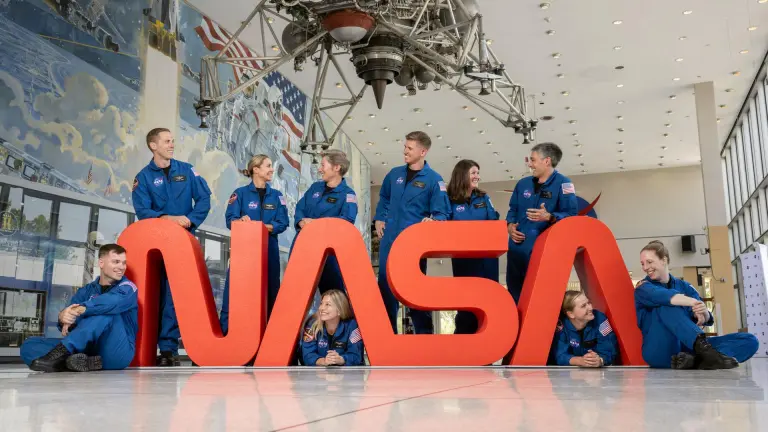
Crew training is also advancing, with astronauts rehearsing mission procedures, emergency scenarios, and spacecraft operations. These steps are essential to reducing risk and ensuring that Artemis II is not only successful, but safe.
Why Artemis II matters for future Moon missions
Artemis II serves as a bridge between test flights and lunar landings. Before astronauts can return to the Moon’s surface under Artemis III, NASA must prove that its systems work reliably with a crew in deep space.
By confirming Artemis II timeline progress, NASA reinforces its long-term strategy of testing, refining, and validating each phase of the programme. This approach reduces uncertainty and helps ensure future missions can focus on exploration rather than basic system validation.
News Source: NASA
A key step toward sustained lunar exploration
The Artemis programme is about more than a single mission or landing. NASA’s long-term goal is to establish a sustained human presence on and around the Moon, using it as a stepping stone for future missions to Mars.
Artemis II represents a crucial moment in that journey. As preparations continue and milestones are reached, the mission brings humanity one step closer to returning to the Moon and expanding our presence deeper into the Solar System.