Astronomy has entered a digital age where space software plays a central role in how we explore, observe, and understand the universe. While telescopes and optical equipment remain essential, modern stargazing increasingly relies on software-driven tools that enhance accuracy, efficiency, and learning. From planning an observation session to processing astrophotography images, digital solutions are now part of nearly every astronomer’s workflow.
Alongside desktop programs, space apps and space mobile apps have made astronomy more accessible than ever. With just a smartphone or tablet, users can identify stars, track satellites, and follow real-time space events. These tools have lowered the barrier to entry for beginners while offering advanced capabilities for experienced observers.
This article introduces the main categories of space software and explains how each supports different aspects of astronomy, astrophotography, and space science.
Sky mapping and planetarium software

Sky mapping and planetarium software is often the first type of space software people encounter. These tools recreate the night sky digitally, allowing users to explore stars, planets, constellations, and deep-sky objects based on their location and time.
Planetarium-style space programs are invaluable for learning celestial navigation. They help users understand how the sky changes throughout the night and across seasons, making it easier to locate objects during real observing sessions. Many also include educational overlays that explain astronomical concepts visually.
Modern space apps in this category frequently include augmented reality features. By pointing a device at the sky, users can identify objects instantly, making these tools especially popular among beginners and casual stargazers.
Telescope control software

Telescope control software connects digital systems to physical observing equipment. This category of space software allows users to align, control, and automate telescope movements with precision that manual methods cannot easily match.
For observers using GoTo mounts, these space programs enable accurate slewing to targets, tracking objects across the sky, and synchronising telescope position with sky databases. This significantly reduces setup time and improves observing efficiency.
Advanced telescope control solutions are often integrated with other space software, such as imaging or planning tools. This creates a seamless workflow where hardware and software work together during long observing or imaging sessions.
Astrophotography software

Astrophotography software supports the complex process of capturing and processing images of celestial objects. This category of space software covers everything from camera control to stacking and post-processing raw image data.
During image capture, these space programs manage exposure settings, camera cooling, and sequencing. This is especially important for deep-sky imaging, where consistency and precision directly affect image quality.
Processing-focused space software allows users to calibrate, align, and stack images to reduce noise and enhance detail. Over time, many astrophotographers build their entire workflow around a combination of specialised space programs designed for different stages of imaging.
Observation planning tools

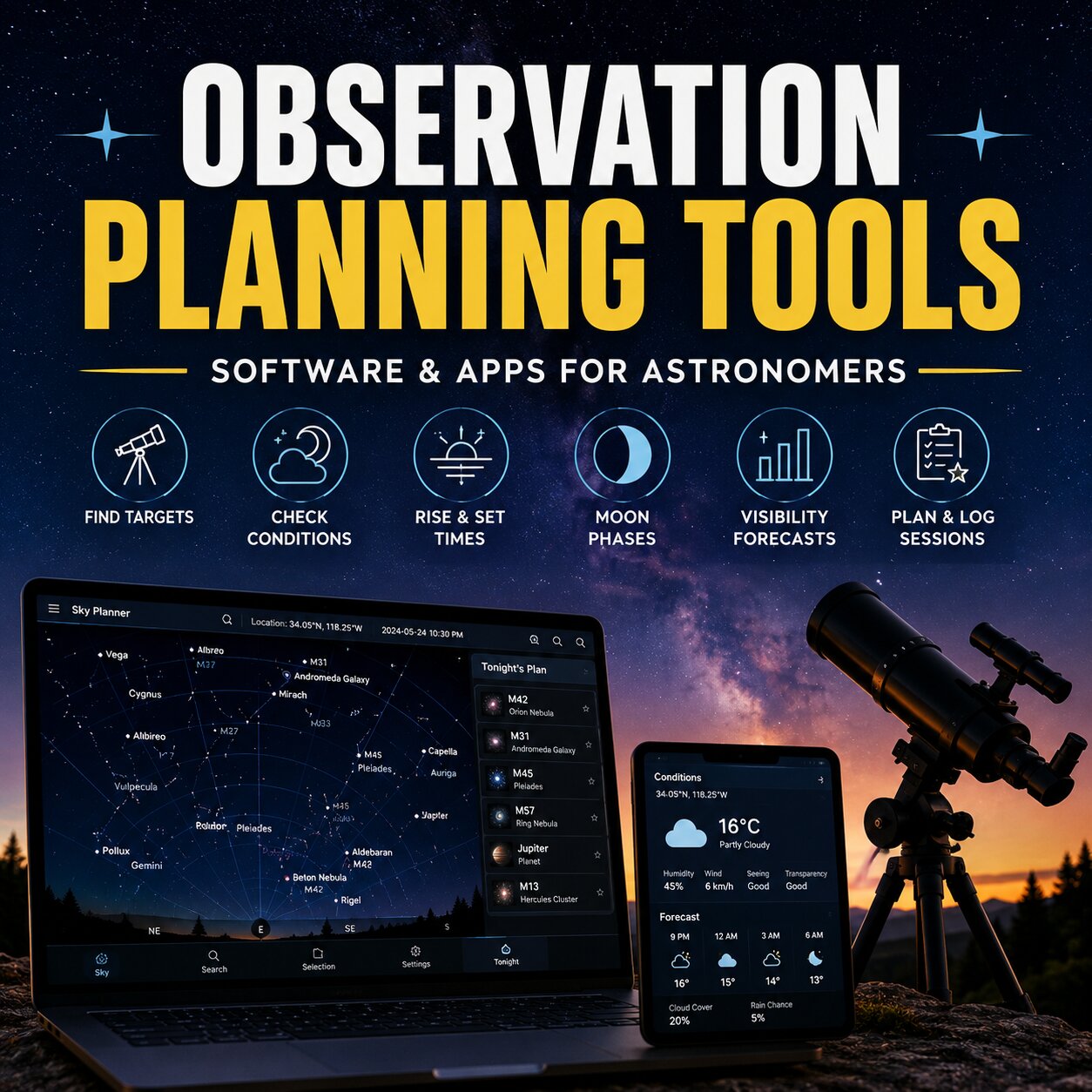
Observation planning tools help astronomers decide what to observe and when. This type of space software analyses factors such as object visibility, moon phase, weather conditions, and light pollution.
These space apps are particularly useful for making the most of limited clear skies. By planning ahead, observers can prioritise targets that are best positioned and avoid wasted time in the field.
Many planning tools integrate with telescope control or sky mapping software, creating a connected ecosystem of space programs that support efficient and productive observing sessions.
Space tracking and alert software

Space tracking software focuses on real-time activity beyond Earth. These tools monitor satellites, space stations, launches, and natural events such as meteor showers and eclipses.
Space apps in this category often provide alerts for visible ISS passes, rocket launches, or peak meteor activity. This makes them ideal for observers who enjoy spontaneous or event-driven astronomy.
In addition to observational alerts, some space software also tracks space weather, solar activity, and orbital data, offering insight into how space conditions affect both Earth and astronomical observing.
Educational and learning space apps

Educational space software is designed to explain astronomy and space science concepts in an interactive way. These tools often combine simulations, visualisations, and guided lessons to make learning more engaging.
Space mobile apps in this category are widely used by students, educators, and enthusiasts who want to deepen their understanding of the universe without specialised equipment. Topics may range from planetary motion to stellar evolution and cosmology.
By combining education with visual exploration, learning-focused space programs bridge the gap between theory and observation, making astronomy more approachable for all experience levels.
Exploring the digital tools behind modern astronomy
Space software has become an essential companion to traditional observing equipment. Whether you are planning a session, controlling a telescope, processing images, or learning about the cosmos, the right digital tools can transform how you experience astronomy.
To explore these tools in more detail, visit our Software & Apps page, where you will find dedicated categories and articles covering each type of space software and space apps in depth!