


A new era of private space stations may be closer than many people realise. Space startup Vast has announced that it has raised $500 million in new funding to continue development of its Haven series of commercial space stations.
The funding round consists of $300 million in Series A equity and $200 million in debt financing, providing the company with significant resources to push forward with its ambitious plans for a privately operated orbital station network.
Vast hopes its Haven stations will become part of the growing low Earth orbit economy, supporting research, manufacturing, and commercial operations once the current International Space Station eventually retires.
A successor to the International Space Station
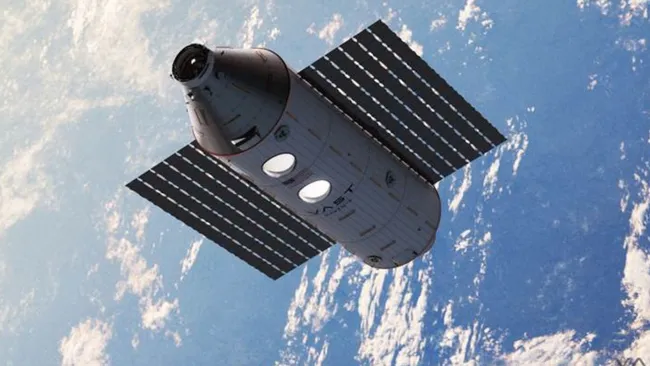
The International Space Station (ISS) is expected to retire around 2030, creating a major gap in human presence in low Earth orbit. Companies like Vast are positioning themselves to fill that gap with privately developed space stations.
Vast plans to launch its Haven-2 station beginning in 2028, adding additional modules roughly every six months until the structure is completed in 2032. The goal is to ensure continuous human presence in orbit for the United States and its partners after the ISS is decommissioned.
The Haven stations are designed to support microgravity research, in-space manufacturing, and commercial space missions, areas expected to grow significantly over the next decade.
Haven-1 will launch first
Before the larger Haven-2 station is built, Vast plans to launch a smaller pathfinder station called Haven-1.
This single-module station is expected to launch in 2027 aboard a SpaceX Falcon 9 rocket, allowing the company to test technologies and operational systems before expanding the platform into a larger orbital outpost.
Vast has already begun testing some of the station’s technologies through the Haven-Demo spacecraft, a 500-kilogram satellite that launched into orbit in late 2025.
NASA has also selected Vast to operate a private astronaut mission to the ISS in 2027, which will use SpaceX’s Falcon 9 rocket and Dragon spacecraft.
The growing race for private space stations
Vast is not alone in its effort to build the next generation of orbital infrastructure. Several companies are currently developing commercial space stations designed to replace the ISS.
Some of the most notable projects include:
- Axiom Space, which plans to attach modules to the ISS beginning in 2027 before separating them into a free-flying station
- Orbital Reef, a station being developed by Blue Origin and Sierra Space
- Starlab, a project supported by Voyager Space and NanoRacks
This growing competition highlights how quickly the commercial space economy is evolving.
Our view: the orbital economy is becoming real
For decades, space stations were almost exclusively the domain of government agencies. The ISS itself was built through an international partnership involving NASA, Roscosmos, ESA, JAXA, and CSA.
Now we are seeing the private sector step in to build the next generation of orbital infrastructure.
The fact that Vast was able to raise half a billion dollars for Haven development suggests investors believe the low Earth orbit economy is about to expand dramatically.
If companies like Vast, Axiom, and Blue Origin succeed, the next decade could see a shift from a single government space station to multiple privately operated research and manufacturing hubs in orbit.
For scientists, astronauts, and commercial companies interested in working in microgravity, that could open the door to far more opportunities in space than ever before.

