
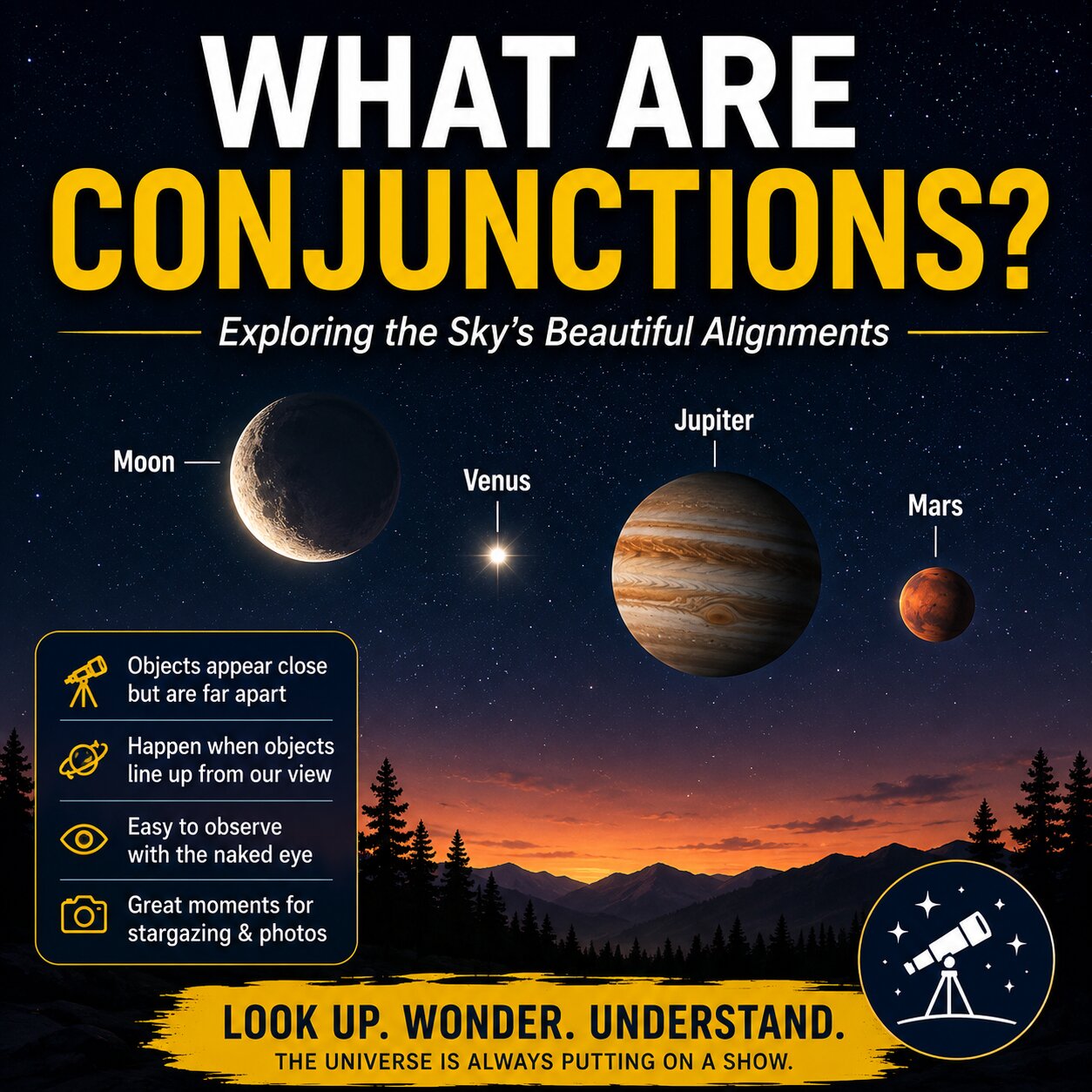

If you’ve ever looked up at the night sky and noticed two bright celestial objects appearing unusually close together, you’ve probably witnessed a conjunction. These beautiful astronomical events occur regularly throughout the year and are among the easiest skywatching experiences for beginners to enjoy.
Understanding what conjunctions are helps amateur astronomers appreciate the movements of our Solar System while recognising that these impressive alignments are often optical illusions rather than actual close encounters in space.
Whether involving planets, the Moon, or bright stars, conjunctions provide fantastic opportunities for observation and astrophotography.
What Is a Conjunction?
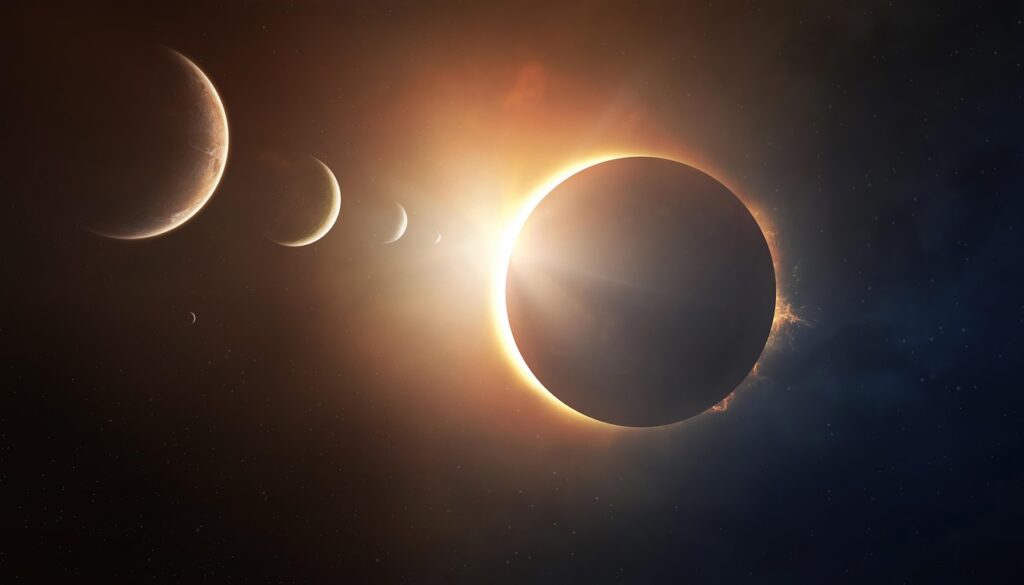
A conjunction occurs when two celestial objects appear very close together in the sky as viewed from Earth.
The important word here is “appear.”
Although they may seem almost side by side, the objects are usually separated by millions or even billions of kilometres in space.
The apparent closeness results from our viewing angle rather than any physical interaction between the objects.
For example, Venus may appear beside Jupiter during a conjunction, even though the two planets remain hundreds of millions of kilometres apart.
Why Do Conjunctions Happen?
The planets, Moon, and Sun all travel along a similar path across our sky known as the ecliptic.
Since their orbits lie within roughly the same plane around the Sun, they occasionally appear to line up from Earth’s perspective.
As each object moves at its own orbital speed, these alignments constantly change.
Some conjunctions last only a single evening, while others remain visible over several days.
Because every planet follows its own orbit, conjunctions occur frequently throughout the year.
Types of Astronomical Conjunctions
There are several kinds of conjunctions that observers can enjoy.
The most common include:
- Moon and planet conjunctions
- Planet and planet conjunctions
- Moon and bright star conjunctions
- Planet and bright star conjunctions
- Multiple-object conjunctions
- Solar conjunctions (when a planet lies behind the Sun from Earth’s perspective)
Each type offers its own unique viewing experience depending on brightness, separation, and observing conditions.
Planetary Conjunctions
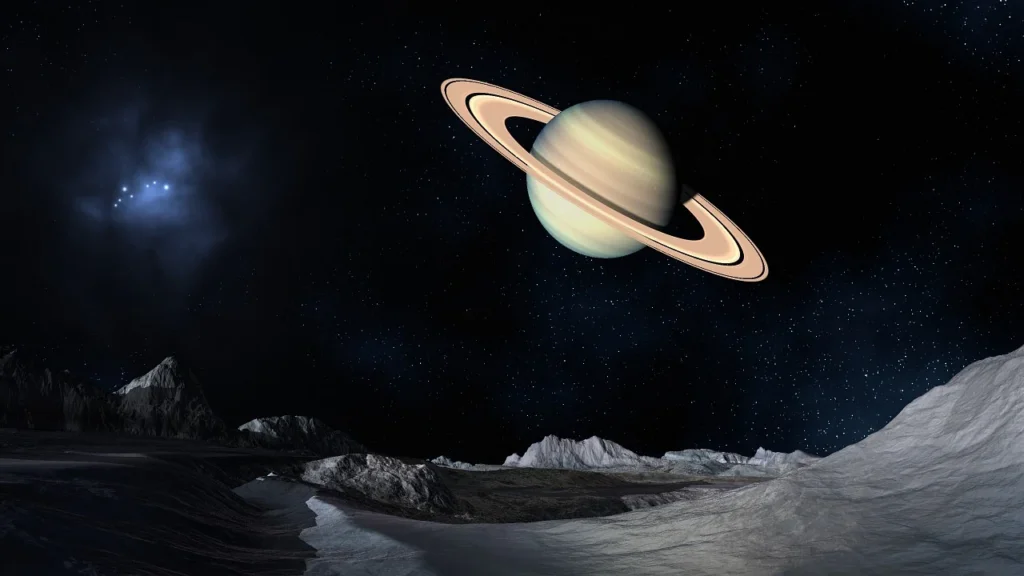
Planetary conjunctions are among the most spectacular astronomical events visible without specialised equipment.
Bright planets such as Venus, Jupiter, Mars, and Saturn often appear close together in the dawn or evening sky.
Because these planets shine brightly, even urban observers can enjoy the event.
Occasionally several planets become visible together during a planetary parade, creating unforgettable opportunities for photographers and astronomy enthusiasts.
Moon Conjunctions
The Moon participates in conjunctions almost every month.
As it travels quickly around Earth, it regularly passes near planets and bright stars along the ecliptic.
These events are particularly striking because the Moon provides an easy reference point for locating other celestial objects.
For many beginners, a conjunction between the Moon and a bright planet offers an excellent opportunity to identify that planet for the first time.
Conjunction Does Not Mean Collision
One of the biggest misconceptions about conjunctions is that the objects are somehow close together in space.
In reality, conjunctions involve perspective rather than physical proximity.
For example, during a conjunction between Mars and Jupiter, Mars may be over 200 million kilometres from Earth while Jupiter sits hundreds of millions of kilometres farther away.
The apparent alignment simply results from our viewing position.
This is similar to seeing two distant mountains appear side by side despite being many kilometres apart.
How to Observe Conjunctions
Most conjunctions require no telescope.
Simply choose a location with an unobstructed view of the eastern or western horizon, depending on when the event occurs.
Binoculars can reveal additional detail, while telescopes may show planetary features if atmospheric conditions are favourable.
Astronomy apps, star charts, and online sky calendars can help determine when conjunctions will occur in your location.
Many conjunctions are visible shortly after sunset or before sunrise, making them accessible for casual observers.
Why Conjunctions Matter
Although conjunctions have little scientific significance compared with eclipses or planetary transits, they play an important role in astronomy education.
They help people understand planetary motion, orbital mechanics, and the three-dimensional structure of our Solar System.
Conjunctions also inspire countless people to begin exploring astronomy for the first time.
For photographers, they offer opportunities to capture beautiful compositions featuring planets, the Moon, landscapes, and famous landmarks.
Looking Up Together
Learning what are conjunctions reveals that some of the night sky’s most impressive sights are created simply by perspective and the graceful motion of celestial bodies around the Sun.
Whether you’re watching the Moon pass beside Venus, Jupiter shine close to Mars, or several planets gather in the twilight sky, conjunctions remind us that our Solar System is constantly changing.
Keep an eye on upcoming astronomical calendars, because the next beautiful conjunction may be just around the corner, waiting to reward anyone who takes a moment to look up.

Leave a Reply