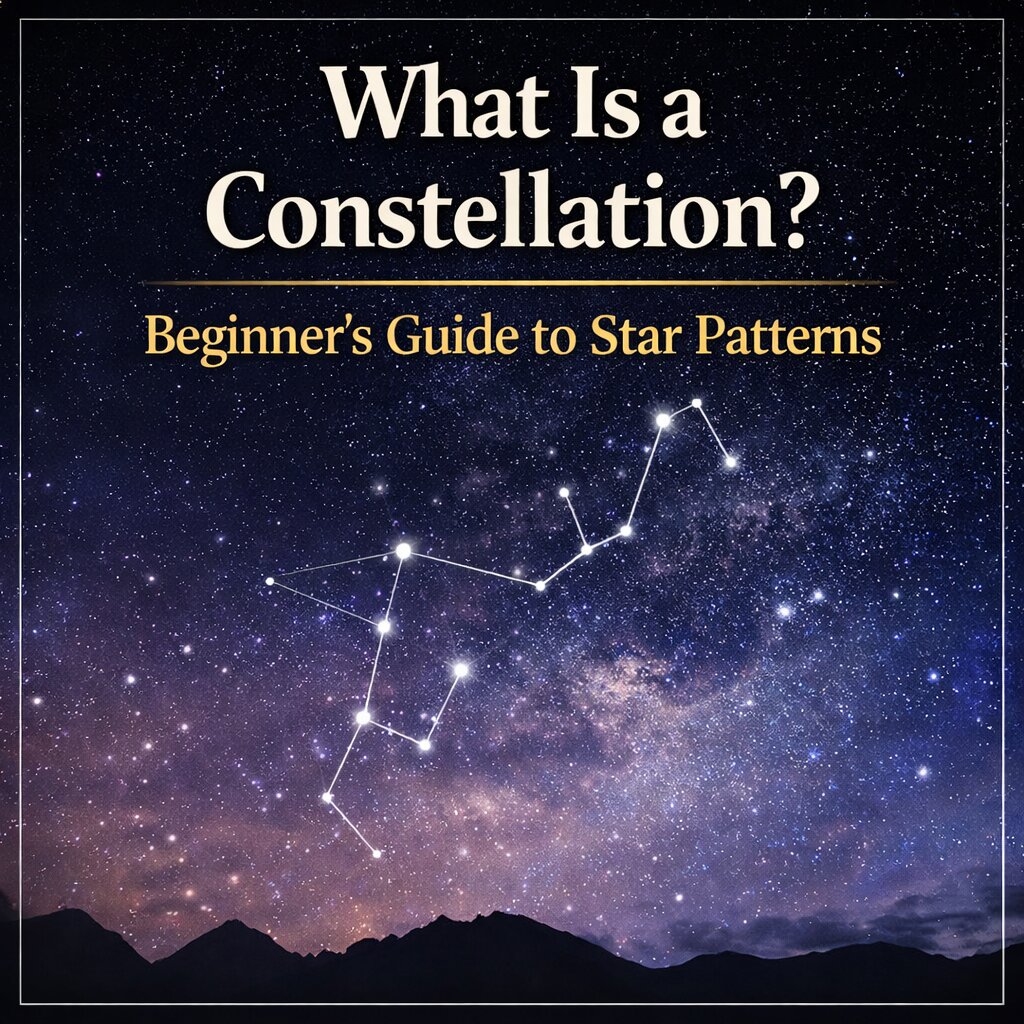

When people look up at the night sky, they often notice groups of stars forming patterns. These patterns are known as constellations and have helped humans navigate, tell stories, and study the cosmos for thousands of years. While many people think constellations are simply shapes drawn between stars, the concept is actually far more structured in modern astronomy.
Today, astronomers use constellations to divide the entire sky into defined regions. Each constellation represents a specific area of the celestial sphere, making it easier for scientists and observers to locate stars, planets, nebulae, and galaxies.
The basic definition of a constellation

In astronomy, a constellation is a recognised region of the sky defined by the International Astronomical Union (IAU). There are 88 officially recognised constellations that together cover the entire celestial sphere.
Historically, constellations began as simple star patterns that ancient civilisations used to organise the night sky. Over time, these patterns were formalised into the modern system used by astronomers today.
Although stars in a constellation may appear close together from Earth, they are usually separated by vast distances in space. The pattern we see is simply a result of our viewing perspective from our planet.
How ancient cultures created constellations

Long before modern astronomy existed, civilisations around the world created constellations to help explain the night sky. These patterns were often tied to mythology, navigation, agriculture, and seasonal changes.
Ancient Greek astronomers documented many of the constellations that are still used today. These include famous patterns such as Orion, Scorpius, and Ursa Major. However, other cultures developed their own sky maps and star patterns.
For example, Chinese, Indigenous Australian, and Native American cultures all identified unique constellations and celestial figures based on their traditions and storytelling.
The 88 modern constellations
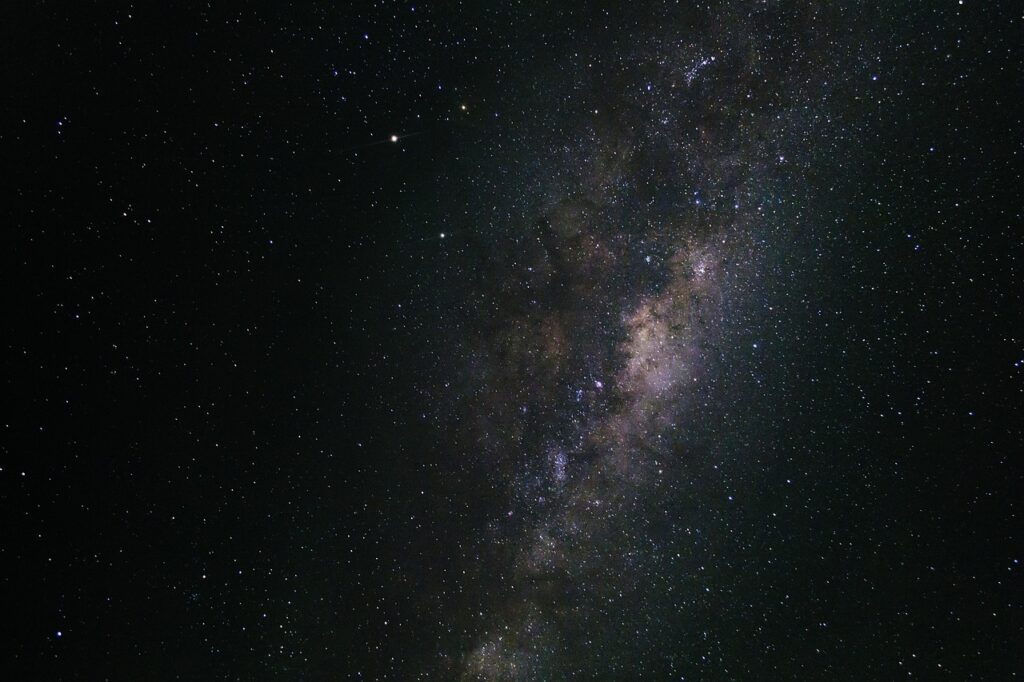
Modern astronomy recognises 88 constellations, officially defined by the International Astronomical Union in the early 20th century. Each constellation covers a precise region of the sky rather than just a simple star pattern.
Some constellations are large and easy to identify, while others are small and faint. Well-known examples include Orion, Leo, and Cassiopeia in the northern sky, as well as Crux and Centaurus in the southern hemisphere.
These official boundaries help astronomers catalogue celestial objects more easily. When scientists describe the location of a nebula or galaxy, they often refer to the constellation in which it is located.
Why constellations are important in astronomy

Constellations provide a framework for mapping the sky. By dividing the celestial sphere into recognised regions, astronomers can more easily track and catalogue objects across the universe.
For amateur astronomers, constellations also serve as navigation tools. Once you learn to recognise a few major constellations, it becomes much easier to find other stars and deep-sky objects.
Many famous astronomical discoveries have been associated with particular constellations. Nebulae, star clusters, and galaxies are often identified by the constellation in which they appear.
Famous constellations visible from the southern hemisphere
Observers in the southern hemisphere enjoy views of several iconic constellations that are difficult or impossible to see from northern latitudes.
Examples include:
- Crux (Southern Cross) – the smallest but one of the most recognisable constellations
- Centaurus – home to Alpha Centauri, the closest star system to Earth
- Carina – containing the spectacular Carina Nebula
- Scorpius – a bright constellation visible during winter evenings
From locations like South Africa, these constellations form a stunning part of the night sky and are ideal starting points for beginner astronomers.
Constellations as a gateway to exploring the universe
Constellations are often the first step in learning the night sky. By recognising star patterns and understanding their locations, observers can begin to explore planets, nebulae, and galaxies far beyond our solar system.
For both professional astronomers and casual stargazers, constellations remain one of the most useful tools for navigating the cosmos. They connect ancient storytelling with modern science, reminding us that humans have been studying the stars for thousands of years.