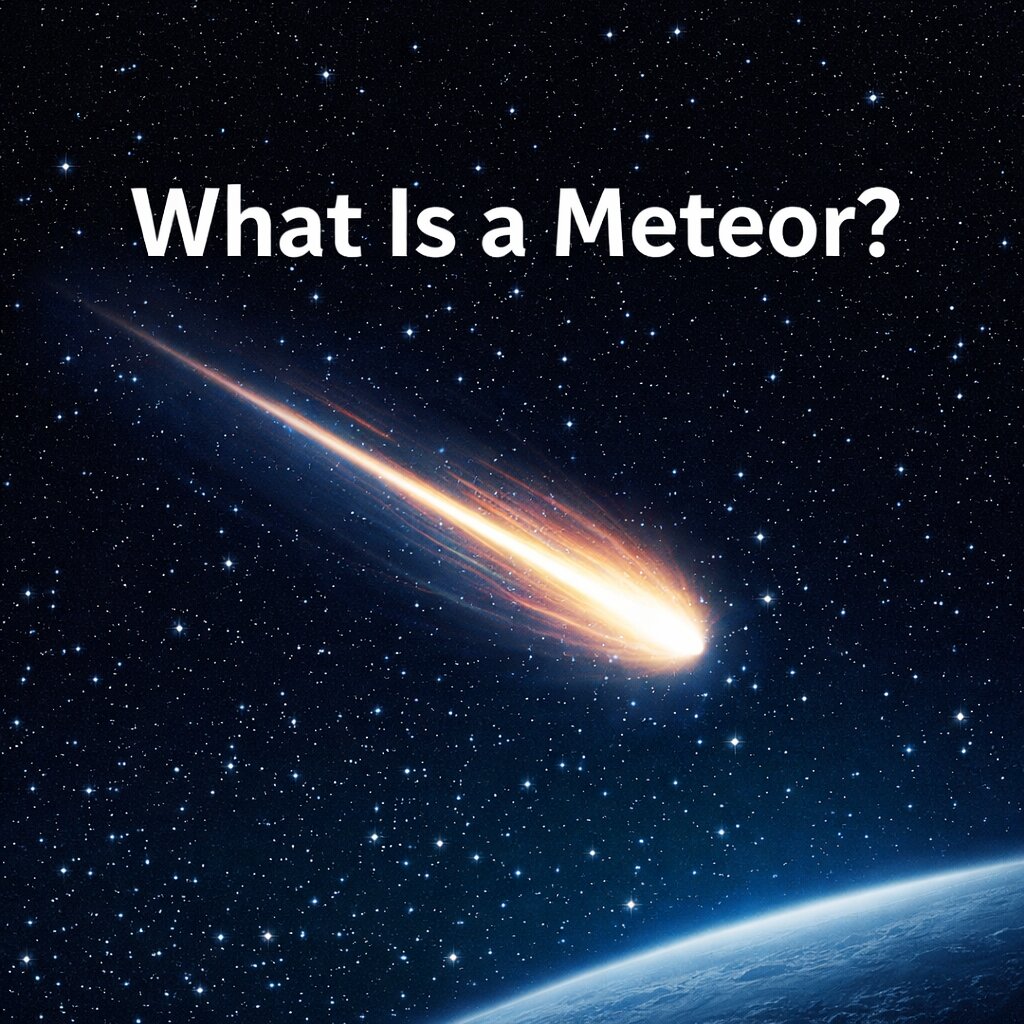

When you see a bright streak of light flash across the night sky, you are witnessing a meteor. Often called a “shooting star,” a meteor is not actually a star at all. It is a small piece of space rock burning up as it enters Earth’s atmosphere.
Understanding what a meteor is requires looking at the difference between meteoroids, meteors, and meteorites. These terms are related but describe different stages of the same object.
Meteoroid vs Meteor vs Meteorite
The confusion usually starts with terminology.
A meteoroid is a small rocky or metallic object travelling through space. These can range in size from tiny grains of dust to larger fragments several metres across. Most originate from comets or asteroids.
A meteor is the streak of light produced when a meteoroid enters Earth’s atmosphere and burns up due to friction and intense heat. The glowing trail is what we see from the ground.
If part of the object survives the fiery descent and lands on Earth, it becomes a meteorite.
So the same object can be called three different things depending on where it is and what is happening to it.
What Causes a Meteor to Glow?
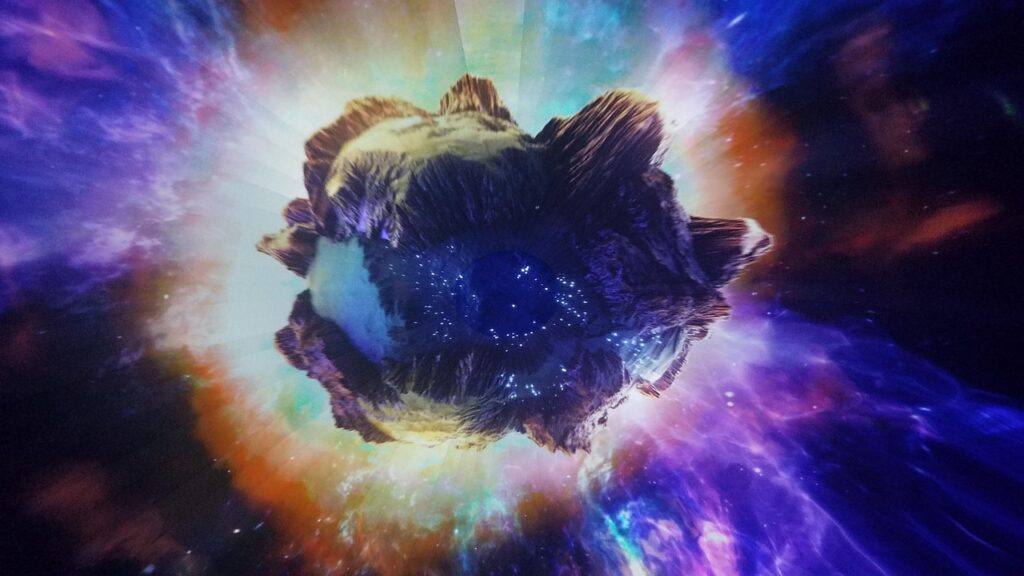
When a meteoroid enters Earth’s atmosphere, it travels at extremely high speeds, often between 11 and 72 kilometres per second.
At these speeds, the air in front of the object compresses rapidly. This compression generates intense heat, causing the surface of the meteoroid to vaporise in a process called ablation. The heated gases and glowing particles create the bright streak we call a meteor.
Most meteors burn up completely before reaching the ground. The majority are no larger than a pebble.
What Is a Shooting Star?
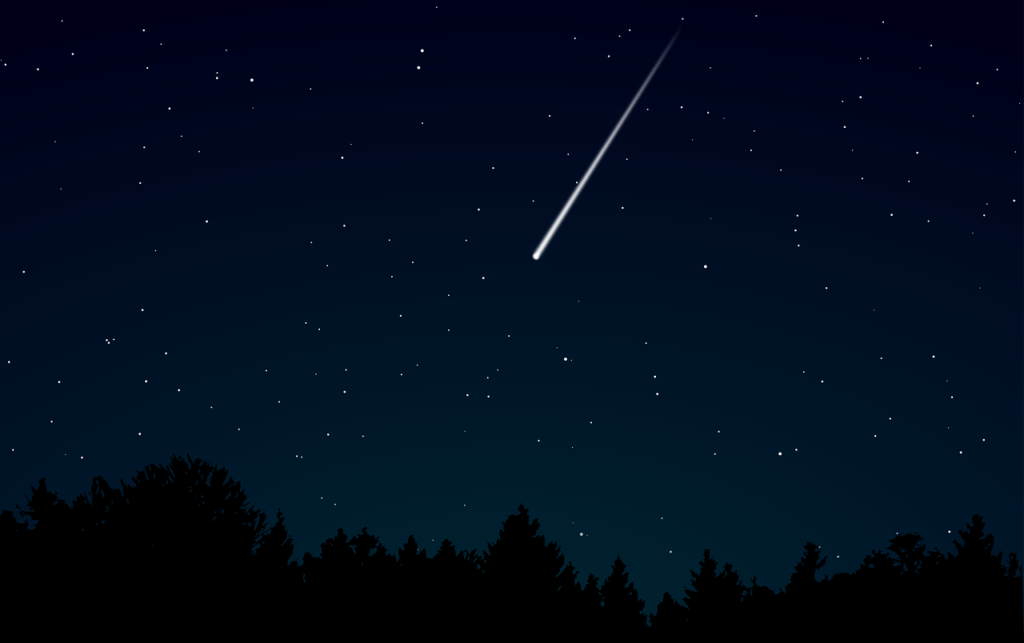
The term “shooting star” is a popular name for a meteor. Ancient observers believed these streaks of light were falling stars. Today, we know they are small pieces of cosmic debris interacting with Earth’s atmosphere.
Shooting stars can appear anywhere in the sky and usually last only a few seconds. Some are faint and barely visible. Others are bright enough to light up the landscape.
What Is a Fireball?
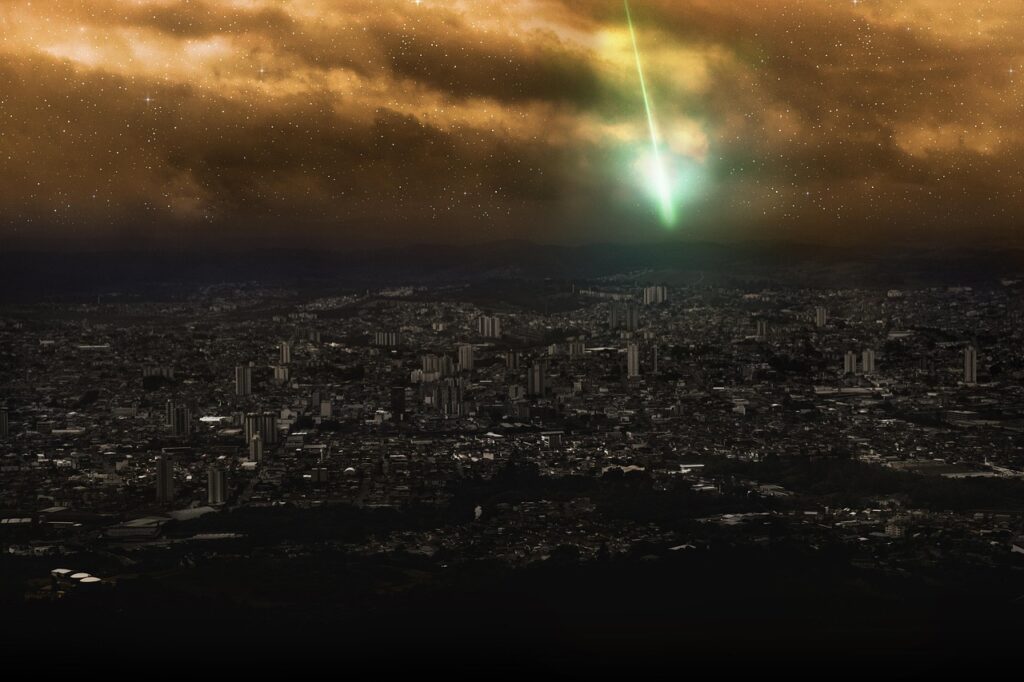
Some meteors are exceptionally bright. These are called fireballs.
A fireball is a meteor that shines brighter than the planet Venus. Larger meteoroids create more dramatic displays and may produce fragmentation or even sonic booms if they penetrate deeply into the atmosphere.
Occasionally, fireballs result in meteorites reaching the surface.
What Are Meteor Showers?
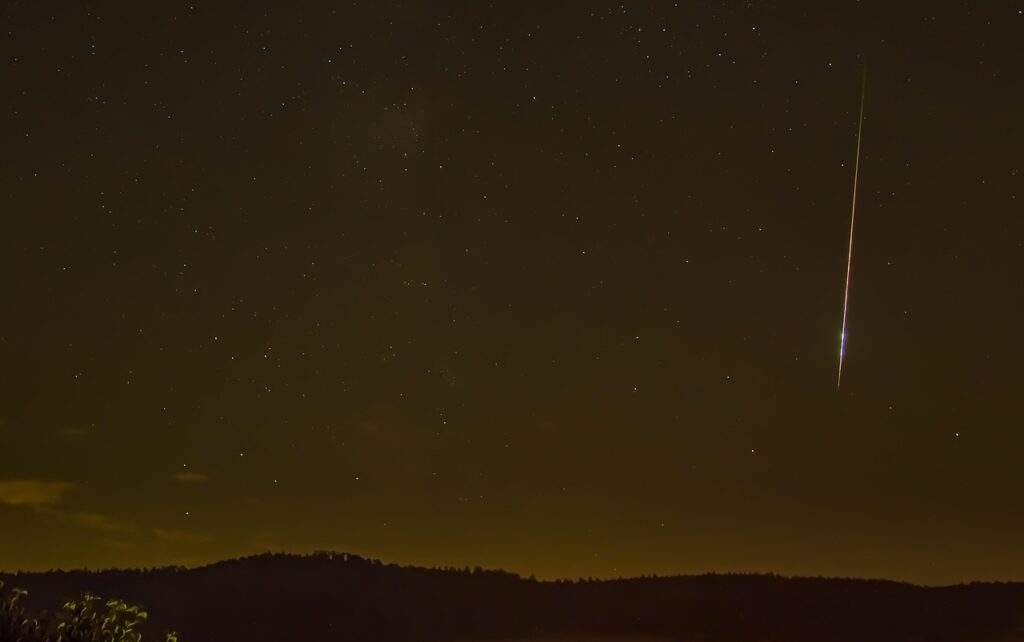
At certain times of the year, Earth passes through streams of debris left behind by comets. When this happens, many meteoroids enter the atmosphere in a short period, creating a meteor shower.
Meteor showers are named after the constellation from which the meteors appear to originate. For example, the Perseids appear to radiate from the constellation Perseus.
During peak activity, observers may see dozens of meteors per hour under dark skies.
Are Meteors Dangerous?
Most meteors are harmless. They burn up high in the atmosphere, typically between 70 and 100 kilometres above Earth’s surface.
However, larger objects can survive atmospheric entry. While impacts are rare, Earth has experienced meteorite strikes throughout its history. Fortunately, large impact events are extremely uncommon in modern times.
Planetary defence programmes around the world actively monitor near-Earth objects to reduce potential risk.
Why Studying Meteors Matters
Meteors offer valuable scientific insight. By analysing meteorites, scientists can study the early Solar System, as many meteorites contain material that formed over 4.5 billion years ago.
Meteor observations also help researchers understand how Earth interacts with cosmic debris and how planetary atmospheres protect surfaces from space hazards.
Every shooting star is a reminder that our planet moves through a dynamic and debris-filled Solar System.