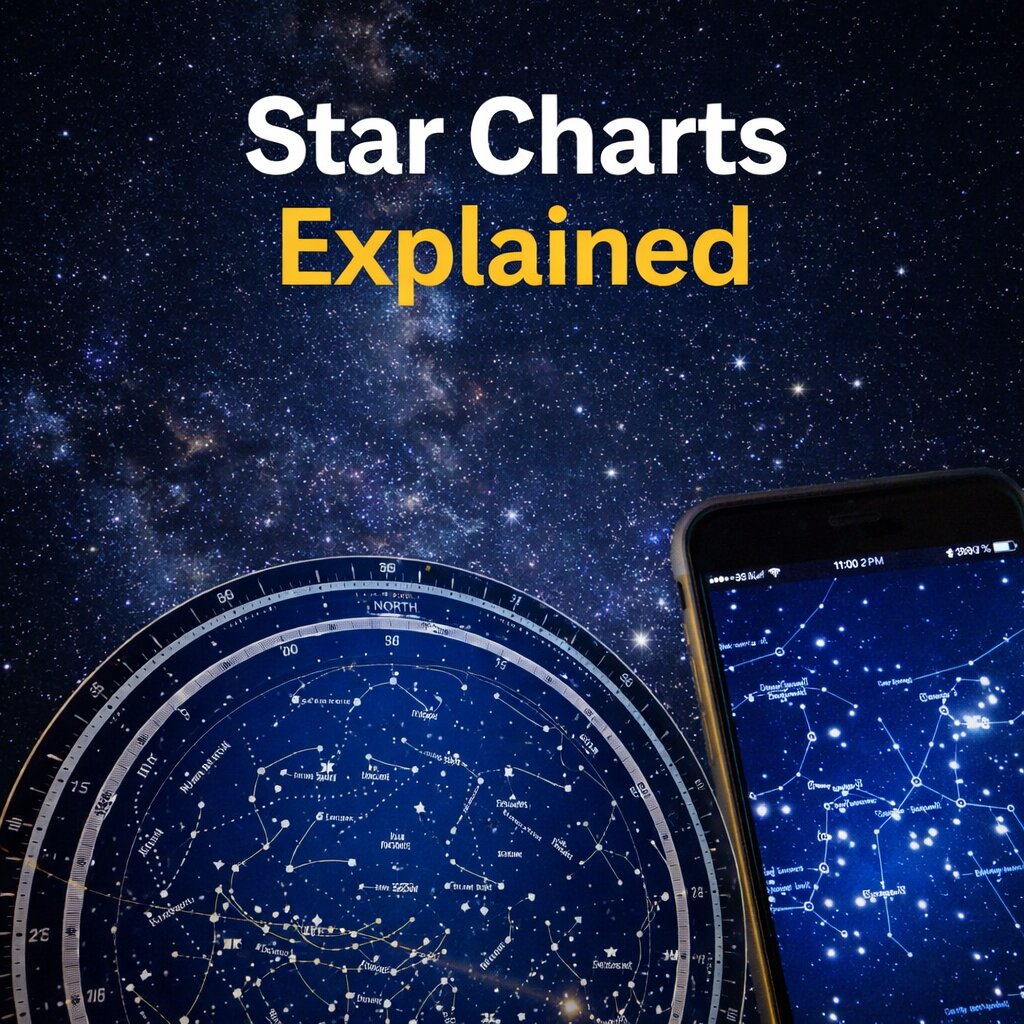

If you have ever looked up at the night sky and wondered how astronomers know what they are looking at, the answer often starts with star charts.
Star charts are visual maps of the night sky. They show the positions of stars, constellations, planets, and deep-sky objects as seen from Earth. For beginners and experienced observers alike, star charts are one of the most important tools in astronomy.
In this guide, we explain how star charts work, how to read them, and how mobile apps are transforming the way we explore the night sky.
What Are Star Charts?

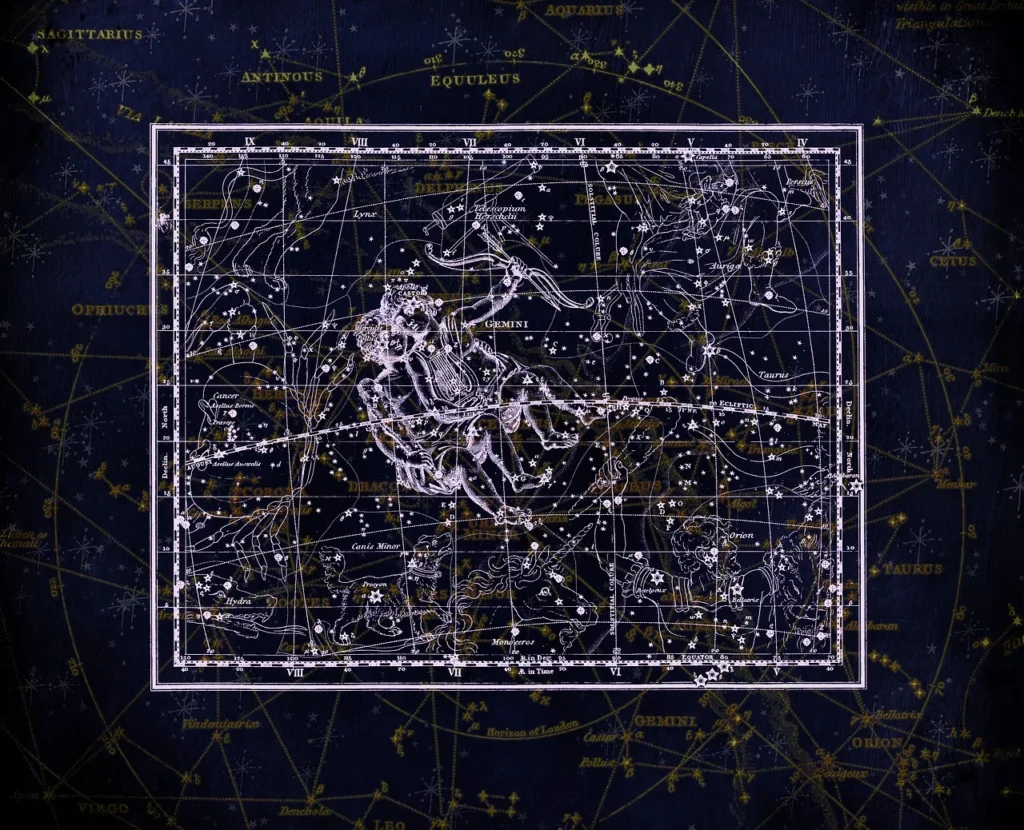
Star charts are two-dimensional representations of the sky at a specific time and location. Because Earth rotates, the sky appears to move throughout the night and across seasons. Star charts account for this motion.
A typical star chart shows:
- Constellation outlines
- Named stars
- Celestial coordinates
- The horizon line
- Cardinal directions
Some charts also include planets, the Milky Way band, and notable deep-sky objects such as nebulae and star clusters.
Unlike a regular map, star charts represent the sky as if you are standing beneath it and looking upward. This means orientation can feel reversed at first, especially for beginners.
Why the Sky Changes Throughout the Year
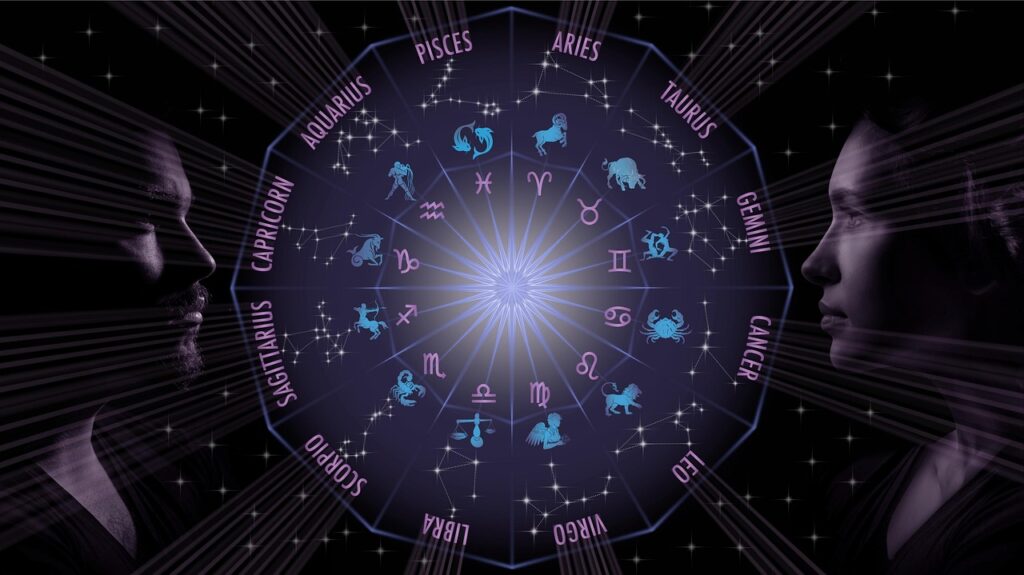
One of the first things to understand about star charts is that they are time-sensitive.
As Earth orbits the Sun, different constellations become visible at different times of the year. For example, Orion dominates summer skies in the Southern Hemisphere but shifts position seasonally.
Star charts are usually designed for a specific month and time. That is why many printed charts are labelled by season. To use a star chart correctly, you must match it to both your location and the time of observation.
This is also why star charts in South Africa differ from those in Europe or North America. Your latitude determines which constellations are visible above your horizon.
How to Read a Star Chart
Reading star charts becomes intuitive with practice. The key is understanding orientation and movement.
First, identify the cardinal directions on the chart. Most star charts place north at the bottom for Southern Hemisphere observers and at the top for Northern Hemisphere observers. Always confirm which orientation the chart assumes.
Next, find a bright and easily recognisable constellation. In South Africa, the Southern Cross is an excellent starting point. Locate it on the chart and then compare its position to what you see in the sky.
Hold the chart above your head so that the direction you are facing matches the direction on the map. If you are facing south, rotate the chart until south on the chart aligns with your real horizon.
With time, you will begin recognising patterns. Star charts help train your brain to see constellations instead of random points of light.
Planispheres: A Rotating Star Chart
One of the most useful physical tools is a planisphere. This is a rotating star chart with a circular overlay that allows you to set the date and time.
By adjusting the wheel, the planisphere reveals which stars and constellations are visible at that specific moment. It automatically accounts for Earth’s rotation and seasonal movement.
Planispheres are simple, durable, and do not require batteries. For beginners learning the sky, they are often more educational than relying immediately on digital tools.
Mobile Apps and Digital Sky Maps

Modern astronomy has been transformed by mobile apps. Digital star charts use your phone’s GPS, compass, and gyroscope to show exactly what you are looking at in real time.
When you point your phone at the sky, the app overlays constellation names, planets, and deep-sky objects directly onto your screen. This removes much of the initial confusion beginners experience.
Popular mobile sky map apps allow users to:
- Identify stars instantly
- Track satellites
- Locate planets
- Preview meteor showers
- Simulate the sky for future dates
While apps are powerful, it is still beneficial to understand how traditional star charts work. Knowing the mechanics behind the sky improves your overall astronomy skills and reduces reliance on technology.
Tips for Using Star Charts Successfully
Start with bright constellations and slowly build familiarity. Do not try to memorise the entire sky at once.
Give your eyes time to adjust to darkness. Avoid bright phone screens if you are using printed star charts.
Observe consistently. The more frequently you look up, the easier it becomes to recognise seasonal patterns.
Finally, be patient. The night sky is a skill that develops over time.
Mapping the Sky for Yourself
Star charts remain one of the most valuable tools in amateur astronomy. Whether printed on paper, built into a planisphere, or integrated into a mobile app, they connect us to the structured beauty of the cosmos.
Learning to use star charts does more than help you identify constellations. It teaches you how Earth moves, how seasons shift, and how our planet fits within the wider universe.
The next time you step outside on a clear night, bring a star chart with you. The sky is not random. It is mapped, structured, and waiting to be explored.