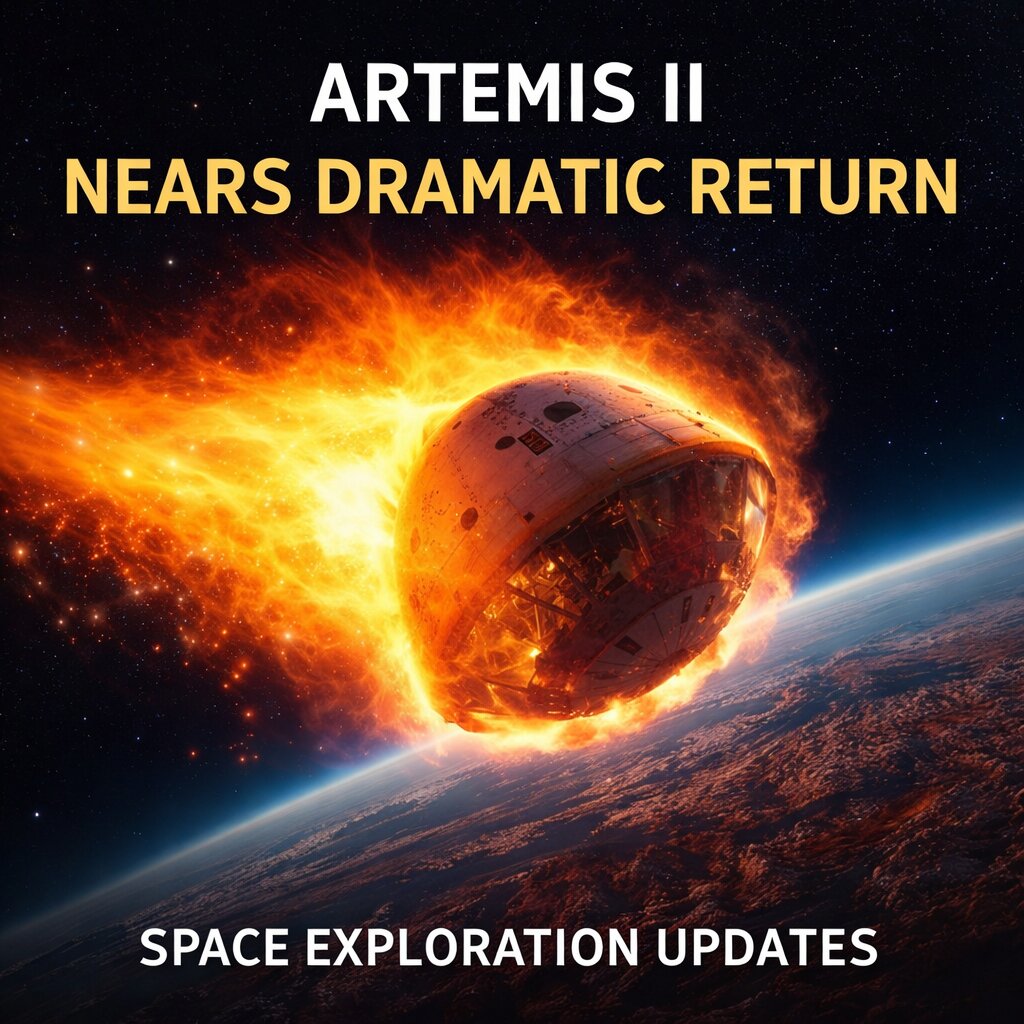

It’s an exciting moment for space exploration as NASA’s Artemis II mission enters its final phase. After travelling farther than any humans in history and orbiting the Moon, the crew is now preparing for a dramatic return to Earth.
But Artemis II isn’t the only story making waves. From unusual exoplanet discoveries to strange comet compositions and increasing light pollution on Earth, the latest space updates remind us just how dynamic and unpredictable the universe truly is.
Let’s break down the biggest developments shaping astronomy and space exploration right now.
Artemis II Prepares For High-Speed Return
NASA’s Artemis II crew is in its final days in space, preparing for one of the most intense parts of the mission — reentry into Earth’s atmosphere. Travelling at an incredible 23,840 mph, the Orion spacecraft will become a blazing fireball as it descends toward the Pacific Ocean.
Splashdown is scheduled for April 10, 2026, marking the end of a historic journey. The crew has already begun securing equipment and preparing the capsule for the high-speed return, ensuring everything is ready for a safe landing.
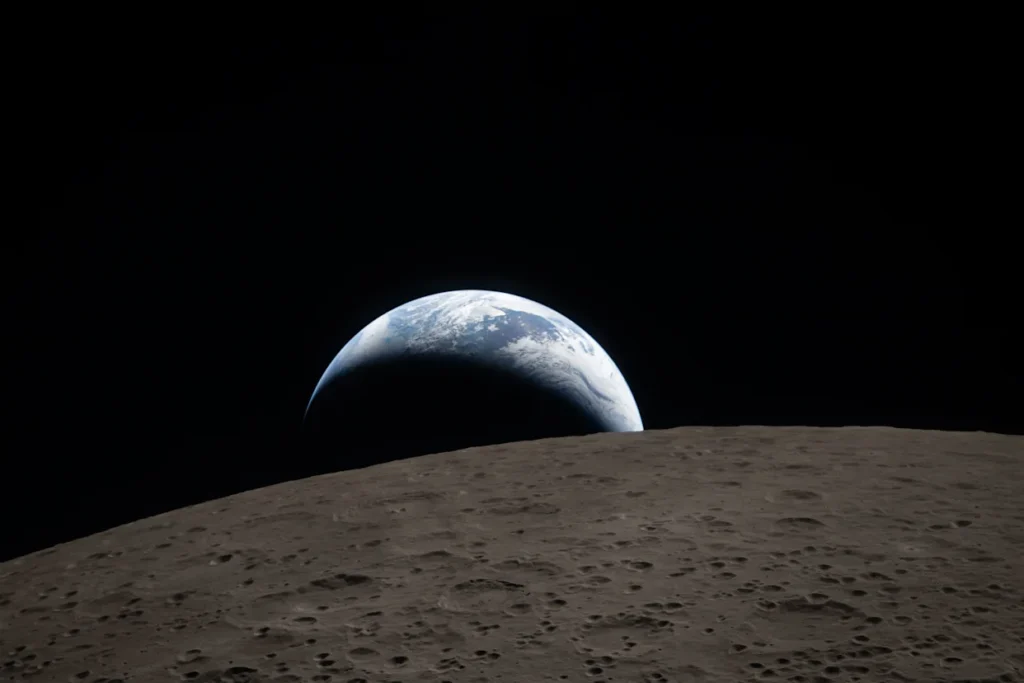
During the mission, the astronauts achieved a major milestone by travelling farther from Earth than any humans before them. They also captured breathtaking images of the far side of the Moon, offering new perspectives on our closest celestial neighbour.
This mission is a critical step forward in NASA’s Artemis programme, paving the way for future lunar landings and long-term exploration.
Mission Achievements And What Comes Next
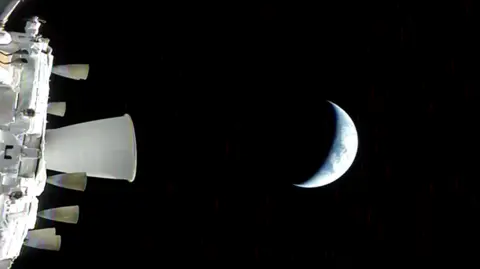
Artemis II has proven that human deep-space missions beyond low Earth orbit are not only possible but sustainable with modern technology. The mission’s success builds confidence for the next phases of lunar exploration.
Looking ahead, Artemis III, planned for 2027, aims to return humans to the Moon’s surface for the first time since the Apollo era. Artemis IV will expand on this by supporting long-term lunar infrastructure and exploration capabilities.
The data gathered during Artemis II will play a key role in shaping these missions, particularly in areas such as navigation, life support, and deep-space communication.
Strange And Surprising Discoveries Across The Universe
While Artemis II dominates headlines, astronomers have also made several fascinating discoveries that challenge our understanding of space.
A newly identified Jupiter-sized “forbidden planet” has caught scientists’ attention due to its unusual characteristics, defying existing models of planetary formation. At the same time, researchers are observing a young magnetar — an extremely magnetic neutron star — offering a rare glimpse into one of the universe’s most powerful phenomena.
These discoveries highlight how much there is still to learn about the cosmos, even as our technology continues to improve.
A Comet Rich In Alcohol And Other Cosmic Oddities
In one of the more unexpected findings, comet 3I/ATLAS has been discovered to contain unusually high levels of alcohol-related compounds. While this doesn’t mean space is filled with drinkable substances, it does provide valuable insight into the chemical complexity of comets.
Comets like this are considered time capsules from the early solar system, preserving materials that existed during its formation. Studying their composition helps scientists understand how organic molecules may have been delivered to Earth.
Meanwhile, a meteor breaking apart over Europe served as a reminder of the dynamic and sometimes hazardous nature of our cosmic neighbourhood.
Earth’s Growing Light Pollution Problem
Back on Earth, satellite data reveals a concerning trend: artificial light pollution has increased by approximately 16% since 2014. This has significant implications for both astronomy and the natural environment.
For astronomers, increased light pollution makes it harder to observe distant objects, reducing the effectiveness of ground-based telescopes. For ecosystems, excessive artificial lighting can disrupt wildlife behaviour and natural cycles.
This growing issue highlights the need for more sustainable lighting practices and greater awareness of how human activity impacts our view of the night sky.
A Defining Moment For Space Exploration
As Artemis II prepares for its return, it marks a defining moment in humanity’s journey back to deep space. The mission not only demonstrates our ability to travel farther than ever before but also sets the stage for a new era of exploration.
Combined with the latest discoveries across the universe, it’s clear that we are entering an exciting period for astronomy and space science. Each new mission and observation brings us closer to understanding our place in the cosmos.
Stay Tuned For Splashdown
All eyes are now on April 10, as the Artemis II crew makes their high-speed return to Earth. It’s a moment that will be watched around the world, a fiery conclusion to a mission that has already made history.
And as always, we’ll be here to bring you the latest updates from the edge of space.