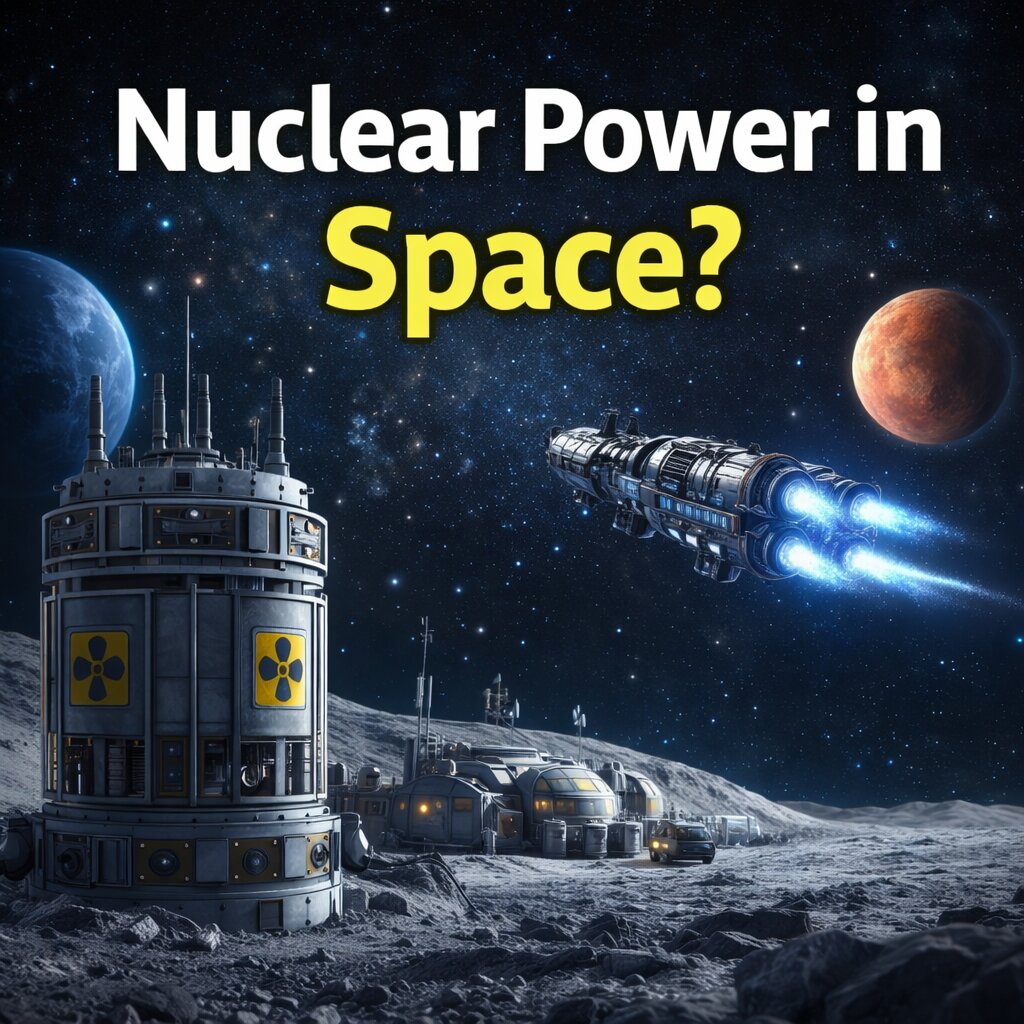

The future of space exploration may be about to take a major leap forward. Recent statements from the White House and NASA leadership point toward a bold new direction: the development of nuclear power systems for use in space. As part of a proposed National Initiative for American Space Nuclear Power, this technology could redefine how humanity explores the Moon, Mars, and beyond.
While the idea of nuclear energy in space is not entirely new, the renewed focus suggests that it may soon become a central pillar of long-term missions. If realised, this shift could enable sustained human presence far beyond Earth’s orbit.
Why nuclear power matters in space
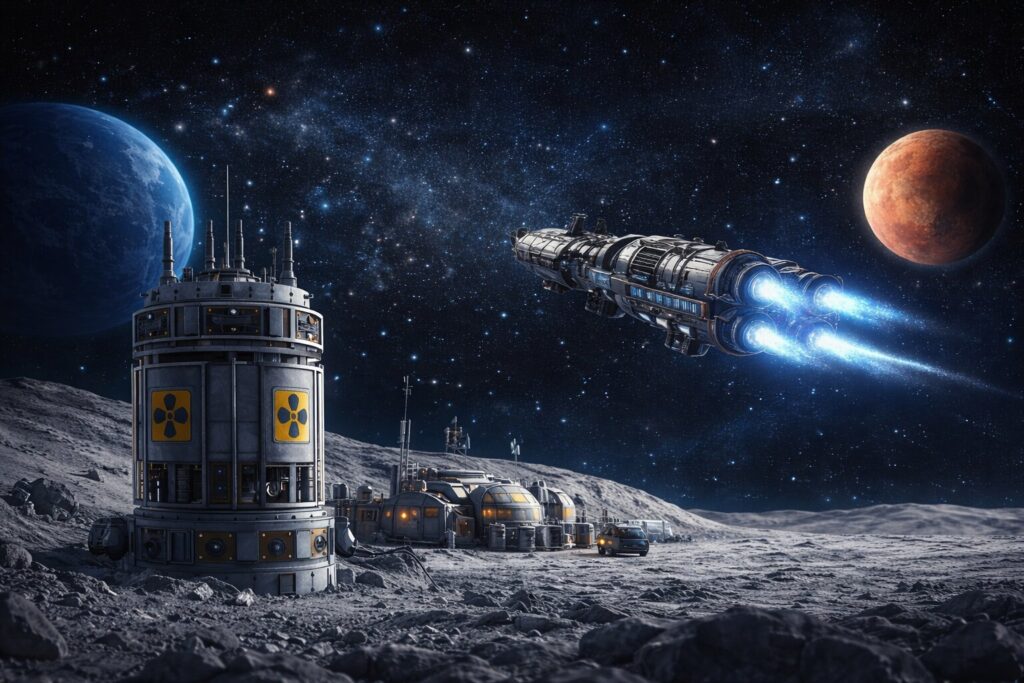
Space is an unforgiving environment where traditional energy solutions face serious limitations. Solar power, while effective in Earth orbit, becomes less reliable in regions with long nights, dust storms, or extreme distances from the Sun. This is particularly true on the Moon’s shadowed craters and on Mars during global dust storms.
Nuclear power offers a solution to these challenges. It provides a consistent and long-lasting energy source that does not depend on sunlight. This means spacecraft, habitats, and scientific equipment could operate continuously, regardless of environmental conditions.
In practical terms, nuclear systems could supply electricity, generate heat to keep equipment operational in freezing temperatures, and even power propulsion systems for deep-space travel. This reliability is exactly what is needed for permanent bases on other worlds.
From concept to reality
The idea of nuclear power in space has been explored for decades. Early missions used small nuclear batteries, known as radioisotope thermoelectric generators (RTGs), to power spacecraft like Voyager and Curiosity. However, the new initiative aims to go far beyond these systems.
Modern space nuclear technology could include compact fission reactors capable of producing significantly more power. These reactors would be designed to operate safely in space, with multiple layers of containment and control systems.
If implemented, such systems could support lunar bases by powering life support systems, scientific experiments, and communication networks. On Mars, they could enable human settlements to function independently of solar limitations, making long-term habitation far more feasible.
What a nuclear-powered space future could look like
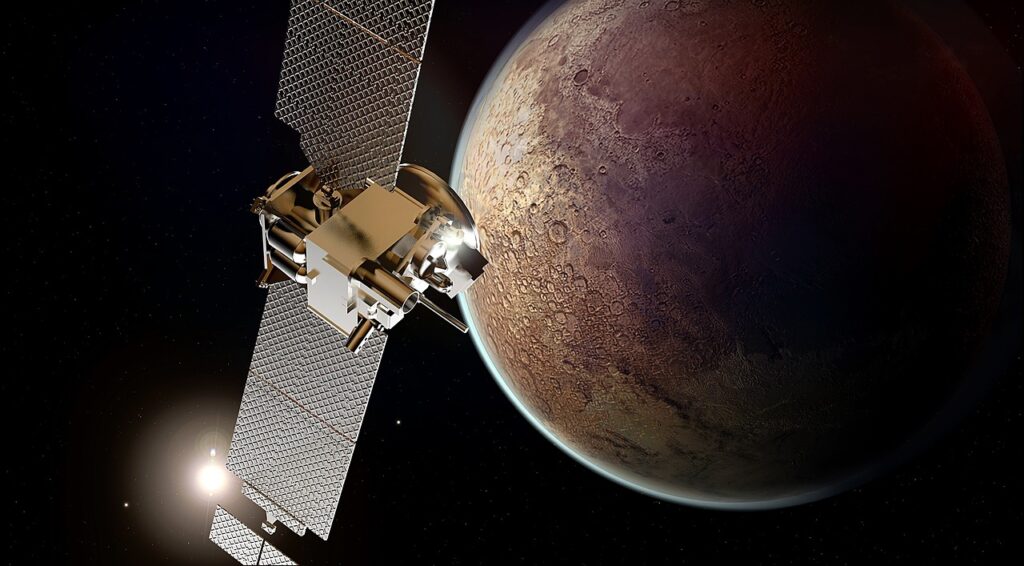
If this initiative moves forward, the implications are enormous. Imagine a permanent base on the Moon, where astronauts live and work with a stable energy supply. Nuclear reactors could provide continuous power during the two-week-long lunar night, something solar panels alone cannot achieve.
On Mars, nuclear energy could be the backbone of human settlements. It could power habitats, fuel production systems, and even agricultural operations needed to sustain life. With reliable energy, missions could shift from short-term exploration to long-term colonisation.
Here are some potential applications of nuclear power in space:
- Continuous power for lunar and Martian bases
- Heating systems to protect equipment and habitats
- Advanced propulsion for faster deep-space travel
- Support for mining and resource extraction on other worlds
- Reliable energy for long-duration scientific missions
These possibilities highlight how transformative this technology could be for space exploration.
Challenges and considerations
Despite its promise, nuclear power in space comes with challenges. Safety is a major concern, particularly during launch. Any nuclear system must be designed to withstand extreme conditions and prevent the release of radioactive material.
There are also political and regulatory hurdles. International agreements and public perception will play a significant role in how quickly these technologies can be developed and deployed.
Technical challenges remain as well. Engineers must ensure that reactors can operate reliably in microgravity, extreme temperatures, and radiation-heavy environments. However, advances in materials science and engineering are steadily addressing these issues.
A turning point for space exploration
The renewed push for nuclear power in space signals a potential turning point in humanity’s journey beyond Earth. With support from both government leadership and NASA, this initiative could accelerate the timeline for establishing a permanent presence on the Moon and Mars.
If successful, nuclear energy could become the foundation of a new era in space exploration, one where missions are no longer limited by energy constraints. Instead, humanity could expand deeper into the solar system with the power needed to sustain life and innovation.
The question is no longer whether nuclear power can be used in space, but how soon it will become a reality. And when it does, it may change everything we know about exploring the cosmos.