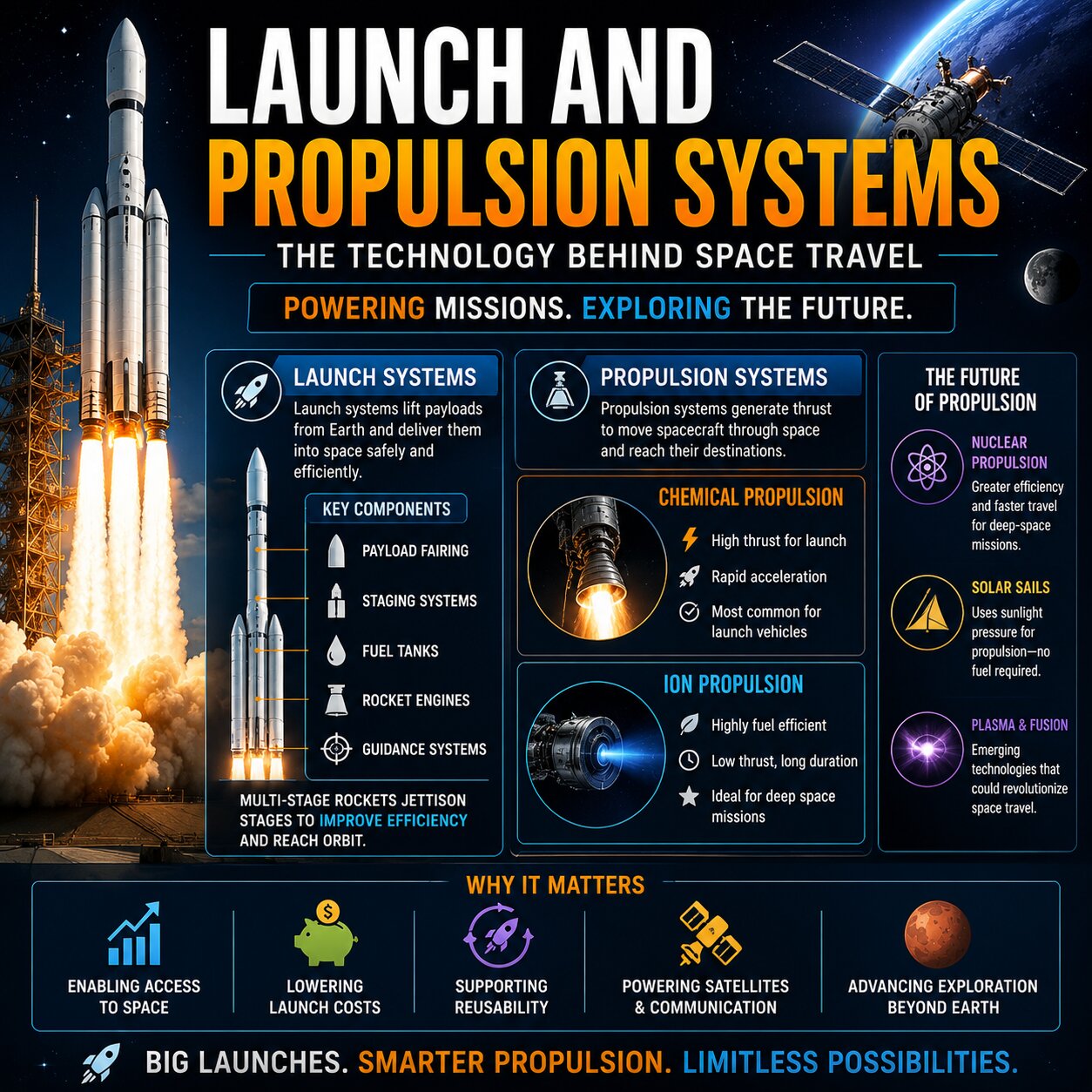

Modern space exploration would not exist without powerful launch and propulsion systems. These technologies are responsible for lifting spacecraft beyond Earth’s atmosphere, guiding missions through space, and helping probes, satellites, and astronauts reach distant destinations. Understanding launch and propulsion systems is essential for anyone interested in how rockets, satellites, and deep-space missions operate.
From chemical rocket engines to advanced ion propulsion concepts, propulsion technology continues to evolve rapidly as humanity pushes further into space. Modern launch systems are becoming more reusable, efficient, and capable of supporting ambitious missions to the Moon, Mars, and beyond.
What are launch systems?
Launch systems are the vehicles and technologies used to transport payloads from Earth into space. These systems include rockets, boosters, fuel tanks, guidance systems, and launch infrastructure designed to overcome Earth’s gravity.
A launch vehicle must generate enormous thrust to escape the atmosphere while protecting its payload during ascent. Launch systems are carefully engineered to balance fuel efficiency, payload capacity, reliability, and safety.
Main components of launch systems
Most modern launch vehicles include several important elements:
- Rocket engines
- Fuel and oxidiser tanks
- Staging systems
- Guidance and navigation systems
- Payload fairings
- Booster rockets
Each component plays a vital role in ensuring a successful launch.
Multi-stage rockets
Many launch systems use multiple stages to improve efficiency. As fuel is consumed, empty stages are detached to reduce weight, allowing the rocket to accelerate more effectively.
This design has become standard for many orbital and deep-space missions.
How propulsion systems work
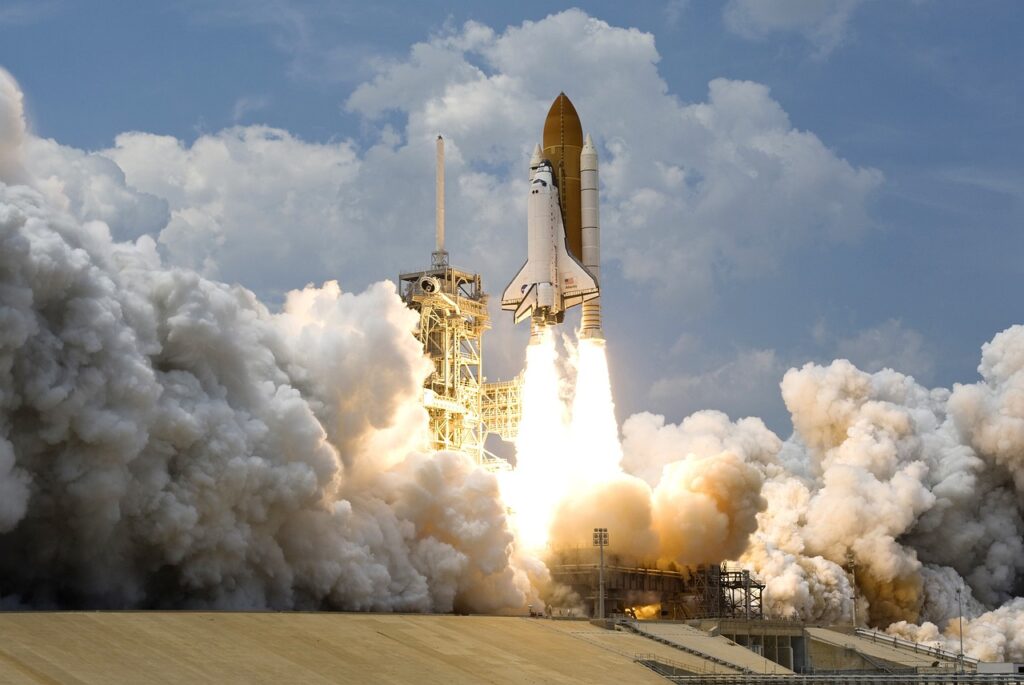
Propulsion systems generate the force needed to move spacecraft through space. Most traditional rockets operate using Newton’s Third Law of Motion, where hot gases expelled downward create thrust upward.
The type of propulsion system used depends on the mission objectives, payload requirements, and travel distance.
Chemical propulsion
Chemical rockets remain the most common propulsion technology for launches. These systems burn fuel and oxidisers to create high-speed exhaust gases that produce massive thrust.
Chemical propulsion offers:
- High launch power
- Rapid acceleration
- Strong lifting capability
- Reliable launch performance
However, chemical rockets consume large amounts of fuel and are expensive to operate.
Ion propulsion systems
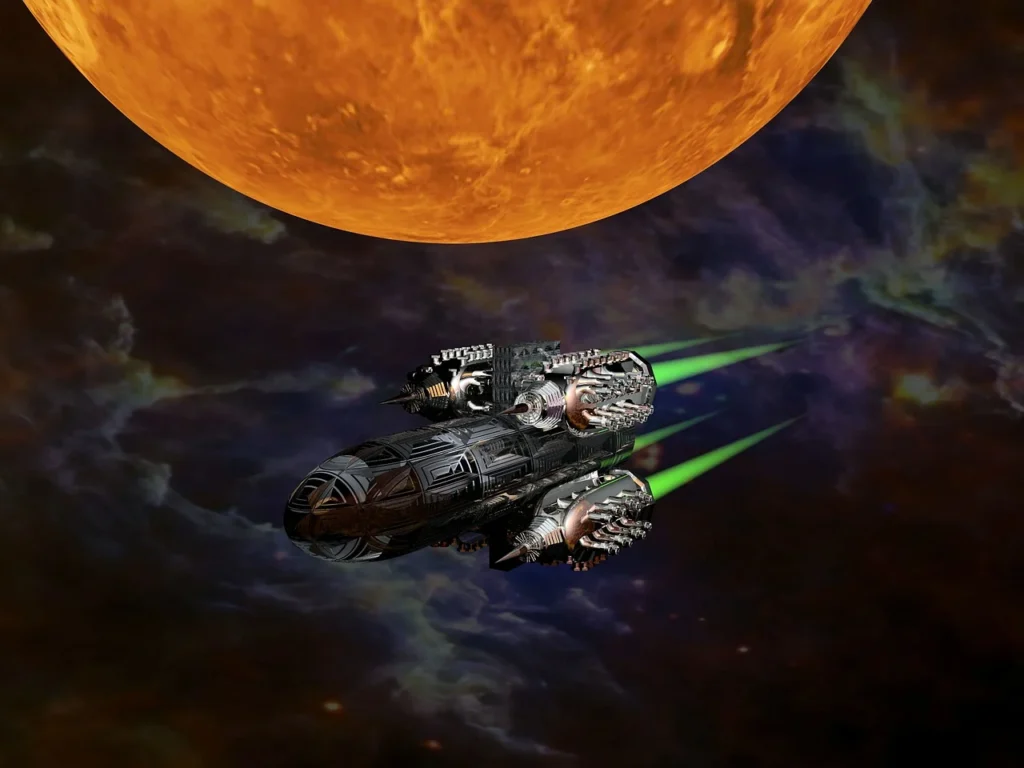
Ion propulsion represents a more advanced and fuel-efficient technology often used for long-duration space missions. Instead of explosive combustion, ion engines use electrically charged particles accelerated by electric fields.
Ion propulsion provides:
- Exceptional fuel efficiency
- Long operational lifespan
- Continuous low-thrust acceleration
- Efficient deep-space travel
While ion engines generate far less thrust than chemical rockets, they are highly effective for missions travelling vast distances over extended periods.
Reusable launch technology is changing space travel
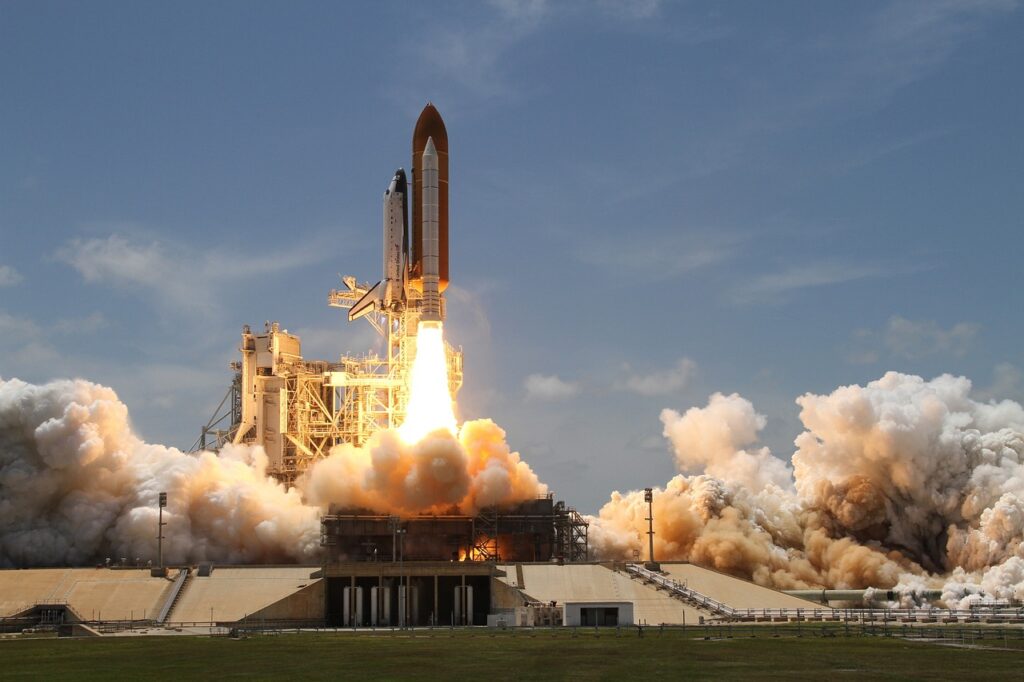
One of the biggest developments in modern launch and propulsion systems is reusability. Traditional rockets were discarded after each mission, making launches extremely expensive.
Today, companies and space agencies are developing reusable boosters and spacecraft that can land and fly again. Reusable systems help reduce launch costs while increasing mission frequency.
Benefits of reusable launch systems
Reusable technology offers several advantages:
- Lower operational costs
- Faster launch turnaround
- Reduced manufacturing waste
- Greater mission accessibility
- Increased commercial opportunities
This shift is helping drive the rapid expansion of private spaceflight and satellite deployment.
Future propulsion technologies
Scientists and engineers continue exploring new propulsion methods that may revolutionise future space travel.
Nuclear propulsion
Nuclear thermal and nuclear electric propulsion systems could dramatically reduce travel times for deep-space missions by providing more efficient long-duration thrust.
Solar sails
Solar sails use sunlight pressure to propel spacecraft without traditional fuel. While acceleration is extremely gradual, solar sails could support lightweight long-term missions.
Plasma and fusion concepts
Experimental plasma and fusion propulsion systems may one day enable faster interplanetary travel and support human exploration of distant worlds.
Although many of these systems remain in development, they represent exciting possibilities for the future of space exploration.
Powering humanity’s journey into space
Launch and propulsion systems form the backbone of modern space exploration. Without these technologies, satellites, planetary probes, crewed missions, and scientific discoveries beyond Earth would not be possible.
As launch systems become more reusable and propulsion technologies grow more advanced, humanity moves closer to a future of expanded exploration across the Solar System and beyond. Understanding launch and propulsion systems helps reveal the incredible engineering that powers every journey into space.