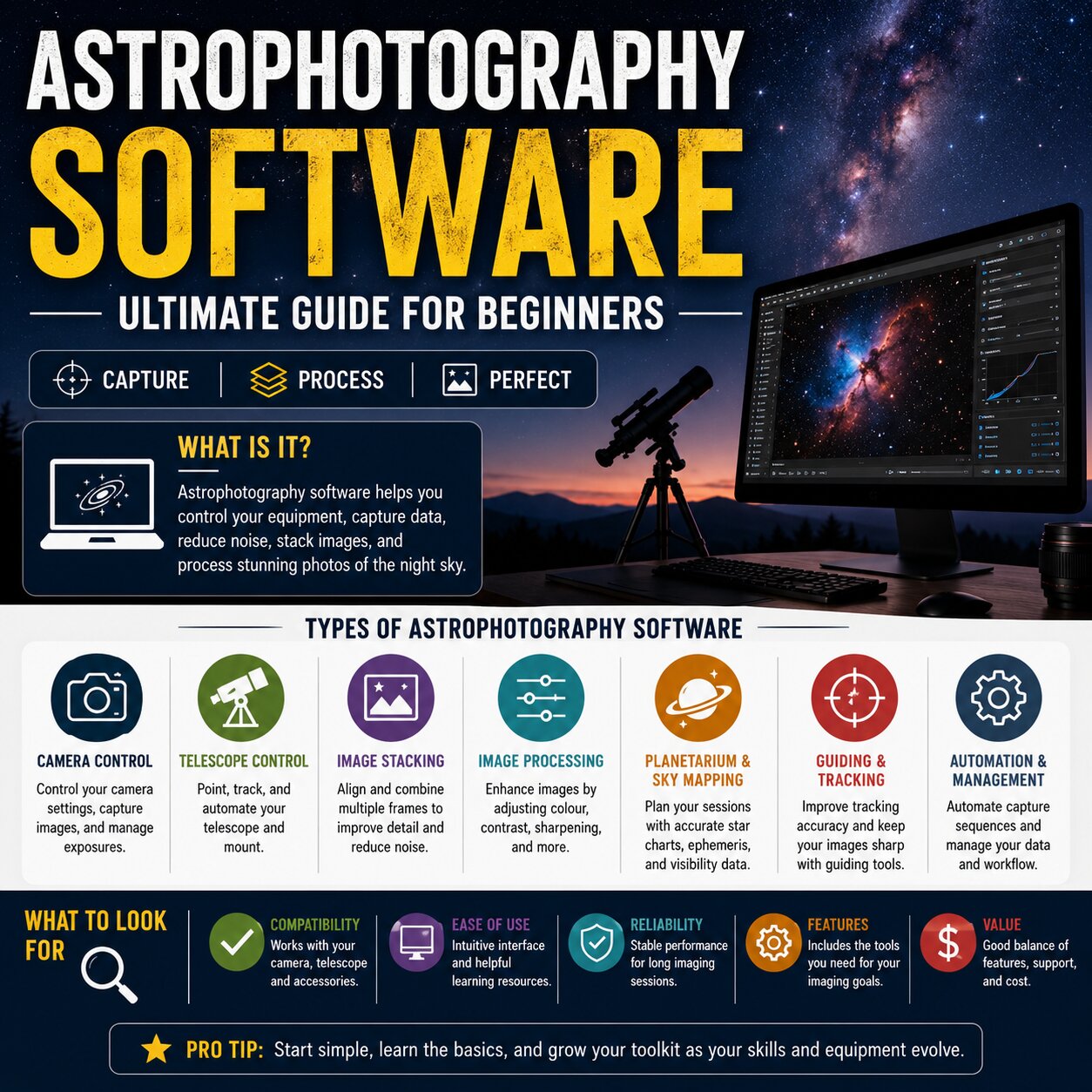

Astrophotography software plays a critical role in modern space photography, helping astronomers and hobbyists capture, process, organise, and enhance images of the night sky. While telescopes, cameras, and mounts are essential hardware components, software is often what transforms raw astronomical data into breathtaking final images.
From tracking stars and controlling cameras to stacking exposures and reducing image noise, astrophotography software helps photographers overcome many of the challenges associated with capturing deep-space objects and celestial events.
Understanding the different types of astrophotography software and what they are designed to do can help beginners choose the right tools for their imaging journey without becoming overwhelmed by technical complexity.
Why astrophotography software matters
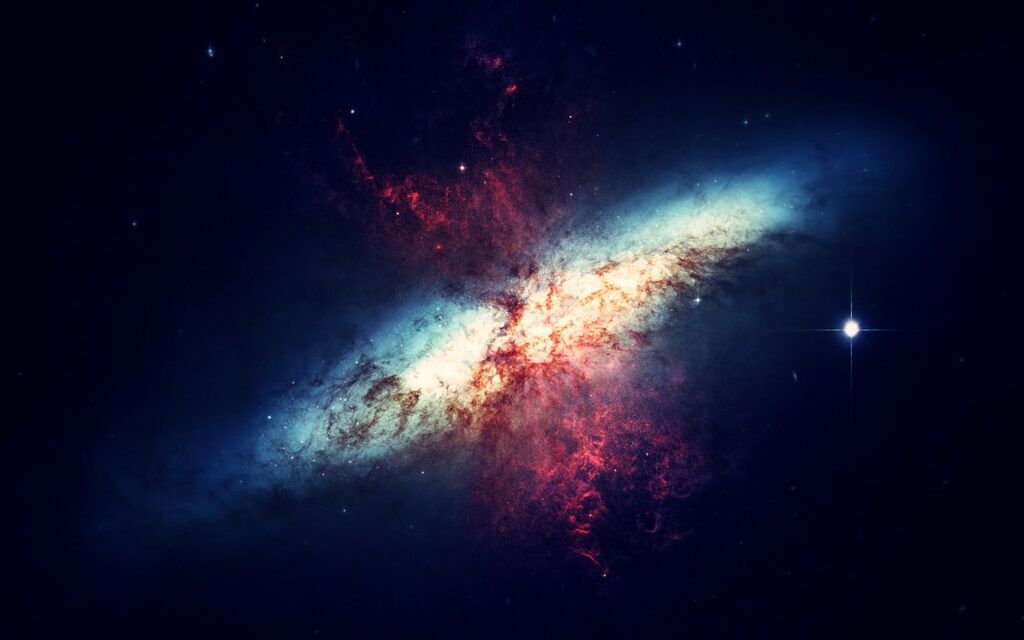
Capturing space images is far more complicated than ordinary photography. Astronomers often work in low-light conditions while photographing extremely distant objects that require long exposures and careful tracking.
Raw astrophotography images frequently contain noise, atmospheric distortion, colour imbalance, and tracking imperfections. Software helps correct many of these issues while improving image clarity and detail.
Modern astrophotography workflows also involve managing large image datasets, controlling specialised hardware, and planning observation sessions based on weather, celestial positioning, and sky conditions.
Without proper software support, many astrophotography tasks would become extremely difficult or time-consuming for beginners and advanced users alike.
Main types of astrophotography software

Astrophotography software is usually divided into several categories based on its primary purpose within the imaging process.
Common types of astrophotography software include:
- Camera control software
- Telescope and mount control software
- Image stacking software
- Image processing and editing software
- Planetarium and sky-mapping software
- Guiding and tracking software
- Observatory automation software
- File management and image organisation software
Each category serves a different role during astrophotography sessions and post-processing workflows.
Some software platforms combine multiple functions together, while others specialise in specific tasks such as image calibration or telescope control.
What image stacking and processing software does
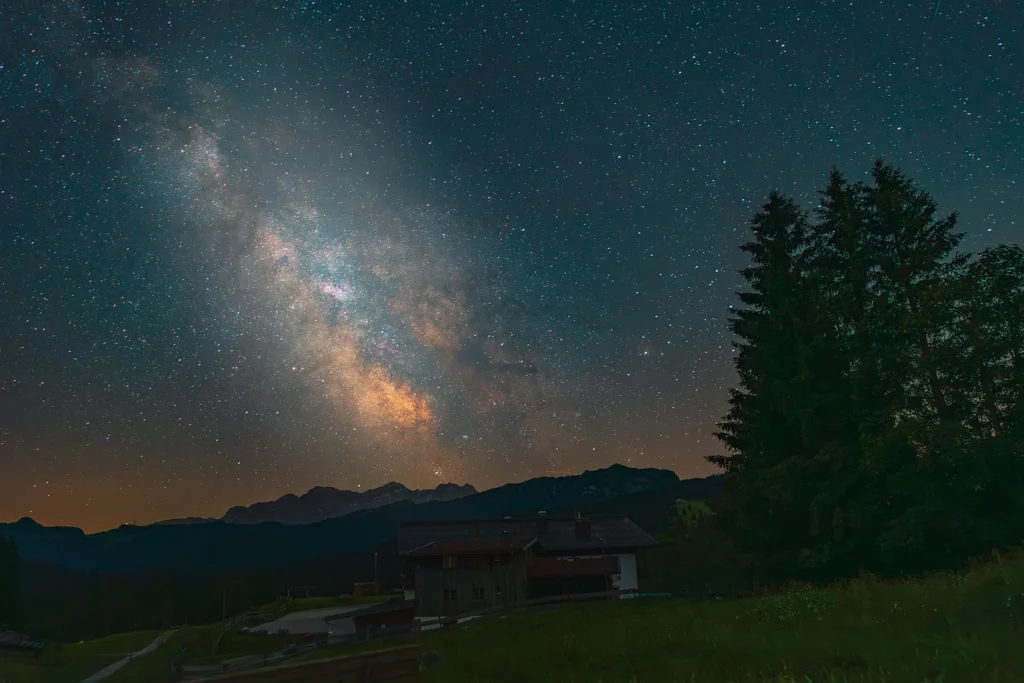
One of the most important areas of astrophotography software involves image stacking and processing. Since space objects are often extremely faint, astrophotographers capture multiple exposures and combine them to improve overall image quality.
Stacking software aligns and merges multiple images to increase detail while reducing noise. This process helps reveal faint nebulae, galaxies, star clusters, and planetary details that may not appear clearly in a single exposure.
Processing software is then used to adjust brightness, contrast, colours, sharpness, and noise reduction. These tools help astrophotographers produce cleaner and more visually striking final images.
Learning image processing can take time, but it remains one of the most rewarding aspects of astrophotography.
Features to look for in astrophotography software
Choosing astrophotography software depends heavily on experience level, equipment setup, and imaging goals. Beginners should focus on software that offers user-friendly interfaces and clear workflows rather than overly advanced technical features.
Important features to look for include compatibility with your telescope and camera equipment, stable performance, automation capabilities, image calibration tools, and reliable tracking support.
Good astrophotography software should also provide accurate star alignment tools, exposure controls, and image organisation systems that simplify large imaging sessions.
As astrophotographers gain experience, they often expand into more advanced software tools that offer greater customisation, automation, and precision control.
Building a better astrophotography workflow
Astrophotography software forms the foundation of modern astronomical imaging, helping users capture, process, and refine incredible views of the cosmos.
Understanding the different software categories and their functions allows beginners to build more efficient workflows while improving image quality over time.
Instead of rushing to download every available application, new astrophotographers should focus on understanding what each type of software is designed to accomplish and how it fits into the overall imaging process.
With the right combination of hardware, patience, and software knowledge, astrophotography becomes a powerful way to explore and document the wonders of the night sky.