Astronomers continue to report elevated solar activity as the Sun moves closer to the peak of its current solar cycle. Increased numbers of sunspots, frequent solar flares, and multiple coronal mass ejections have been observed in recent months, signalling a period of heightened activity that affects both space weather and skywatching conditions on Earth.
Solar cycles typically last around 11 years, moving between periods of low and high activity. As the Sun approaches its solar maximum, magnetic activity on its surface intensifies, leading to more dynamic and sometimes dramatic solar events.
What increased solar activity means
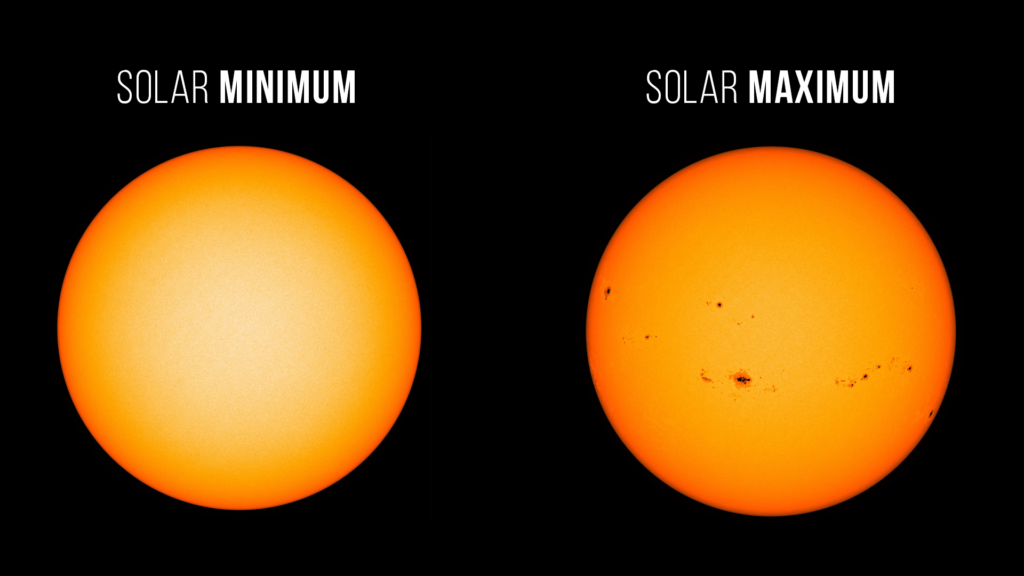
During periods of heightened activity, the Sun produces more sunspots, which are regions of intense magnetic fields. These areas are often associated with solar flares, sudden bursts of radiation that can release vast amounts of energy into space. Some flares are accompanied by coronal mass ejections, massive clouds of charged particles expelled from the Sun’s outer atmosphere.
When directed toward Earth, these particles interact with our planet’s magnetic field. This interaction can trigger geomagnetic storms, which are responsible for enhanced auroral displays and, in rare cases, disruptions to satellites, radio communications, and power systems.
Why scientists are watching closely
Monitoring solar activity is essential for understanding space weather and protecting modern infrastructure. Satellites, navigation systems, and even aviation routes can be affected by strong solar storms. For this reason, scientists track solar behaviour continuously, analysing sunspot activity and flare intensity to improve forecasting models.
The current increase in activity provides valuable data. Each solar cycle is slightly different, and studying this one helps researchers refine predictions for future cycles and better understand how solar behaviour influences Earth’s space environment.
What this means for skywatchers
For astronomy enthusiasts, increased solar activity has a more positive side. Strong geomagnetic storms can lead to brighter and more widespread auroras. While auroras are usually associated with high-latitude regions, intense solar events can sometimes push them closer to the equator.
For observers in the southern hemisphere, including South Africa, this raises interest in monitoring space weather alerts. While auroras remain rare at lower latitudes, periods of elevated solar activity increase the chances of unusual atmospheric phenomena being observed.
The importance of solar safety
Despite the excitement surrounding solar activity, direct observation of the Sun must always be done safely. Looking at the Sun without proper solar filters can cause permanent eye damage. Solar telescopes, certified solar glasses, or indirect viewing methods are essential for anyone interested in observing sunspots or solar eclipses.
Astronomers also remind the public that solar flares themselves are not visible to the naked eye. The real effects are measured through instruments and experienced indirectly through changes in Earth’s magnetic environment.
News Source: NASA Science
Looking ahead in the solar cycle
As the Sun continues toward its peak phase, elevated activity is expected to persist. This does not mean that extreme solar storms are guaranteed, but it does suggest that dynamic solar events will remain common over the coming years.
For scientists, this period offers a rare opportunity to study our star at its most active. For skywatchers, it is a reminder that the Sun is not a static object but a constantly changing engine that shapes conditions throughout the solar system.
Solar activity may be invisible during the day-to-day routine of life on Earth, but as the Sun approaches peak conditions, its influence becomes increasingly evident, both in space and in the skies above us.