
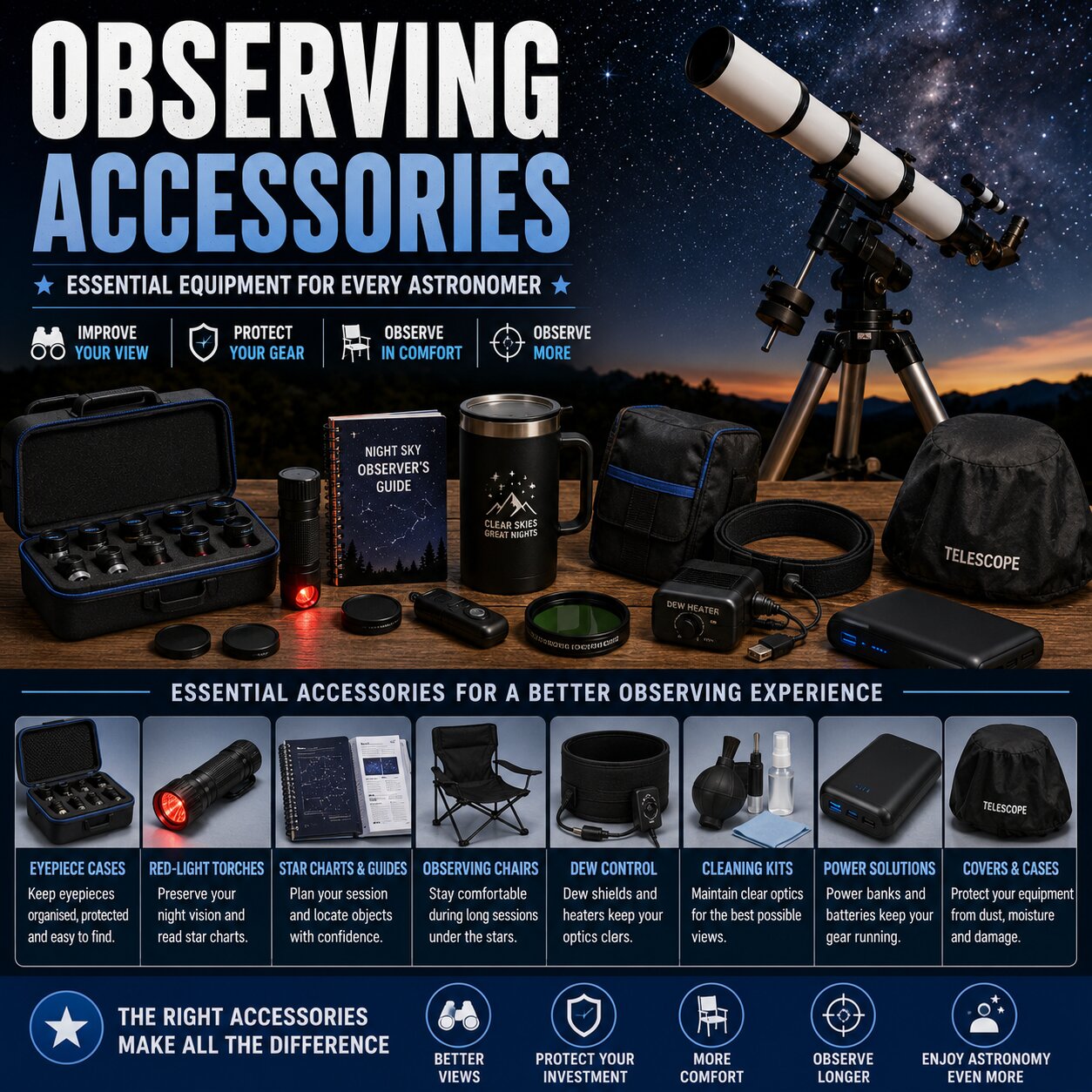

A telescope or pair of binoculars may be the centrepiece of an astronomy setup, but the right observing accessories can dramatically improve your overall stargazing experience. From increasing comfort during long observing sessions to enhancing image quality and protecting your equipment, these accessories help both beginners and experienced astronomers get the most from every night under the stars.
Whether you are exploring the Moon, observing distant galaxies, or photographing celestial objects, investing in quality observing accessories can make your sessions more productive, enjoyable, and rewarding.
Why Observing Accessories Matter
Many newcomers focus solely on purchasing a telescope, overlooking the accessories that support successful observations.
Good observing accessories improve comfort, simplify equipment setup, protect expensive optics, and allow you to observe more efficiently. They also reduce frustration by making it easier to locate objects, change eyepieces, and adapt to changing observing conditions.
As your astronomy skills grow, these accessories often become just as valuable as the telescope itself.
Essential Observing Accessories
Every astronomer’s equipment collection evolves over time, but several accessories prove useful for almost every observing session.
Common observing accessories include:
- Eyepiece cases and storage boxes
- Red-light torches for preserving night vision
- Star charts and observing guides
- Adjustable observing chairs
- Dew shields and dew heaters
- Lens cleaning kits
- Power banks and battery packs
- Equipment covers and carrying cases
These items help protect equipment while making observing sessions more comfortable and organised.
Accessories That Improve Observation Quality
Some observing accessories directly enhance what you see through the telescope.
Additional eyepieces provide different magnifications for viewing planets, star clusters, and deep-sky objects. Barlow lenses effectively increase magnification while reducing the number of eyepieces required.
Astronomical filters improve contrast when observing the Moon, planets, nebulae, or light-polluted skies. Finderscopes and red-dot finders also make locating celestial objects significantly easier, particularly for beginners.
Choosing quality optical accessories can greatly expand the capabilities of an existing telescope.
Protecting Your Equipment
Astronomy equipment represents a significant investment, making protection essential.
Dust caps, padded carrying cases, weather-resistant covers, and silica gel packs help prevent damage caused by moisture, dust, and transportation. Dew control systems also protect optics during humid nights while maintaining clear views throughout the session.
Proper storage and maintenance accessories help ensure telescopes and optical equipment continue performing reliably for many years.
Choosing the Right Observing Accessories
Not every accessory needs to be purchased immediately. The best approach is to add observing accessories gradually as your experience and observing interests develop.
Beginners may prioritise a red-light torch, star atlas, and comfortable observing chair, while experienced astronomers may invest in advanced filters, electronic focusing systems, or portable power solutions for extended observing sessions.
Selecting accessories that complement your equipment and observing goals ensures you spend your budget where it delivers the greatest benefit.
The right observing accessories transform astronomy from a simple hobby into a comfortable and efficient experience. By improving organisation, protecting valuable equipment, and enhancing what you see through the eyepiece, these tools help astronomers make the most of every clear night.
Whether you observe from your backyard, a remote dark-sky site, or a public observatory, investing in practical observing accessories will support your journey as you continue exploring the wonders of the universe.
Leave a Reply