Planet Uranus is one of the most unusual and misunderstood worlds in our Solar System. Often described as cold, distant, and featureless, Uranus is in fact a dynamic ice giant with extreme seasons, powerful winds, a faint ring system, and a dramatic axial tilt unlike any other planet.
As the seventh planet from the Sun, Planet Uranus occupies the outer reaches of the Solar System, where sunlight is weak and temperatures plunge to record lows. Studying Uranus helps astronomers understand ice giant formation, atmospheric physics under extreme conditions, and the behaviour of planets with extreme axial tilts, a feature increasingly observed among exoplanets.
Quick Stats: Planet Uranus
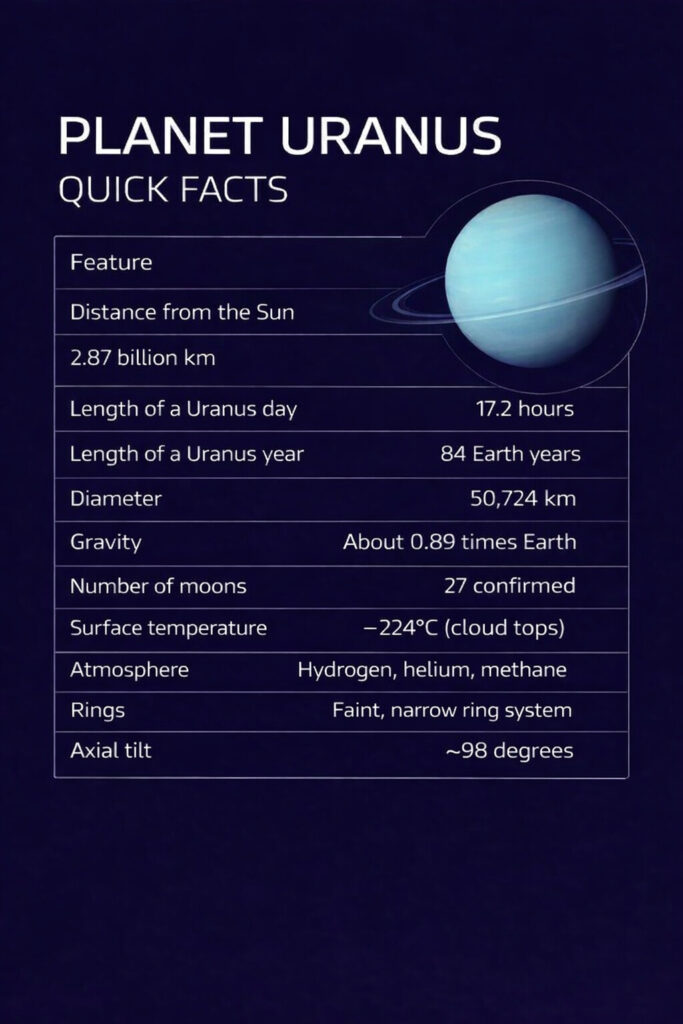
| Feature | Details |
|---|---|
| Distance from the Sun | 2.87 billion km |
| Length of a Uranus day | 17.2 hours |
| Length of a Uranus year | 84 Earth years |
| Diameter | 50,724 km |
| Gravity | About 0.89 times Earth |
| Number of moons | 27 confirmed |
| Surface temperature | −224°C (cloud tops) |
| Atmosphere | Hydrogen, helium, methane |
| Rings | Faint, narrow ring system |
| Axial tilt | ~98 degrees |
Uranus’s Position in the Solar System
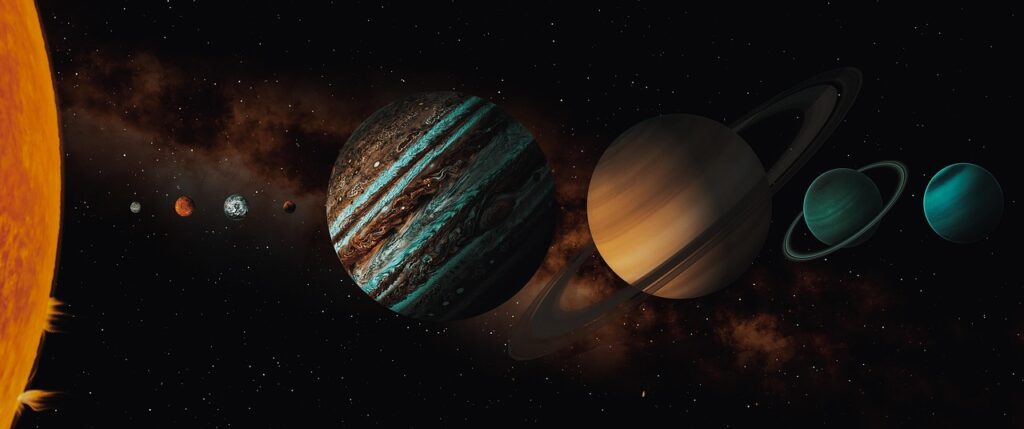
Planet Uranus is the third-largest planet by diameter and the fourth most massive planet in the Solar System. It orbits beyond Saturn and marks the transition between the gas giants and the ice giants.
Unlike Jupiter and Saturn, Uranus is composed largely of heavier volatile compounds such as water, ammonia, and methane ices. Its distance from the Sun places it in an environment where solar heating is minimal, making internal heat and atmospheric chemistry especially important in shaping the planet’s behaviour.
The Extreme Tilt of Planet Uranus
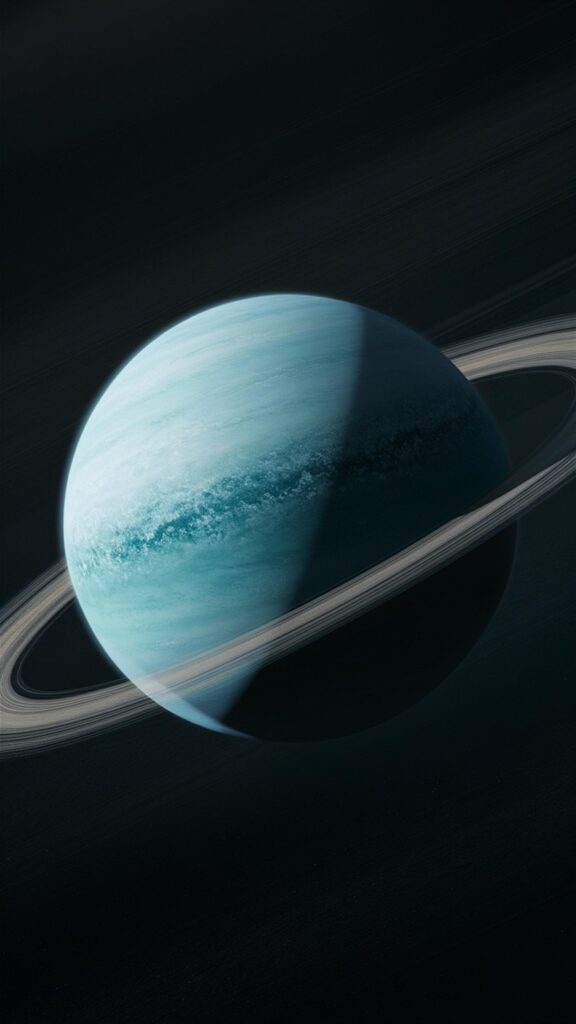
One of the defining features of Planet Uranus is its extreme axial tilt of approximately 98 degrees. Unlike other planets that rotate upright or with slight tilts, Uranus essentially rotates on its side.
This unusual orientation causes some of the most extreme seasonal variations in the Solar System. Each pole experiences around 42 years of continuous sunlight followed by 42 years of darkness. These long seasons dramatically influence atmospheric circulation, cloud formation, and wind patterns across the planet.
Uranus’s Atmosphere: Methane, Winds, and Weather
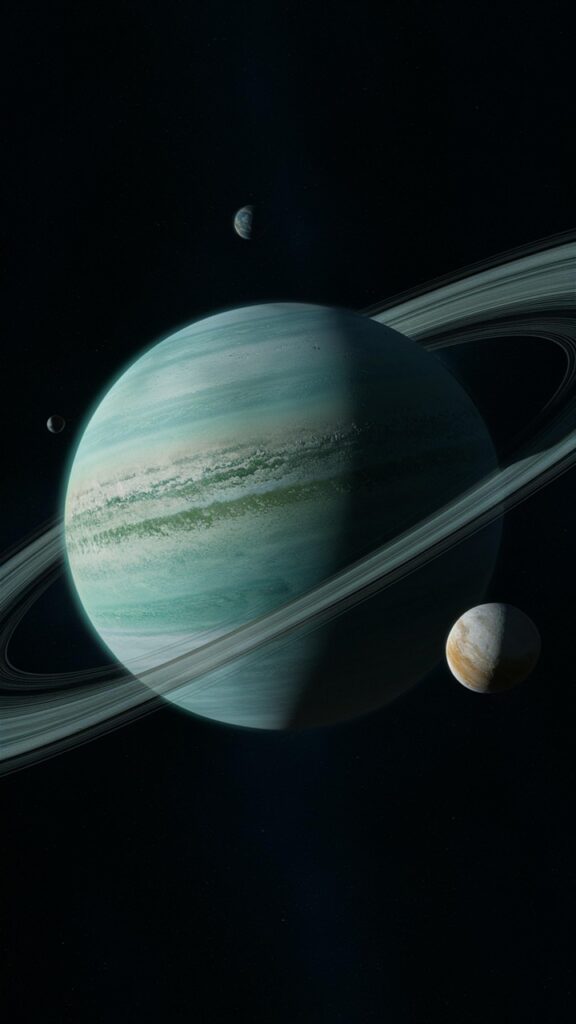
The atmosphere of Planet Uranus is dominated by hydrogen and helium, with methane playing a critical role in its appearance. Methane absorbs red light, giving Uranus its characteristic blue-green colour.
Despite its calm appearance, Uranus hosts powerful winds that can exceed 900 km/h. These winds often flow in the opposite direction of the planet’s rotation, a phenomenon known as retrograde motion. Cloud systems, storms, and seasonal atmospheric changes have become increasingly visible as observational technology has improved.
Inside Planet Uranus: Ice Giant Structure
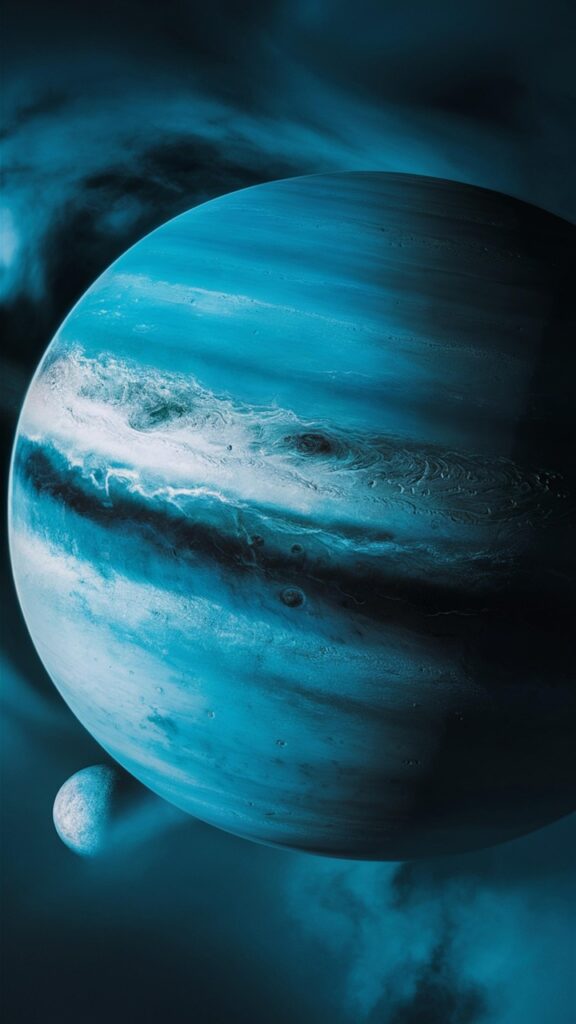
Beneath its atmosphere, Planet Uranus differs significantly from gas giants like Jupiter and Saturn. Instead of thick layers of metallic hydrogen, Uranus contains a mantle rich in supercritical water, ammonia, and methane ices.
At the planet’s centre lies a rocky core surrounded by this icy mantle. Uranus emits very little internal heat compared to other giant planets, a mystery that continues to challenge planetary scientists and may be linked to its internal structure or its violent early history.
Uranus’s Rings: Thin, Dark, and Elusive
Planet Uranus possesses a faint ring system discovered in 1977. Unlike Saturn’s bright, icy rings, Uranus’s rings are narrow, dark, and composed of relatively large particles with little dust.
The rings are closely associated with small moons that act as gravitational shepherds, maintaining ring structure. Though visually subtle, these rings provide valuable insight into how ring systems evolve around ice giants.
Moons of Planet Uranus: Literary Worlds
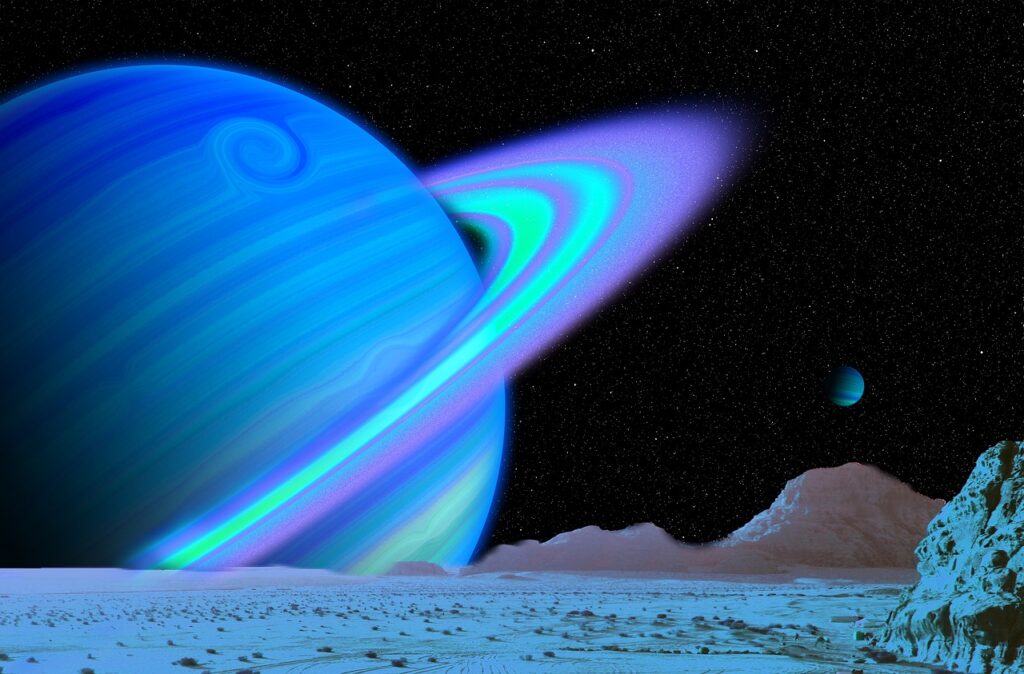
Planet Uranus has 27 known moons, all named after characters from the works of William Shakespeare and Alexander Pope. These moons range from small, irregular bodies to larger, geologically complex worlds.
Major moons such as Titania, Oberon, Ariel, Umbriel, and Miranda display signs of tectonic activity, surface fracturing, and past geological evolution. Miranda, in particular, features dramatic cliffs and patchwork terrain, suggesting a violent or highly dynamic history.
Exploring Planet Uranus: Missions and Discoveries
To date, Planet Uranus has been visited only once, by NASA’s Voyager 2 spacecraft in 1986. Voyager 2 provided humanity’s first close-up observations of Uranus, revealing its rings, moons, magnetic field, and atmospheric structure.
The data returned by Voyager 2 remain the foundation of much of what we know today. Future mission proposals aim to return to Uranus with an orbiter, recognising its importance in understanding ice giants both within and beyond our Solar System.
Why Planet Uranus Matters to Astronomy
Planet Uranus is a crucial reference point for studying ice giants, a class of planets that appears to be common in other planetary systems. Many exoplanets detected to date resemble Uranus more closely than they do Jupiter or Earth.
Its extreme axial tilt, low internal heat output, and unusual magnetic field offer natural laboratories for testing planetary physics under conditions not found elsewhere in the Solar System.
Planet Uranus and the Nature of Extremes
Planet Uranus stands as a reminder that the Solar System is far stranger than it first appears. Beneath its serene blue exterior lies a world shaped by extremes, from sideways rotation and decades-long seasons to powerful winds and mysterious internal dynamics.
As astronomy advances and new missions are planned, Uranus is increasingly recognised not as a quiet outlier, but as one of the most scientifically valuable planets orbiting our Sun.