
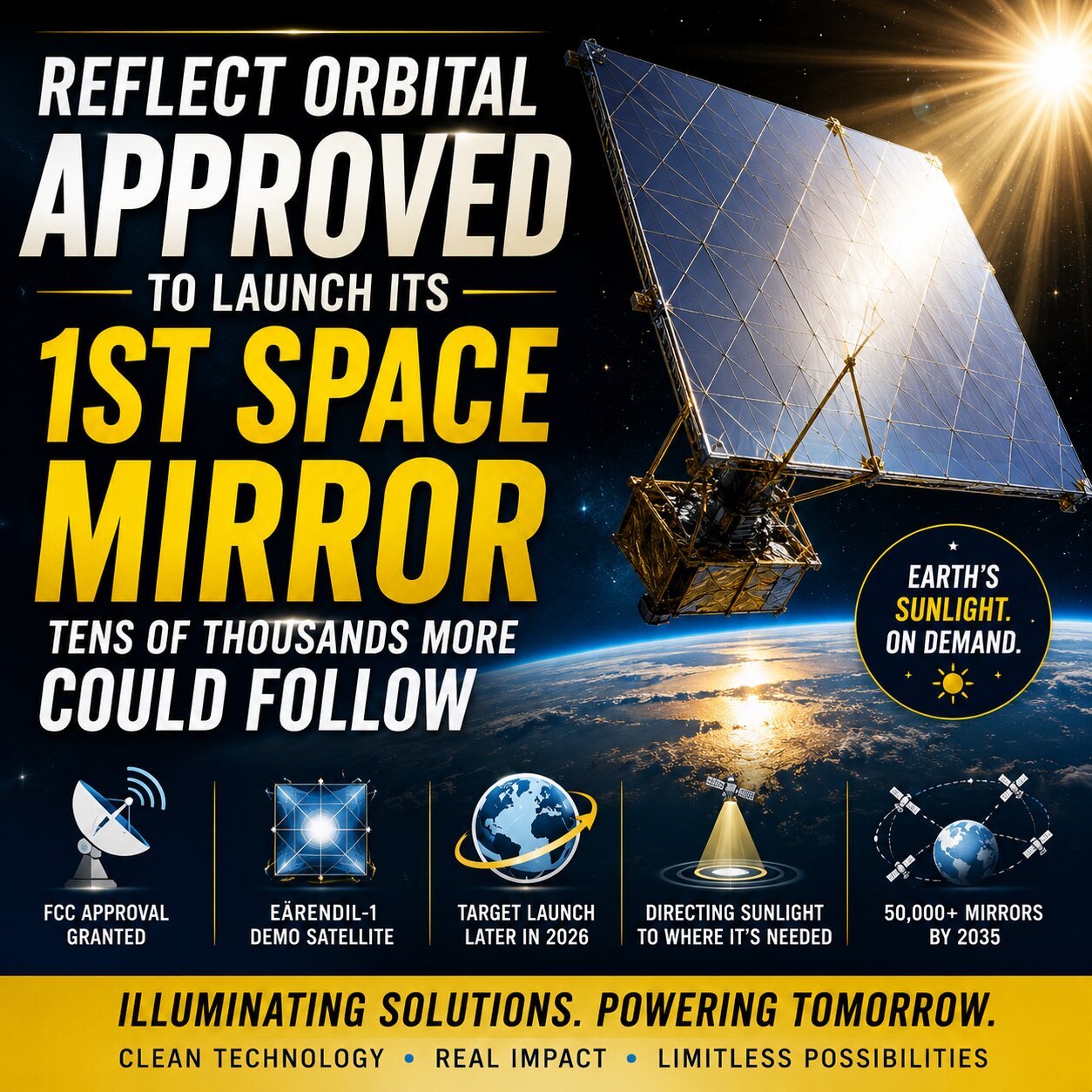

The idea of using mirrors in space to reflect sunlight back to Earth has long belonged to the realm of science fiction. Now, California-based startup Reflect Orbital is taking the first major step toward making that vision a reality after receiving regulatory approval to launch its first demonstration satellite.
The company’s ambitious project could eventually see tens of thousands of reflective satellites operating in low Earth orbit, providing targeted sunlight for a variety of practical applications while also raising important questions about the future of the night sky.
The Eärendil-1 Demonstration Mission
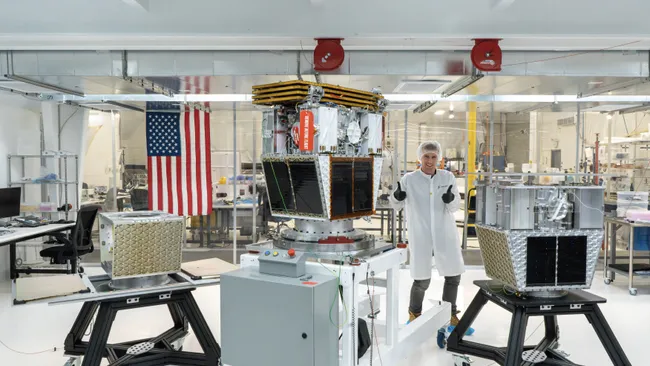
Reflect Orbital has received a licence from the United States Federal Communications Commission (FCC) to launch and operate Eärendil-1, its first demonstration spacecraft.
Scheduled to launch later in 2026, the satellite will deploy an 18-metre by 18-metre reflective mirror designed to redirect sunlight toward selected locations on Earth. The mission aims to validate both the technology and the operational safeguards before any larger deployment takes place.
If successful, the company envisions building a constellation of more than 50,000 space mirrors by 2035, creating a new form of orbital infrastructure capable of delivering sunlight where and when it is needed.
Potential Benefits of Orbital Mirrors
Reflect Orbital believes its technology could support a wide range of industries and emergency services.
- Extending daylight for search and rescue operations.
- Improving safety at construction sites during evening hours.
- Supporting disaster response efforts.
- Increasing the productivity of large solar farms.
- Providing temporary lighting for remote infrastructure projects.
- Reducing dependence on fossil-fuel-powered lighting.
The company emphasises that its mirrors would only reflect existing sunlight rather than generate new energy, positioning the concept as a clean technology that could complement renewable energy systems.
Astronomers Raise Concerns
Despite the potential advantages, the proposal has generated concern within the astronomical community.
Many astronomers are already dealing with the growing impact of satellite megaconstellations on scientific observations. A network of tens of thousands of reflective mirrors could introduce an entirely new form of light pollution, potentially affecting professional observatories, amateur astronomers and wildlife that depends on natural darkness.
Critics also point to the cumulative environmental effects of launching, operating and eventually deorbiting such a large number of satellites.
Reflect Orbital states that its system has been designed to minimise these impacts by allowing reflected light to be switched off rapidly, limiting illumination to designated areas and avoiding sensitive locations such as observatories and protected habitats whenever possible.
A Bold Vision for Space Infrastructure
Whether Reflect Orbital’s ambitious plans become a common part of Earth’s orbital environment remains to be seen. The Eärendil-1 mission will provide the first real-world demonstration of whether orbital mirrors can safely deliver meaningful benefits while addressing concerns about astronomy and environmental impacts.
As commercial space technology continues to evolve, projects like Reflect Orbital highlight both the remarkable innovation taking place beyond our atmosphere and the importance of carefully balancing technological progress with the protection of our shared night sky.


Leave a Reply