
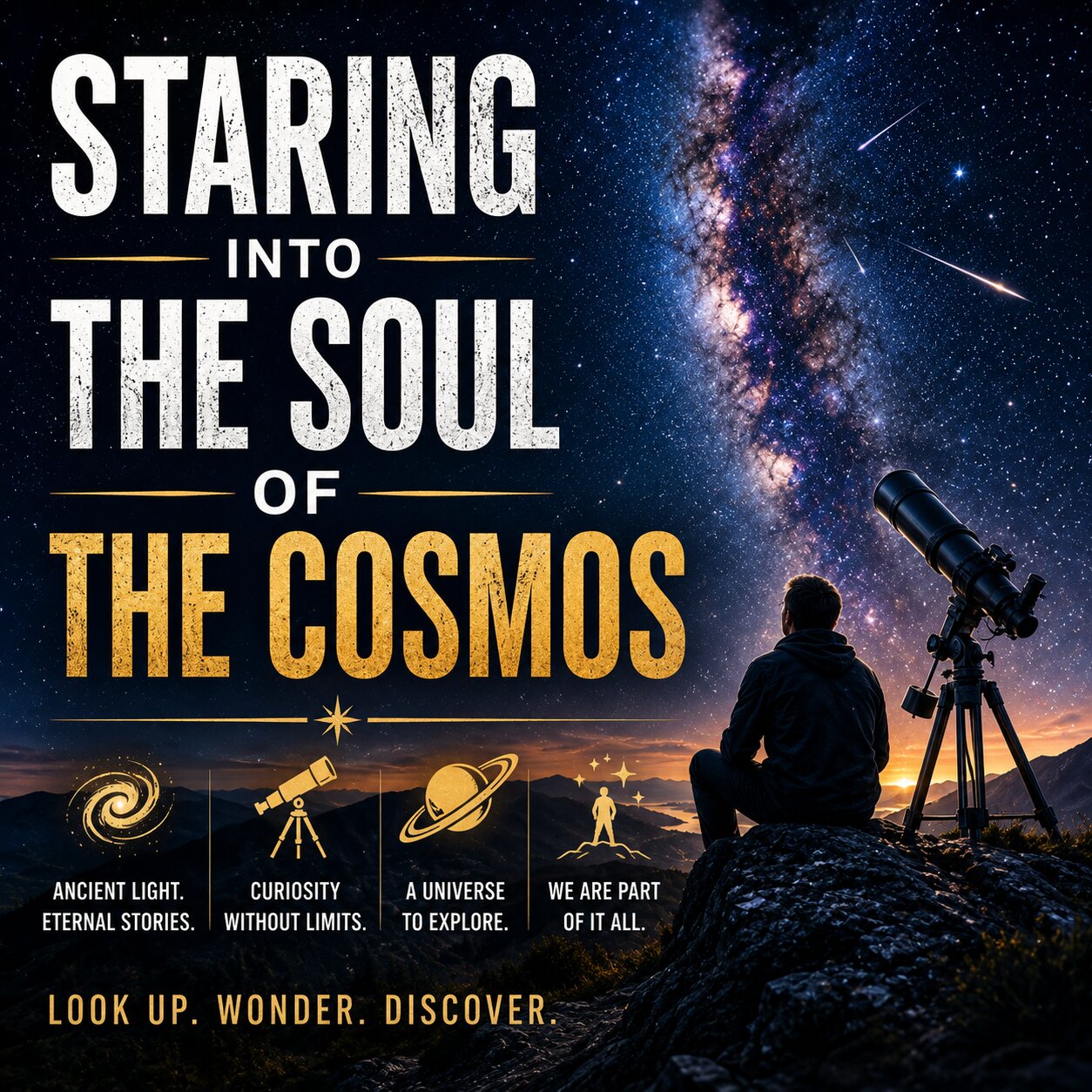

There is a unique feeling that comes from standing beneath a clear night sky. As the stars emerge one by one and the Milky Way stretches across the darkness, everyday worries seem to fade into the background. We begin asking questions that humanity has pondered for thousands of years. Where did all of this come from? Are we alone? What is our place in such an unimaginably vast universe?
Staring into the soul of the cosmos is about more than observing distant stars and galaxies. It is about recognising that astronomy connects science, philosophy and human curiosity in ways few other disciplines can. Every point of light carries a story that began long before humanity existed, and every observation brings us one step closer to understanding the universe and ourselves.
Whether you are an experienced astronomer with a powerful telescope or someone simply gazing skyward from your garden, the night sky has an extraordinary ability to inspire wonder. It reminds us that exploration does not always require travelling across great distances. Sometimes, all it takes is looking up.
Every Photon Carries a Story
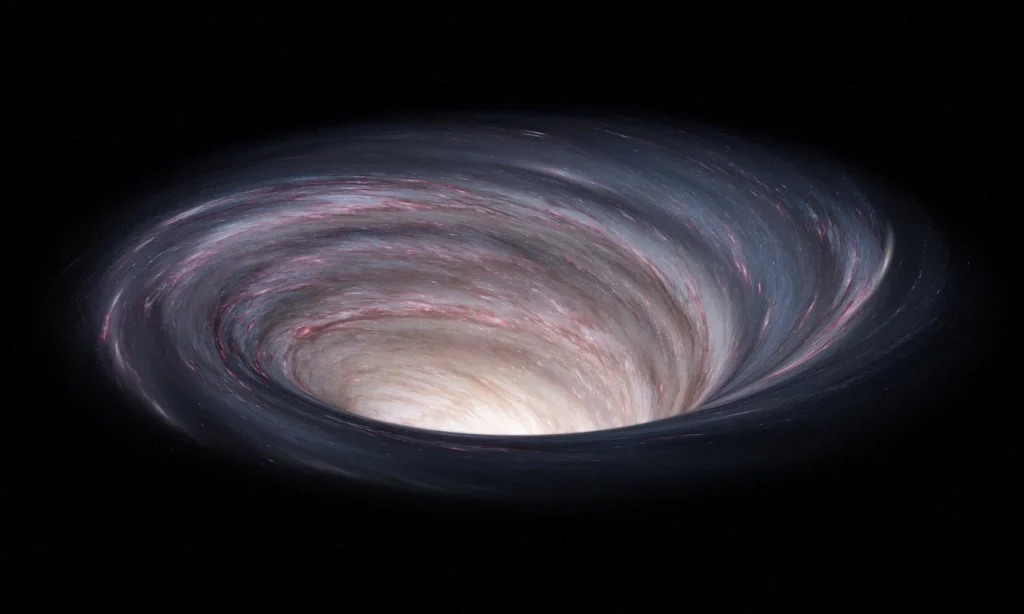
One of the most remarkable aspects of astronomy is that looking into space is also looking back in time. Light does not travel instantaneously. Even travelling at nearly 300,000 kilometres per second, it takes time to cross the immense distances between celestial objects.
When we observe the Moon, we see it as it appeared about 1.3 seconds ago. Sunlight reaching Earth has travelled for approximately eight minutes. The nearest star beyond our Sun sends light that has journeyed for more than four years before entering our eyes.
The story becomes even more astonishing when we turn powerful telescopes towards distant galaxies. Some of the light captured by modern observatories began its journey billions of years ago, before Earth even existed. In a very real sense, astronomers are historians studying the universe through ancient light.
Each photon arriving at Earth carries information about temperature, chemistry, motion and age. By studying this light, scientists reconstruct the history of stars, galaxies and cosmic evolution.
The Universe Is Both Vast and Personal
The numbers involved in astronomy are almost impossible to comprehend. Our Milky Way alone contains hundreds of billions of stars. Beyond it lie hundreds of billions of galaxies, each containing their own stellar populations, planets and perhaps even life.
It would be easy to feel insignificant in the face of such enormity. Yet astronomy often produces the opposite effect.
The atoms that form our bodies were created inside ancient stars that lived and died long before the Sun was born. Carbon, oxygen, calcium and iron were forged through nuclear fusion before being scattered across space by stellar explosions.
Every person, animal, tree and ocean on Earth contains material recycled from previous generations of stars.
In that sense, staring into the soul of the cosmos becomes deeply personal. The universe is not separate from us. We are one of its many expressions.
Curiosity Is Humanity’s Greatest Telescope
Astronomy has advanced because people refused to stop asking questions.
Ancient civilisations tracked the movement of stars to understand the seasons. Early philosophers debated the nature of the heavens long before telescopes existed. Centuries later, observers like Galileo transformed our understanding by simply pointing new instruments towards familiar objects.
Modern astronomers continue that tradition using radio telescopes, space observatories and sophisticated computer models. They investigate black holes, exoplanets, gravitational waves and dark matter while continually refining our understanding of reality.
Yet curiosity is not reserved for scientists alone.
Every amateur astronomer who learns a constellation, photographs the Moon or introduces a child to Saturn’s rings contributes to humanity’s shared fascination with the universe.
Curiosity remains one of the most powerful forces driving discovery.
What the Night Sky Teaches Us
Looking upward offers lessons that extend far beyond astronomy itself.
Among them are:
- Patience, because celestial events unfold on timescales far beyond everyday life.
- Humility, as the universe reminds us how much remains unknown.
- Perspective, helping everyday problems feel more manageable.
- Wonder, encouraging lifelong learning and exploration.
- Connection, revealing that every element of life originated in the stars.
- Hope, because every discovery opens countless new questions.
- Appreciation, reminding us that Earth is an extraordinarily rare and beautiful home.
These lessons explain why astronomy continues to inspire people regardless of age, culture or profession.
Modern Technology Opens New Windows
Today’s astronomers possess tools that previous generations could scarcely imagine.
Ground-based observatories equipped with adaptive optics overcome atmospheric distortion to produce extraordinary detail. Radio telescopes reveal invisible structures hidden behind dust clouds. Space telescopes observe wavelengths completely inaccessible from Earth’s surface.
Artificial intelligence now assists researchers in analysing enormous datasets, identifying exoplanets, classifying galaxies and discovering transient events that might otherwise remain unnoticed.
Citizen science projects also allow members of the public to assist with genuine astronomical research by classifying galaxies, searching for variable stars or helping identify unusual cosmic phenomena.
The barriers between professional and amateur astronomy continue to shrink as technology becomes more accessible.
Finding Your Own Place Among the Stars
One of astronomy’s greatest gifts is that participation does not require expensive equipment.
Many lifelong enthusiasts began with nothing more than their eyes and a sense of curiosity.
Learning seasonal constellations, observing the changing phases of the Moon or identifying bright planets can provide years of enjoyment. A simple pair of binoculars reveals star clusters, lunar craters and distant galaxies invisible to the naked eye.
As experience grows, telescopes, astrophotography and specialised equipment open entirely new ways of exploring the night sky.
Regardless of the equipment used, every observation strengthens the connection between observer and universe.
The sky belongs to everyone willing to spend time beneath it.
The Soul of the Cosmos Reflects Our Own
Perhaps the greatest lesson astronomy offers is that exploration changes both the observer and the observed.
As our knowledge expands, so too does our appreciation for the remarkable complexity, beauty and mystery of existence. Every new discovery answers old questions while revealing even deeper mysteries waiting beyond the horizon.
Staring into the soul of the cosmos is ultimately an invitation to remain curious. It encourages us to embrace uncertainty, celebrate discovery and recognise that humanity’s greatest adventures may still lie ahead.
The next time darkness falls and the stars begin to appear, pause for a moment before continuing with your evening.
Look upward.
Some of the light reaching your eyes has travelled for billions of years simply to arrive in that instant. Within those ancient photons lies the story of the universe, and perhaps a small part of your own.

Leave a Reply