Russia has revealed plans for a future space station designed to generate artificial gravity, allowing astronauts to walk in conditions similar to those on Earth. The concept was outlined by Roscosmos, Russia’s state space corporation, and represents a bold vision for the next generation of orbital habitats.
If realised, the project would mark a major shift in how long-duration human spaceflight is approached, addressing long-standing health challenges faced by astronauts in microgravity.
What Roscosmos has revealed so far
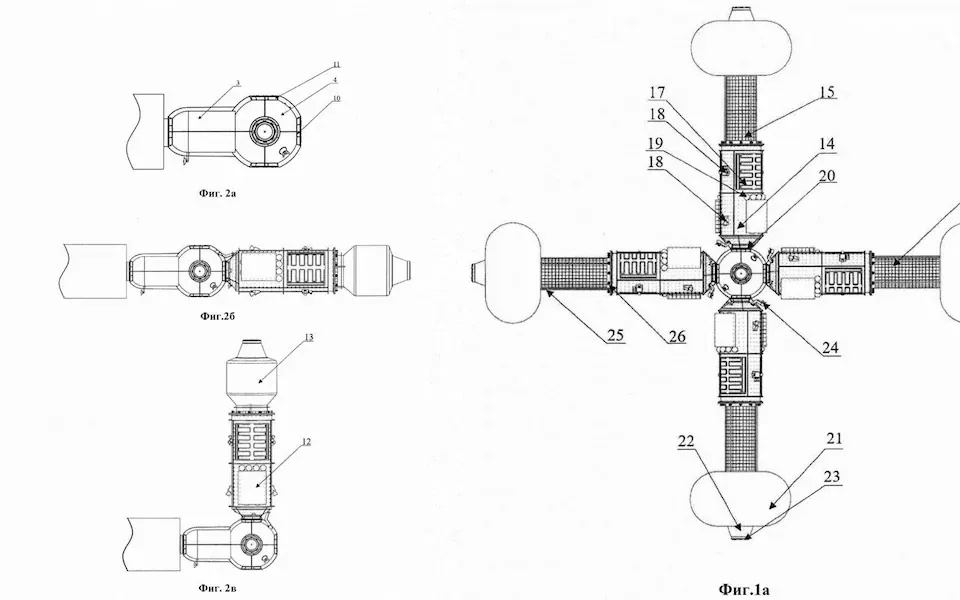
According to documents submitted to Russia’s Federal Service for Intellectual Property, plans for the artificial gravity space station have been advanced by Energia, the principal contractor for Russia’s human spaceflight programme. The proposal outlines a space system designed to improve crew safety by introducing artificial gravity into orbital living and working environments.
The design centres on a rotating structure made up of a central axial module connected to rotating arms via a hermetically sealed flexible junction. As the station rotates, centrifugal force would simulate approximately half of Earth’s gravity, allowing astronauts to walk and work without continuously floating in microgravity. Habitable modules would be attached to the rotating arms, with additional modules added over time as the station expands.
The patent description states that the system includes both static and rotating components, along with dedicated rotation equipment and independent power sources. Construction would require multiple launches and assembly in orbit, with the station designed to be built gradually from the inside outward.
While artificial gravity could help reduce muscle loss, bone density reduction, and cardiovascular deconditioning, Russian officials have indicated that the concept is still experimental and part of long-term planning rather than an imminent deployment. The proposal forms part of a broader vision by Roscosmos to develop sustainable human space infrastructure and address the health challenges of extended spaceflight.
How artificial gravity would work
Artificial gravity can be created by rotating a structure, using centrifugal force to mimic the effects of gravity. In the concept presented by Roscosmos, parts of the space station would rotate slowly, producing partial Earth-like gravity inside habitable sections.
This design aims to reduce muscle loss, bone density reduction, and cardiovascular issues that astronauts experience during extended periods in weightlessness. These physical effects are among the biggest obstacles to long-term missions beyond low Earth orbit.
Why artificial gravity matters for spaceflight
Current space stations, including the International Space Station, operate in microgravity. While this environment is ideal for many scientific experiments, it places significant strain on the human body, even with daily exercise routines.
An artificial gravity station proposed by Roscosmos could allow astronauts to maintain better physical health during long missions. This would be especially important for future exploration plans involving the Moon, Mars, or permanent orbital infrastructure.
A long-term vision rather than an immediate launch
Despite the excitement surrounding the announcement, the artificial gravity space station remains a long-term concept. Developing such a structure would require advanced engineering, multiple launches, and extensive testing to ensure stability and safety.
Roscosmos has positioned the idea as part of a broader vision for sustained human presence in space, rather than a short-term replacement for existing orbital platforms.
News Source: The Scottish Sun
A glimpse into the future of space habitats
The artificial gravity space station concept put forward by Roscosmos highlights a growing global focus on solving the human challenges of space exploration. While still at an early planning stage, the proposal offers a glimpse into how future space habitats may be designed around long-term human health.
As space agencies worldwide look toward extended missions and permanent space infrastructure, artificial gravity could become a defining feature of next-generation space stations.