
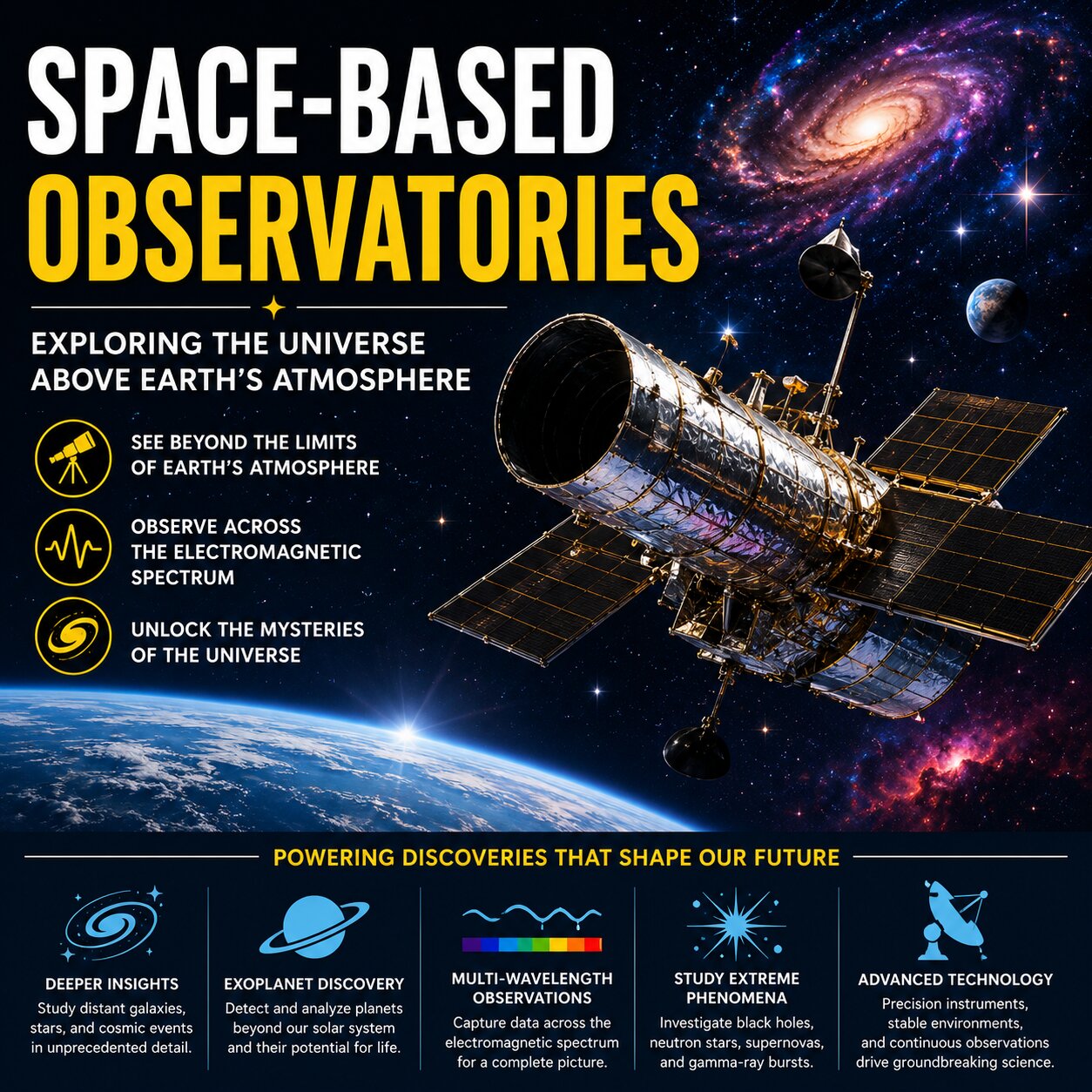

Space-Based Observatories have transformed modern astronomy by allowing scientists to study the universe without the limitations imposed by Earth’s atmosphere. While ground-based telescopes remain essential research tools, Space-Based Observatories provide clearer views of distant objects, access to wavelengths blocked by the atmosphere, and uninterrupted observations of cosmic phenomena.
From discovering distant galaxies to investigating exoplanets and studying the origins of the universe, Space-Based Observatories have become some of the most important research equipment ever developed. Their contributions continue to shape our understanding of space and drive scientific discoveries that would be impossible from Earth alone.
As technology advances, new generations of Space-Based Observatories are expected to provide even deeper insights into the cosmos.
Why Space-Based Observatories Are Necessary
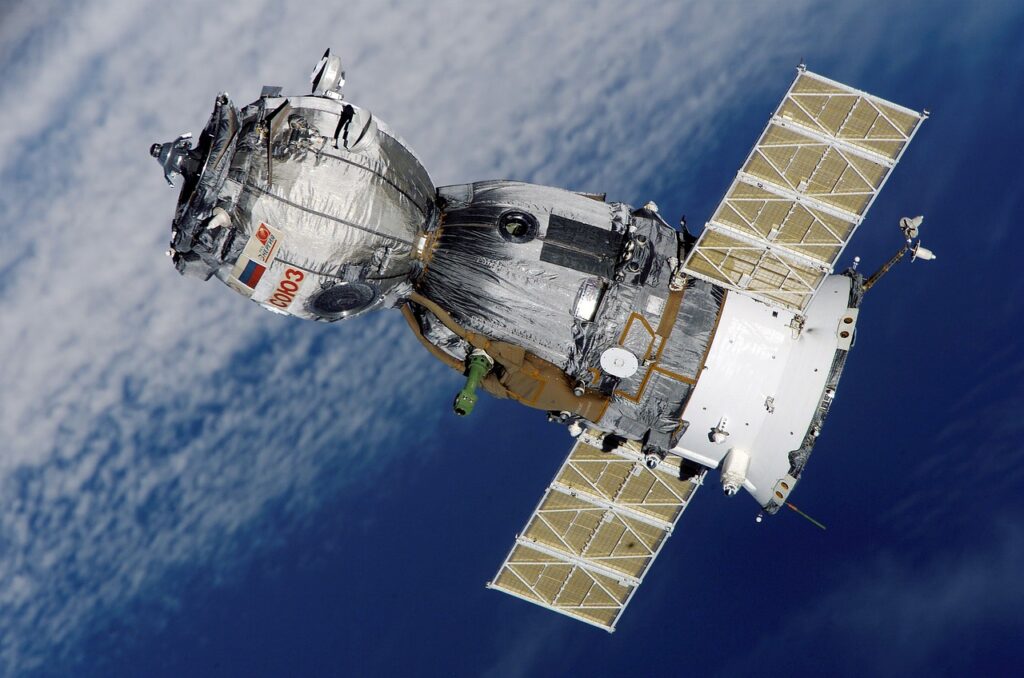
Earth’s atmosphere protects life from harmful radiation, but it also presents challenges for astronomers. Atmospheric turbulence causes stars to appear to twinkle, while certain wavelengths of light are absorbed before they can reach ground-based instruments.
Space-Based Observatories eliminate these obstacles by operating above the atmosphere. This allows them to capture sharper images and detect forms of electromagnetic radiation that are difficult or impossible to observe from Earth.
Many Space Observatories are designed to study specific portions of the electromagnetic spectrum, including infrared, ultraviolet, X-ray, and gamma-ray wavelengths.
By collecting data across multiple wavelengths, scientists can build a more complete picture of astronomical objects and processes.
Key Components Of Space-Based Observatories
Although designs vary depending on scientific objectives, most Space Observatories share several critical components.
The telescope assembly collects and focuses incoming light or radiation from distant targets. Advanced detectors then convert this information into digital data that can be analysed by researchers.
Communication systems transmit observations back to Earth, while onboard computers manage pointing accuracy, instrument operations, and data processing.
Power is typically supplied through solar panels, enabling Space-Based Observatories to operate for many years in orbit.
Thermal control systems are also essential, particularly for infrared missions that require extremely low operating temperatures to minimise interference.
Major Types Of Space-Based Observatories
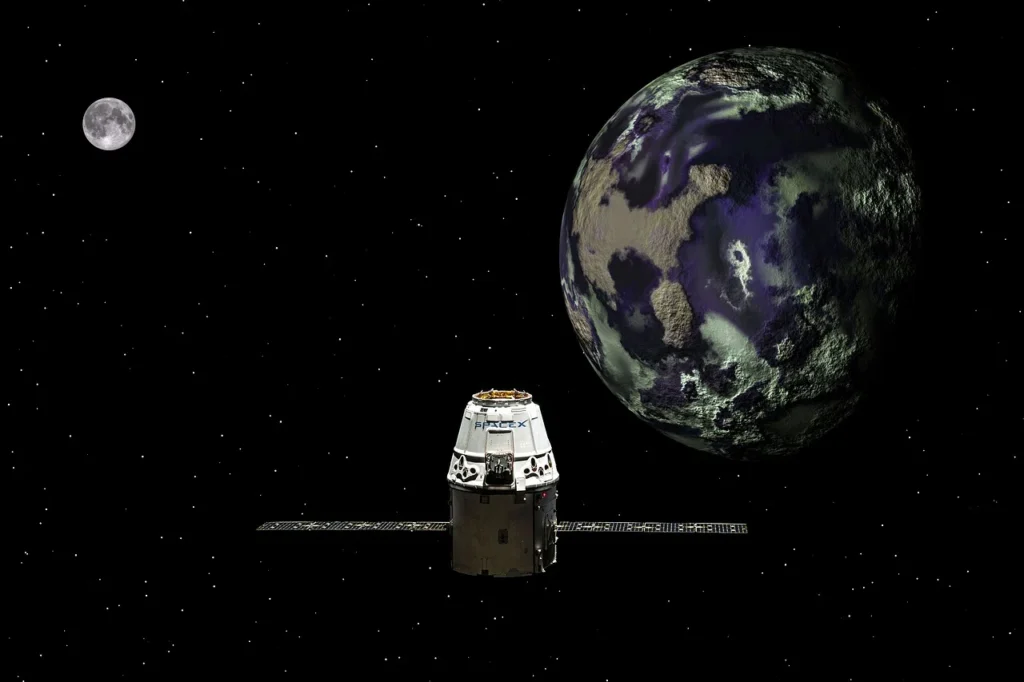
Different scientific goals require specialised Space Observatories capable of observing various regions of the electromagnetic spectrum.
- Optical observatories for visible light observations
- Infrared observatories for studying dust clouds and distant galaxies
- Ultraviolet observatories for examining hot stars
- X-ray observatories for investigating black holes and neutron stars
- Gamma-ray observatories for detecting energetic cosmic events
- Solar observatories for monitoring the Sun
- Exoplanet observatories for searching for planets around other stars
- Cosmology missions studying the early universe
Together, these Space-Based Observatories provide complementary data that supports a wide range of astronomical research.
Scientific Contributions And Discoveries
Space-Based Observatories have contributed to many of astronomy’s most significant breakthroughs. They have helped determine the age of the universe, reveal the existence of supermassive black holes, and identify thousands of exoplanets beyond our Solar System.
Observations from Space-Based Observatories have also improved understanding of stellar evolution, galaxy formation, dark matter, and dark energy. Their ability to capture detailed data over extended periods makes them invaluable for long-term scientific studies.
Many discoveries result from combining data collected by multiple observatories operating at different wavelengths. This multi-observatory approach provides a deeper understanding of complex cosmic phenomena.
As new missions are launched, Space-Based Observatories continue expanding humanity’s knowledge of the universe.
The Future Of Astronomical Research
Space-Based Observatories remain among the most powerful tools available to modern astronomers. Their unique ability to operate beyond Earth’s atmosphere allows them to gather information that cannot be obtained through ground-based observations alone.
Future Space-Based Observatories will feature larger mirrors, more sensitive detectors, and advanced instrumentation capable of investigating some of astronomy’s greatest mysteries. As these missions continue pushing the boundaries of scientific exploration, they will play a central role in revealing the nature, history, and future of the universe.



Leave a Reply