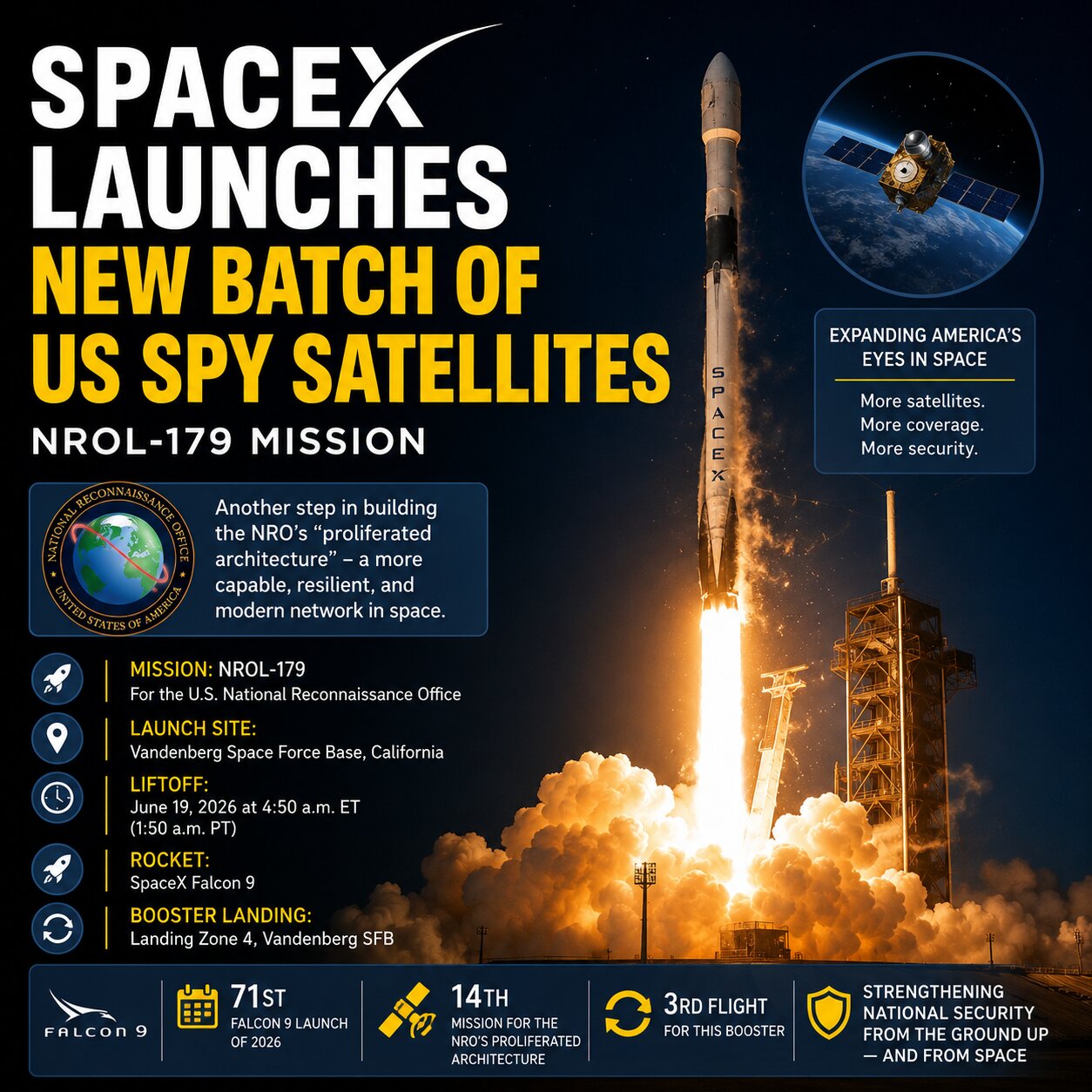

SpaceX successfully launched another mission for the United States National Reconnaissance Office (NRO) on 19 June 2026, continuing the rapid expansion of a next-generation satellite network designed to improve intelligence gathering and operational resilience in orbit.
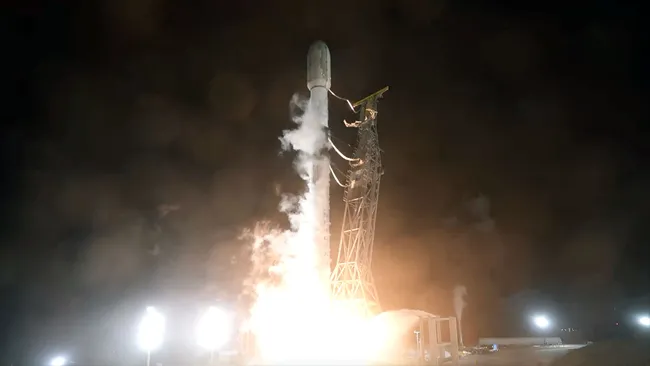
The mission, designated NROL-179, lifted off aboard a Falcon 9 rocket from Vandenberg Space Force Base in California during the early hours of Friday morning. The launch represents the latest step in the NRO’s ongoing effort to modernise its space-based reconnaissance capabilities through what it calls a “proliferated architecture.”
While details about the satellites remain classified, the mission highlights the growing importance of distributed satellite networks in modern space operations.
Building A More Resilient Intelligence Network
Traditional reconnaissance satellites often relied on a relatively small number of highly capable spacecraft. The NRO’s new strategy takes a different approach by deploying larger numbers of satellites across multiple orbital regions.
According to the agency, this architecture is intended to increase resilience while delivering greater amounts of imagery and signal intelligence. By spreading capabilities across numerous spacecraft, the network becomes less vulnerable to failures and potential threats.
The approach mirrors a broader trend in the space industry, where organisations are increasingly deploying constellations of smaller satellites rather than depending solely on a handful of large platforms.
SpaceX Continues Government Launch Support
The NROL-179 mission marks another successful partnership between SpaceX and the US government. Falcon 9 has become one of the most frequently used launch vehicles for both commercial and national security missions due to its reliability and reusable design.
Following launch, the Falcon 9 first stage successfully returned to Earth and landed at Landing Zone 4 at Vandenberg Space Force Base. The booster was completing its third flight, demonstrating the continued effectiveness of SpaceX’s reusable rocket programme.
Reusable launch systems have significantly reduced launch costs and increased mission frequency, allowing government agencies to deploy new spacecraft faster than ever before.
A Busy Year For Falcon 9
The NROL-179 launch was the 71st Falcon 9 mission of 2026, highlighting the extraordinary pace of SpaceX operations. While most Falcon 9 launches this year have supported the expansion of the Starlink broadband constellation, the rocket also continues to serve scientific, commercial, and government customers around the world.
National security missions remain an important part of SpaceX’s launch manifest, with the company regularly supporting reconnaissance, communications, and defence-related satellite deployments.
As launch cadence continues to increase, reusable rockets are helping reshape how governments and commercial organisations access space.
The Future Of Reconnaissance From Orbit
Although little is known publicly about the individual satellites aboard NROL-179, the mission demonstrates how space-based intelligence infrastructure is evolving. Larger satellite constellations can provide more frequent coverage, greater redundancy, and faster access to critical information.
For observers of the space industry, the mission also illustrates the growing partnership between government agencies and commercial launch providers. As satellite networks become increasingly sophisticated, launches such as NROL-179 are likely to become an even more common feature of the modern space age.
With another successful Falcon 9 mission completed, both SpaceX and the NRO continue to push forward with ambitious plans that will shape the future of reconnaissance and space operations for years to come.