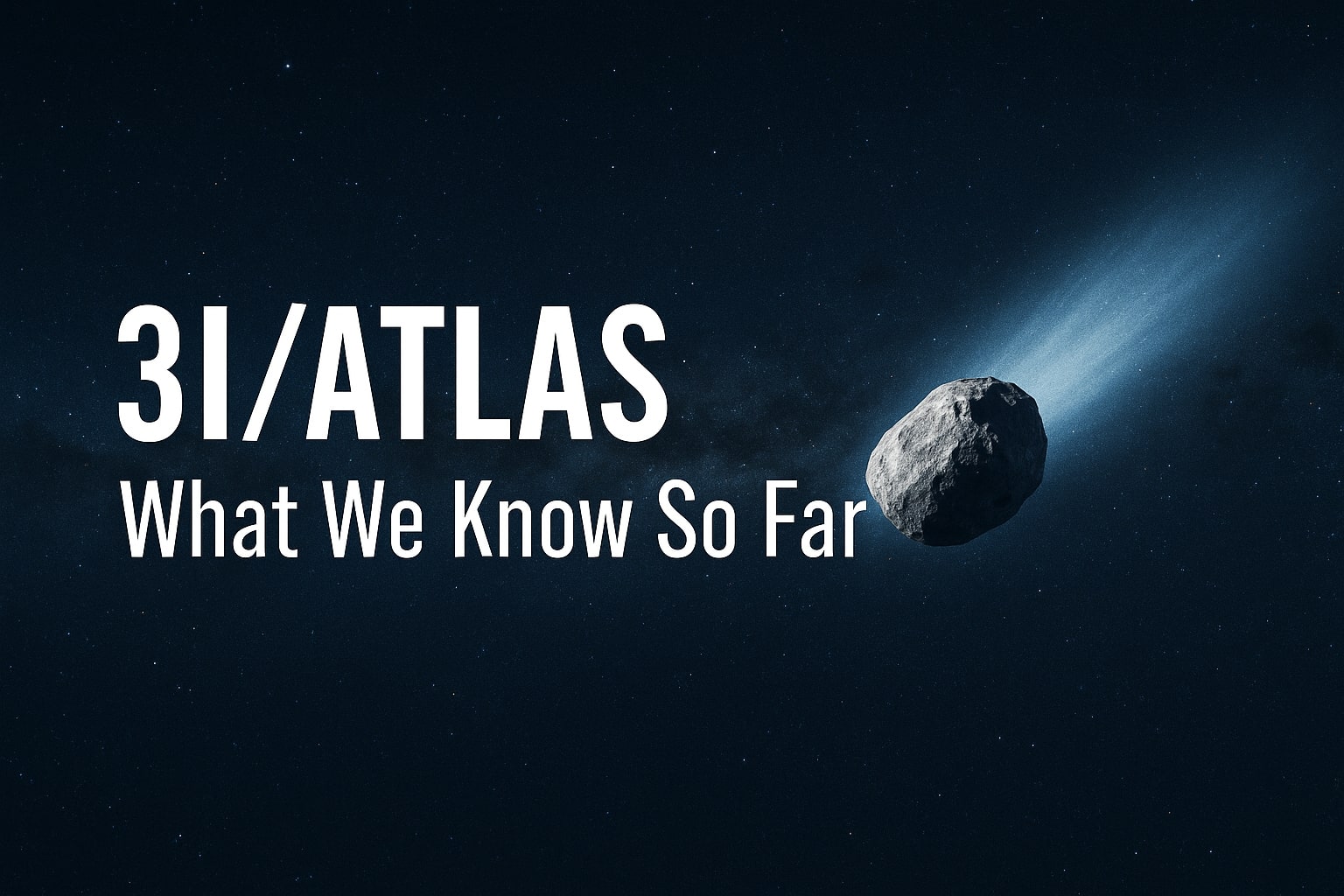

When astronomers detected a faint moving point of light in July 2025, they quickly realised they were witnessing something extraordinary. The object, later confirmed as 3I/ATLAS, became only the third known interstellar visitor to pass through our solar system, following the discoveries of ʻOumuamua in 2017 and Borisov in 2019. Its arrival once again offered a rare glimpse into material that originated far beyond the Sun’s reach.
A journey through the stars
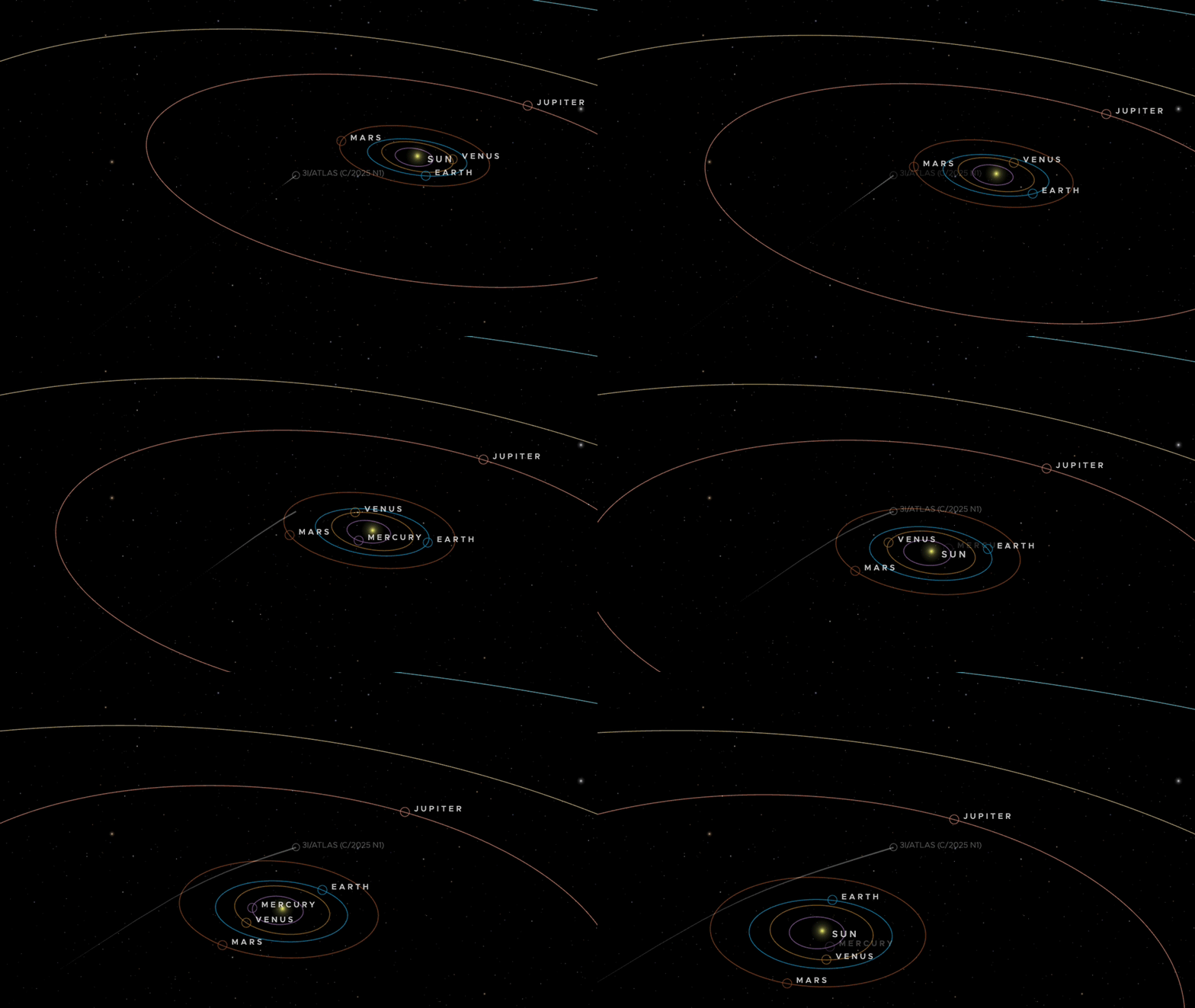
3I/ATLAS was discovered by the Asteroid Terrestrial-impact Last Alert System (ATLAS) in Chile on 1 July 2025. Orbital calculations confirmed its hyperbolic trajectory, meaning it is not gravitationally bound to the Sun and will eventually depart our solar system. Travelling at immense speed, it entered from interstellar space and is now on course to exit after a brief but eventful passage.
The object reached its closest approach to the Sun, or perihelion, around late October 2025, at a distance of roughly 1.3 astronomical units. As it moved through the inner solar system, astronomers noted a distinct coma and tail forming: typical of a comet, yet with properties that raised several eyebrows.
An unusual composition
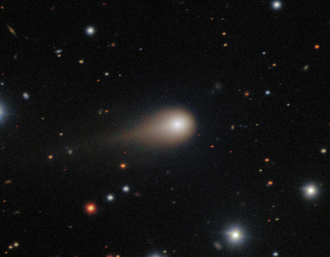
Spectroscopic data from the Hubble Space Telescope and other observatories revealed that 3I/ATLAS possesses an unusual chemical makeup. Its coma showed a high carbon dioxide to water ice ratio, estimated at roughly eight to one, a value far greater than that of most known comets. This finding suggests that it may have formed in a colder, more carbon-rich region of space, possibly within the outer reaches of another star system’s planetary disk.
Estimates of the object’s size vary, though images from the Vera C. Rubin Observatory suggest it could measure several kilometres across, possibly making it one of the largest interstellar bodies ever observed. Whatever its precise dimensions, it has already provided a wealth of data for astronomers eager to understand how planetary systems evolve elsewhere in the galaxy.
Why it matters
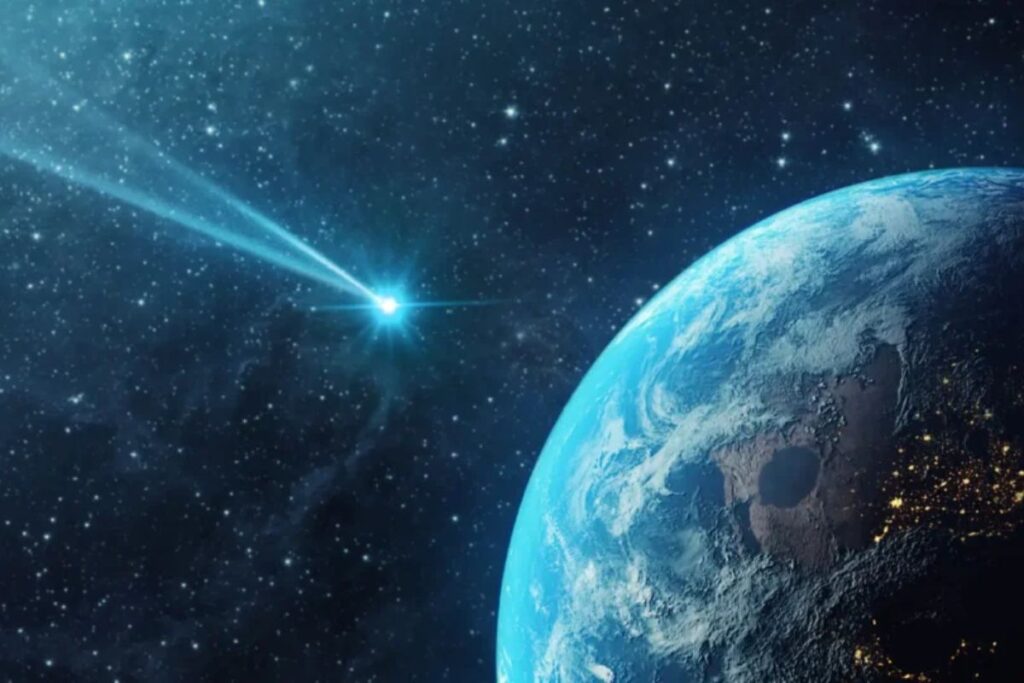
The importance of 3I/ATLAS lies not only in its rarity but in what it can teach us about interstellar chemistry and formation. Each visitor from beyond our solar system offers a direct sample of materials shaped by alien suns and distant nebulae. Unlike local comets, which share a common solar origin, these objects may represent entirely different environmental conditions, enriching our understanding of how diverse planetary systems can be.
Its behaviour has also prompted fresh debates about how interstellar comets evolve. The early activity of 3I/ATLAS, even before it reached the inner solar system, hints at possible internal heating or volatile materials far more responsive to sunlight than those found in typical solar system comets.
Mysteries and debate
Not all aspects of 3I/ATLAS have been easy to explain. Some researchers have highlighted anomalous behaviour, such as its unexpected brightening and unusual gas composition. Harvard astrophysicist Avi Loeb has suggested that its movement might include a degree of non-gravitational acceleration, although these claims remain debated.
While outgassing from sublimating ice can produce small thrusts that alter a comet’s trajectory, extraordinary claims require extraordinary evidence. At this stage, NASA and the Jet Propulsion Laboratory have not confirmed any high-magnitude acceleration beyond normal cometary behaviour. The data collected so far point to subtle effects consistent with natural causes rather than artificial manipulation.
Looking ahead
As 3I/ATLAS continues its outbound journey, telescopes around the world, and above it, are capturing as much data as possible. This window of observation is brief, but every spectrum, image, and light curve adds to humanity’s growing knowledge of interstellar wanderers.
In the coming months, scientists will refine models of its origin and trajectory, hoping to determine which region of the galaxy it came from. Regardless of the outcome, 3I/ATLAS serves as a reminder that our solar system is not isolated. It is part of a dynamic galaxy where countless fragments of other worlds occasionally cross our path, bringing whispers from the stars.