

Venus has long been viewed as Earth’s hostile twin, wrapped in thick clouds, scorched by extreme heat, and assumed to be geologically silent. New evidence now suggests that beneath its blistering surface, Venus may still hide signs of a dynamic and restless past.
By re-examining decades-old radar data, scientists have identified what could be a vast underground tunnel carved by volcanic activity. If confirmed, this would be only the second lava tube ever reported on Venus and a strong indication that the planet is not as geologically inactive as once believed.
Space news: A tunnel hidden beneath Venus’ clouds
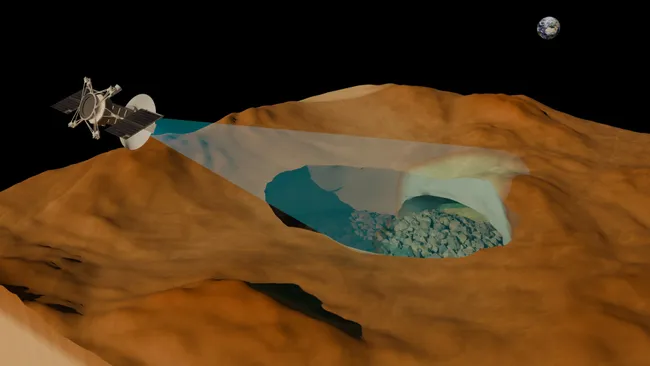
Researchers analysing radar data from NASA’s Magellan mission believe they have identified a large underground volcanic cavity beneath Venus’ surface. The structure closely resembles a lava tube, a hollow tunnel formed when molten lava flows beneath a hardened crust before draining away.
The discovery is based on distinctive radar patterns and surface collapses that resemble skylights. Similar features have been observed on the Moon and Mars, where they mark the presence of extensive underground voids.
News source: Space.com
Why lava tubes on Venus matter
Lava tubes offer important clues about a planet’s volcanic history and internal activity. Discovering one on Venus helps scientists better understand how the planet evolved and whether volcanic processes may still be active today.
This finding challenges the long-standing idea that Venus became geologically inactive billions of years ago. Instead, it adds weight to growing evidence that volcanic activity may have continued far more recently than previously assumed.
Nyx Mons and Venus’ volcanic landscape
The suspected lava tube is located near Nyx Mons, one of Venus’ largest volcanoes. Venus is dominated by volcanic features, with more than 1,600 major volcanoes and hundreds of thousands of smaller ones shaping its surface.
Radar signatures near Nyx Mons closely match those seen where lava tube roofs have collapsed on other worlds. Analysis suggests the underground conduit could extend for several dozen kilometres beneath the surface, although only part of it can currently be confirmed.
How radar reveals what eyes cannot see
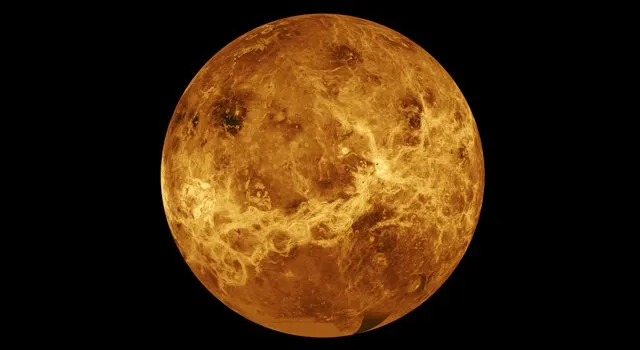
Venus’ dense cloud cover blocks all direct views of its surface, forcing scientists to rely on radar imaging. Magellan mapped the planet by sending radio waves toward the surface and measuring how long they took to return.
These measurements allowed scientists to build detailed maps of Venus’ terrain. Long chains of pits and collapsed regions visible in the data have long hinted at underground cavities, and this study focuses on one of the strongest candidates identified so far.
Future missions may confirm the discovery
Confirming the full size and structure of the underground tunnel will require new observations. Several upcoming missions to Venus are planned with advanced radar instruments capable of probing beneath the planet’s surface.
Some of these instruments are designed to scan hundreds of metres underground, potentially detecting volcanic conduits even where no surface openings exist. These missions could finally confirm whether Venus hosts an extensive network of lava tubes.
What this discovery means for Venus
This possible lava tube adds to a growing body of evidence that Venus is more geologically complex than once believed. Rather than being a long-dead world, Venus may still be reshaping itself beneath its clouds.
Understanding Venus’ volcanic history also helps scientists compare it with Earth and explore why two similar planets evolved so differently over billions of years.
Final thoughts
The potential discovery of an underground tunnel beneath Venus highlights how much remains hidden on our neighbouring planet. It also shows that older data can still deliver major breakthroughs when revisited with modern analysis techniques.
As new missions prepare to explore Venus in greater detail, this hidden tunnel may be just the beginning of a deeper understanding of one of the Solar System’s most mysterious worlds.