

The lessons learned from Artemis II mark a significant step forward in humanity’s return to deep space exploration. As the first crewed mission of NASA’s Artemis programme to orbit the Moon, Artemis II provided invaluable insights into the realities of long-duration spaceflight beyond low Earth orbit.
While the mission achieved major milestones, it also revealed challenges that will shape future lunar and Martian exploration. From human decision-making to communication systems and global cooperation, Artemis II offered a clear picture of what it takes to sustain human presence in deep space.
Human presence remains essential in deep space

One of the most important lessons learned from Artemis II is the critical role of humans in space missions. While automation and advanced systems handled much of the mission, the crew’s ability to respond to unexpected situations proved invaluable.
During the mission, astronauts encountered technical limitations and system quirks that required real-time decision-making. These moments reinforced the idea that no matter how advanced technology becomes, human intuition and adaptability remain irreplaceable.
The mission also highlighted the importance of hands-on problem-solving. From managing onboard systems to addressing minor malfunctions, the crew demonstrated that human oversight is essential for mission safety and success.
This balance between automation and human control will be a key focus for future missions, ensuring that systems are both intelligent and responsive to human input.
Strengthening systems and communication
Another key takeaway from the lessons learned from Artemis II is the need for more robust communication and system resilience. Deep space missions operate far beyond the reliable reach of Earth-based infrastructure, making communication stability a major priority.
Artemis II tested various backup systems under real mission conditions. While these systems performed well overall, the mission exposed areas where improvements are needed, particularly in maintaining consistent communication links and preventing software disruptions.
The mission also reinforced the importance of redundancy. Multiple layers of backup systems are essential to ensure that critical functions remain operational even when primary systems fail.
As future missions venture further into space, enhancing communication technology and system reliability will be crucial for maintaining safety and operational efficiency.
Collaboration and strategy for the future

The lessons learned from Artemis II extend beyond technology and operations. The mission highlighted the importance of international collaboration in achieving ambitious space exploration goals.
Deep space missions require resources, expertise, and coordination on a global scale. Artemis II demonstrated that partnerships between countries, agencies, and organisations are essential for sharing knowledge, reducing costs, and accelerating progress.
Supply chain management also emerged as a critical factor. Coordinating the production and delivery of components requires real-time data sharing and strong collaboration between suppliers. Any disruption can impact mission timelines and performance.
Key strategic lessons from Artemis II include:
- The importance of global partnerships in space exploration
- The need for transparent and efficient supply chain systems
- The value of shared data and collaborative innovation
- The role of ethics in long-term space habitation
- The importance of planning for sustainable lunar presence
These insights will guide the development of future missions, ensuring that exploration efforts are both effective and responsible.
Designing for long-term space habitation
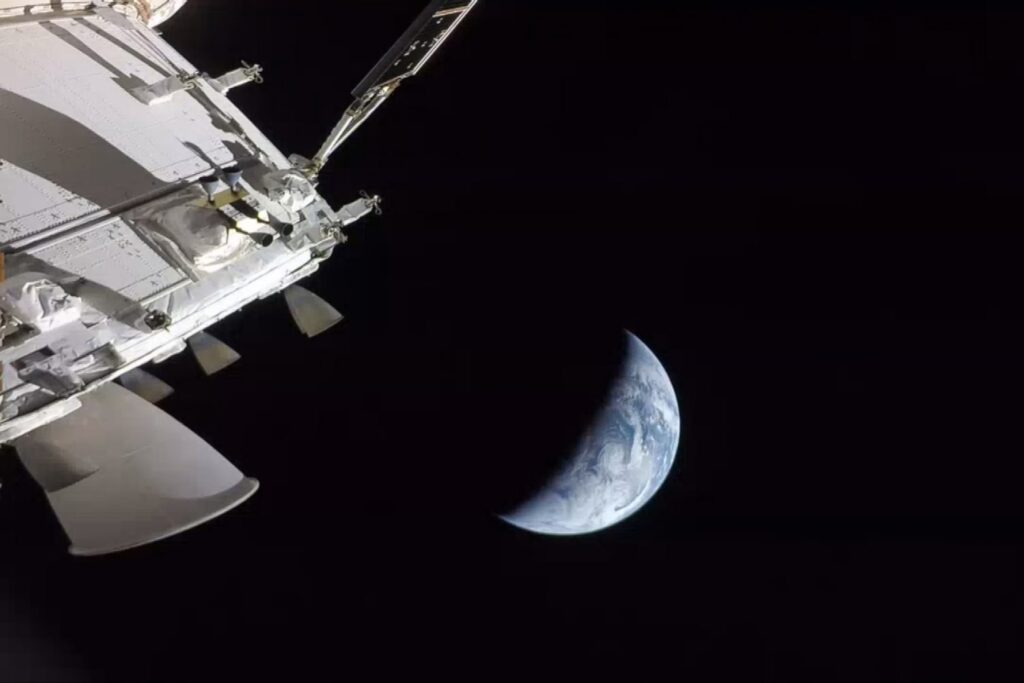
Artemis II also provided valuable insights into the challenges of sustaining human life in space. While the Orion spacecraft successfully supported the crew, the mission highlighted areas that require further development for longer missions.
Environmental control systems, including air, water, and waste management, must be refined to support extended stays in space. The mission demonstrated that while current systems are functional, improvements are needed for long-duration missions to the Moon and beyond.
The concept of the “digital thread” also played a significant role. By linking design, engineering, and manufacturing data, NASA was able to track performance and identify areas for improvement more effectively.
Additionally, the mission reinforced the importance of psychological and cultural considerations. Long-term space habitation will require careful planning to address the human experience, including mental health and social dynamics.
A new perspective on Earth and beyond
Beyond the technical and operational insights, Artemis II offered a powerful reminder of humanity’s place in the universe. The mission reinforced the “Overview Effect,” where astronauts gain a profound appreciation for Earth when viewing it from space.
This perspective is not just philosophical. It also has practical implications for Earth monitoring and environmental research. Observing our planet from deep space provides valuable data that can help track climate change and other global challenges.
The lessons learned from Artemis II will shape the future of space exploration, guiding the next steps in humanity’s journey beyond Earth. As we prepare for future missions, these insights will ensure that we are better equipped to explore, adapt, and thrive in the vastness of space.
The path to the Moon and beyond is becoming clearer, and with each mission, we move closer to a new era of exploration.