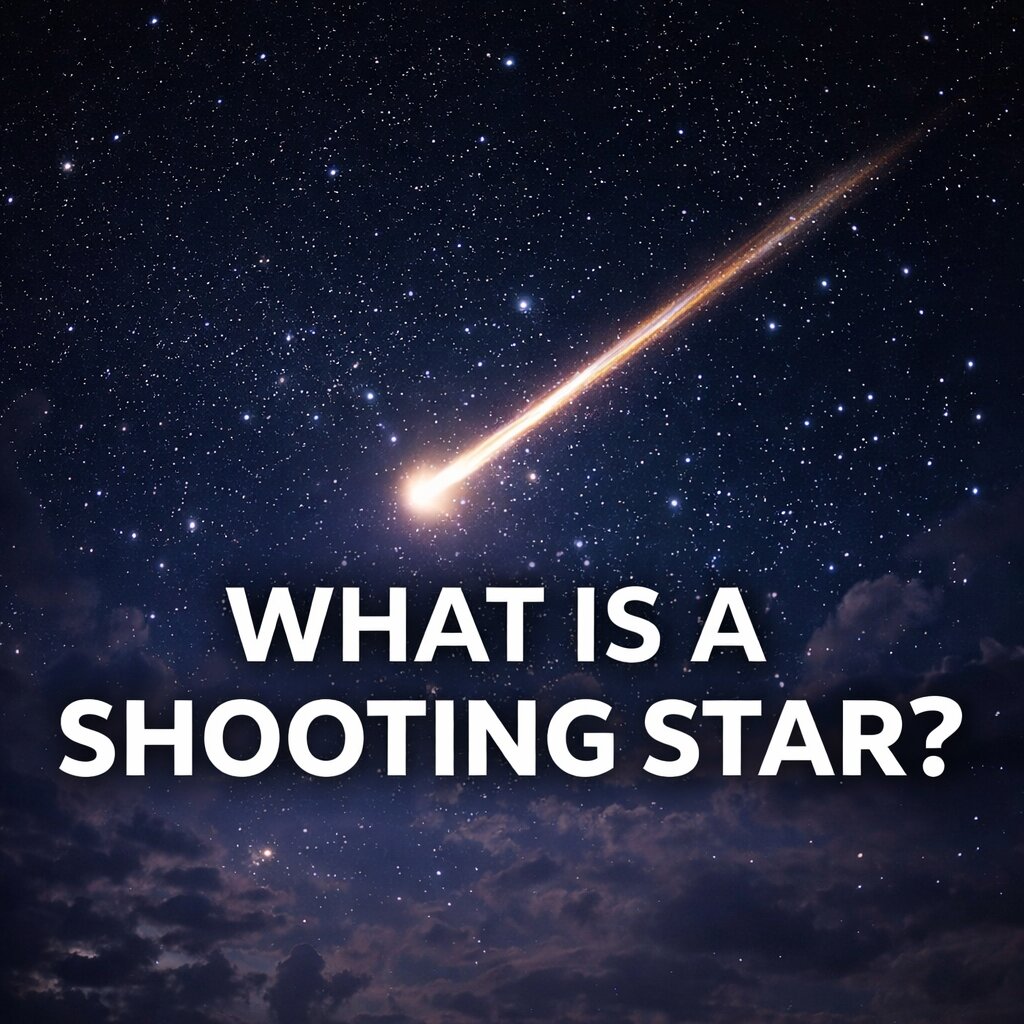

Have you ever looked up at the night sky and seen a bright streak flash across the darkness? Many people call these “shooting stars,” but they are not actually stars at all. Understanding what they really are adds a whole new level of appreciation to the experience.
In astronomy, these glowing streaks are known as meteors. They are small fragments of rock or dust entering Earth’s atmosphere at incredible speeds. As they burn up, they create the brief but beautiful light we see from the ground.
Learning about shooting stars helps us better understand how our planet interacts with space. It also reveals just how dynamic and active our solar system really is.
What Causes a Shooting Star?
A shooting star occurs when a tiny piece of space debris, called a meteoroid, enters Earth’s atmosphere. These particles can come from comets, asteroids, or even collisions between space objects.
As the meteoroid travels through the atmosphere, friction with air molecules causes it to heat up rapidly. This intense heat makes it glow, creating the bright streak we see in the sky.
Most meteors burn up completely before reaching the ground. However, if a fragment survives the journey, it becomes known as a meteorite.
These events happen more often than you might think. Thousands of meteors enter Earth’s atmosphere every day, although most are too small to notice.
Why Do Some Meteor Showers Occur?
Meteor showers happen when Earth passes through a trail of debris left behind by a comet. These debris fields contain countless small particles that enter our atmosphere at the same time.
During a meteor shower, you may see multiple shooting stars in a short period. This makes them one of the most exciting events for skywatchers.
Some of the most well-known meteor showers occur annually, such as the Perseids and the Geminids. Each has its own peak viewing period and unique characteristics.
Meteor showers are predictable, which makes them perfect for planning a night of stargazing.
Tips for Watching Shooting Stars
If you want to see a shooting star, timing and location are important. The darker the sky, the better your chances of spotting one.
Find a location away from city lights. Light pollution can make it difficult to see faint meteors, especially smaller ones.
Allow your eyes time to adjust to the darkness. This can take about 20 to 30 minutes, but it significantly improves visibility.
Patience is key. Shooting stars can appear at any moment, so the more time you spend watching the sky, the more likely you are to see one.
A Glimpse of Space in Motion
Shooting stars remind us that space is not static. It is constantly moving, shifting, and interacting with our planet in subtle but beautiful ways.
The next time you see a streak of light across the sky, you will know that it is not a distant star, but a tiny visitor from space burning brightly for just a moment.
And in that brief flash, you are witnessing a small piece of the universe connecting with Earth in a truly spectacular way.