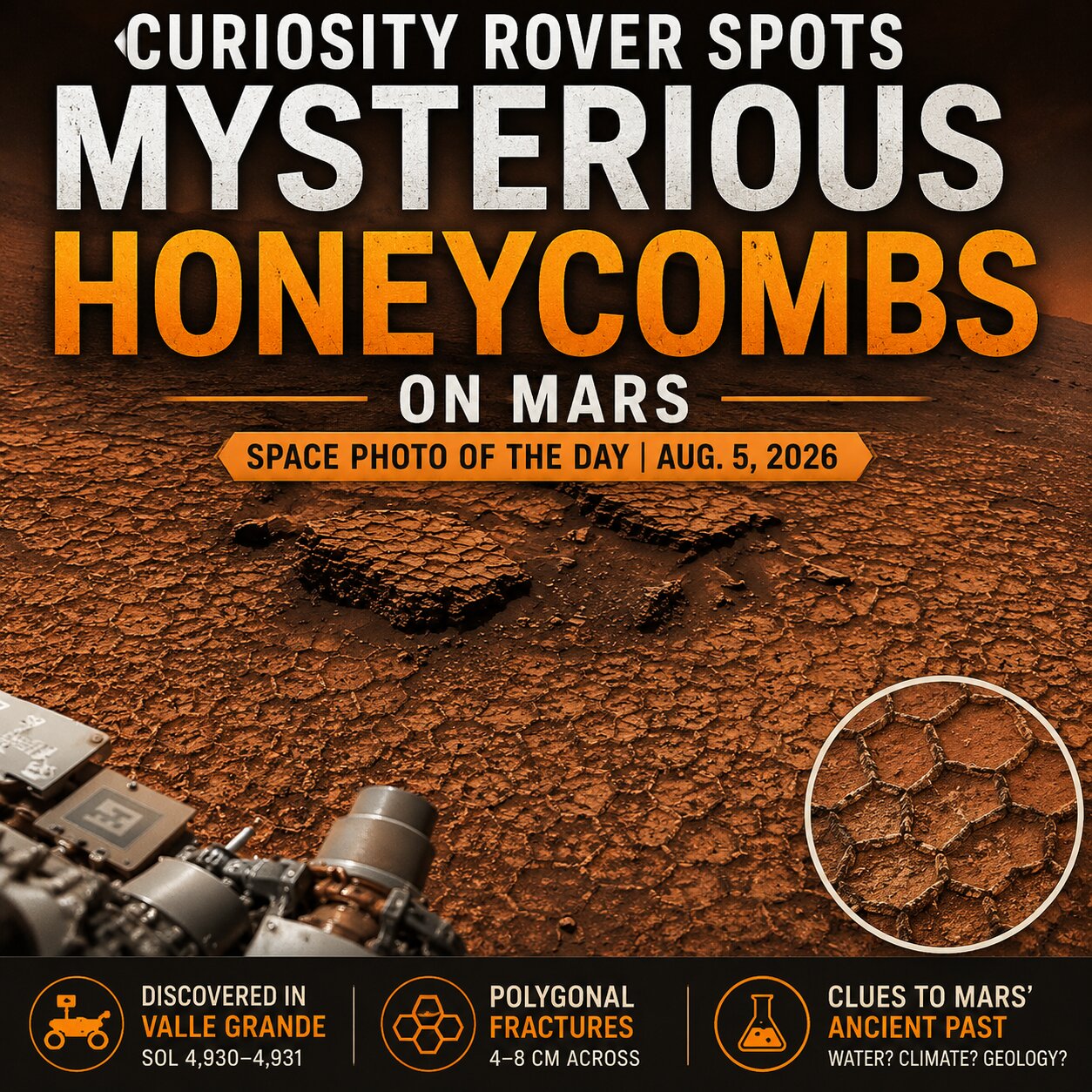

NASA’s Curiosity rover has revealed one of the most visually striking geological landscapes seen on Mars in recent years. While exploring the region known as Valle Grande, the rover captured detailed images of an enormous field of honeycomb-shaped ground patterns stretching across the Martian surface.
Known as polygonal fractures, these formations measure approximately 4 to 8 centimetres across and create an intricate network of almost perfectly shaped polygons that continue as far as Curiosity’s cameras can observe. The discovery has generated excitement among planetary scientists, who hope the unusual terrain will provide valuable clues about Mars’ ancient environmental history.
A Landscape Unlike Any Other
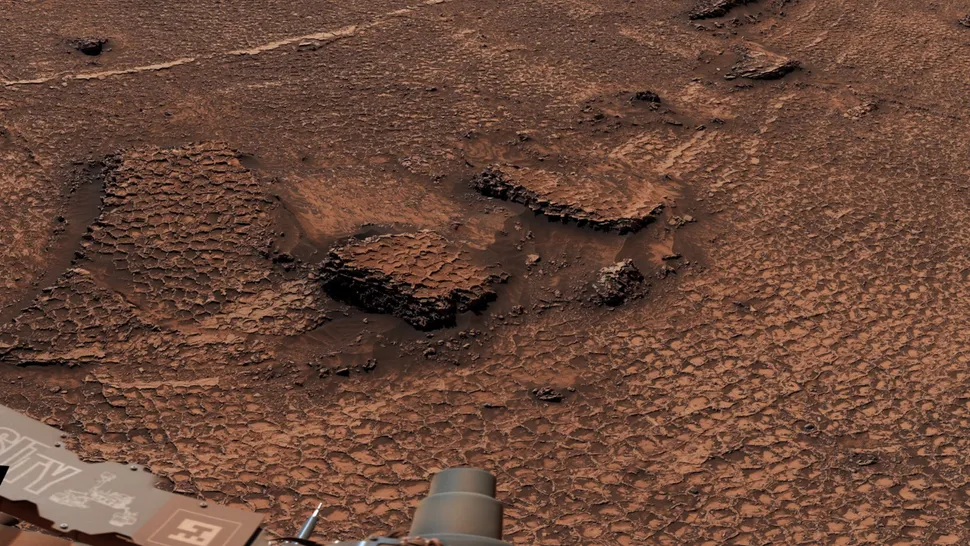
Although polygon-shaped fractures have been observed elsewhere on Mars, the sheer scale of this newly discovered field makes it particularly significant.
The formations extend across the valley floor and continue around the base of a nearby hill known as Miraflores, suggesting that whatever process created them affected a large area rather than an isolated location.
Scientists are now studying the shapes, spacing, and chemical composition of the surrounding rocks to better understand how these remarkable patterns formed.
What Created The Honeycomb Patterns?
Researchers believe several natural processes could have produced the polygonal fractures.
One possibility is repeated cycles of wetting and drying billions of years ago, similar to the cracking patterns found in dried mud on Earth. Another theory involves the expansion and contraction of underground materials as temperatures changed over long periods.
Minerals transported by ancient groundwater may also have strengthened the edges of the polygons, allowing them to remain visible long after their formation.
Future analysis of Curiosity’s geological data may help determine which explanation best fits the evidence.
Why This Matters
Mars continues to surprise scientists with evidence that its distant past may have been far more dynamic than the cold, dry planet we see today.
Geological formations like these act as natural records of ancient environmental conditions. By understanding how they formed, researchers gain valuable insight into the history of Martian water, climate, and the processes that shaped the planet over billions of years.
Each new discovery helps scientists refine future exploration plans while identifying locations that may preserve evidence of Mars’ earliest history.
Another Reminder That Mars Still Has Stories To Tell
After more than a decade exploring the Red Planet, Curiosity continues to uncover landscapes that challenge our understanding of Martian geology.
The newly discovered honeycomb terrain in Valle Grande demonstrates that even after thousands of Martian days, the rover remains capable of revealing features that inspire fresh scientific questions and future investigations.
As humanity prepares for the next generation of robotic and eventually crewed missions, discoveries like these remind us that Mars still holds countless secrets waiting to be explored.