
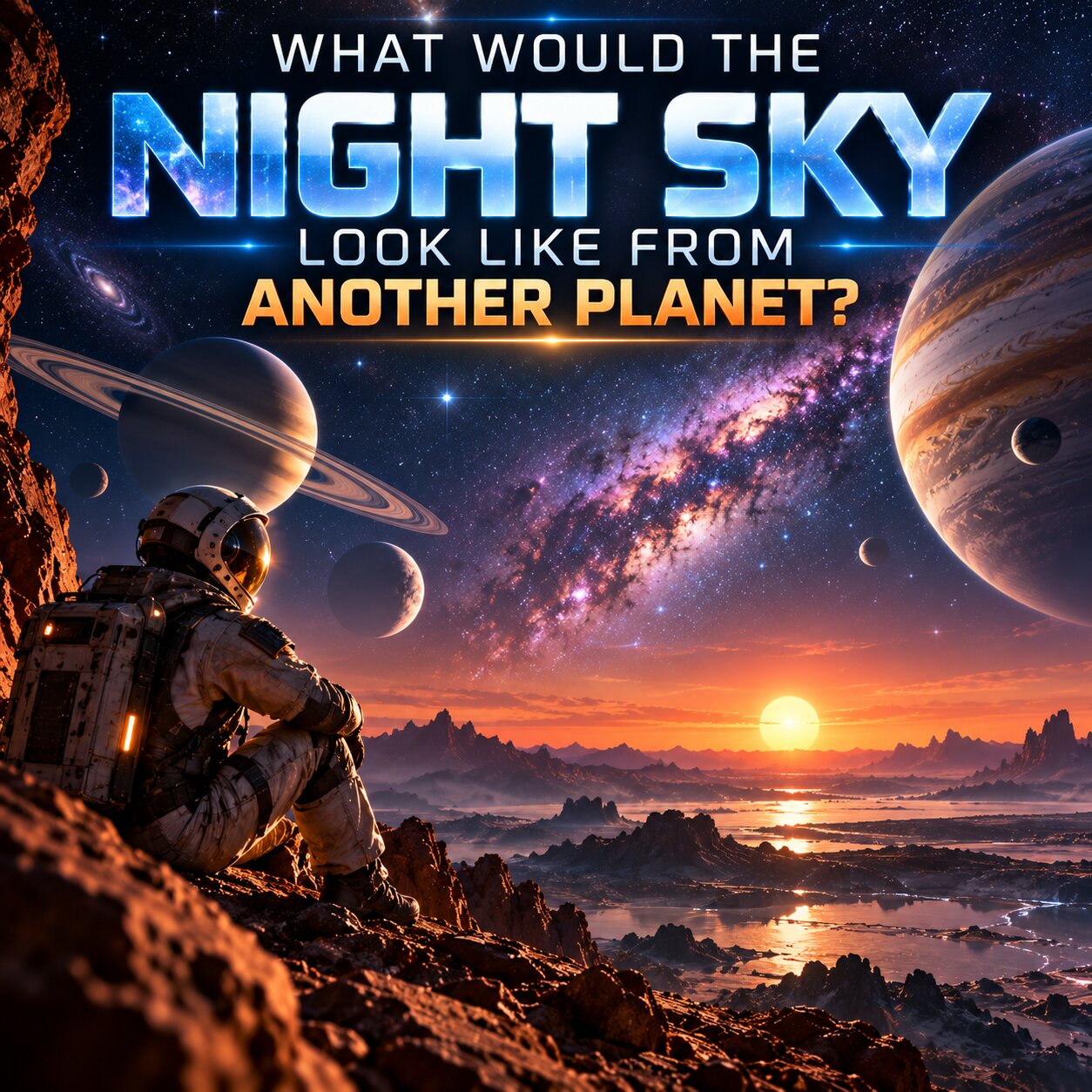

We are accustomed to looking up and seeing Earth’s night sky. The Moon crosses familiar constellations, planets wander between the stars and the Milky Way stretches across sufficiently dark skies.
Travel somewhere else in the Solar System and the universe would suddenly look very different.
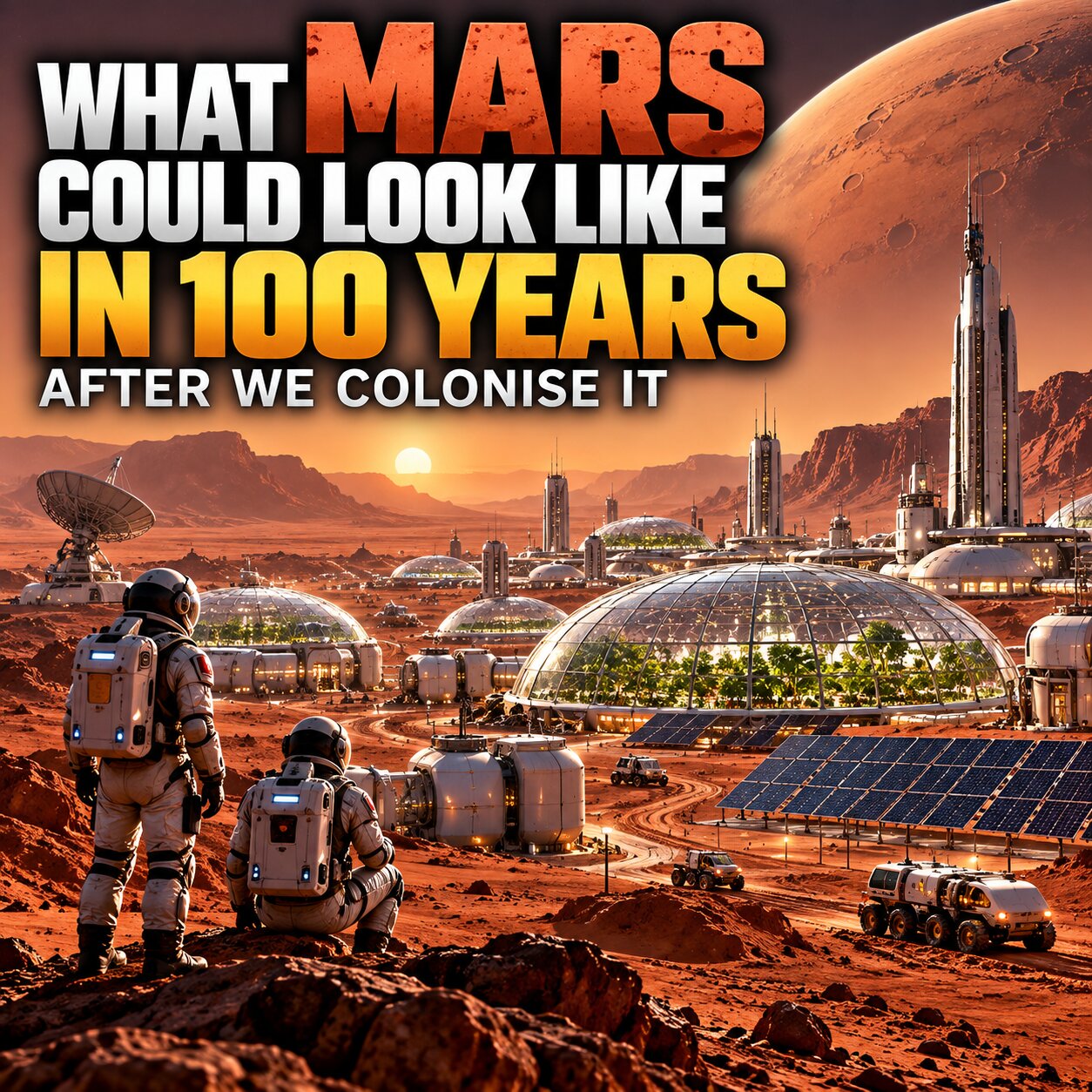
Mars provides perhaps the most fascinating realistic example for future human explorers.
Standing on its surface, an astronaut would still recognise many of the same stars because travelling from Earth to Mars barely changes our position compared with the enormous distances separating the stars themselves.
The planets, however, would appear from a different perspective.
Earth would become another object in the Martian sky.
Our planet could appear as a bright point of light, accompanied by the Moon when their positions allowed them to be distinguished. For someone born on Mars, that tiny light could represent the distant world where humanity originated.
Alien Moons and Strange Skies
Mars also has two small moons, Phobos and Deimos.
They would provide a completely different experience from Earth’s large Moon. Phobos moves across the Martian sky relatively quickly because it orbits close to the planet, while distant Deimos behaves differently. Neither would resemble the enormous bright lunar disc familiar to observers on Earth.
The Moon itself would provide another extraordinary observing location.
With virtually no atmosphere to scatter sunlight, its sky would remain dark even while the Sun was above the horizon. The lack of atmospheric turbulence would also create interesting conditions for astronomical observation, although lunar dust, extreme temperatures and direct sunlight would present engineering challenges.
Venus would be far less welcoming. Its thick atmosphere and extensive cloud cover mean an observer standing on the surface would not enjoy anything resembling a conventional clear night sky.
Then we can leave the Solar System and enter science fiction.
Imagine standing on a habitable planet orbiting two stars. Its inhabitants could experience spectacular double sunsets. A planet inside a dense stellar region might have a dramatically richer night sky, while a world with several moons could experience complicated cycles of moonlight and eclipses.
Constellations would change completely once we travelled far enough from the Solar System. Familiar stellar patterns are created by our particular viewpoint in space. Move across interstellar distances and those apparent arrangements begin to distort.
Orion would no longer necessarily look like Orion.
That is one of the wonderful things about combining astronomy with science fiction. Real astronomical principles give authors an enormous playground without requiring them to abandon imagination.
One day, humans may genuinely stand beneath another world’s sky.
Until then, astronomy lets us calculate what they might see—and science fiction lets us imagine what it might feel like.
Have you imagined your own planets, alien skies or journeys among the stars? Celenic Earth Publications welcomes science fiction manuscripts from fiction authors for consideration. submit your sci fi book here.
Leave a Reply