Betelgeuse is one of the most famous stars in the night sky. Bright, bold and noticeably red, it marks the shoulder of the constellation Orion and has fascinated astronomers for centuries. But Betelgeuse is more than just a striking point of light. It is a colossal red supergiant nearing the end of its life, expanding, pulsing and shedding material as it prepares for an explosive future.
This guide explores what Betelgeuse is, why it behaves so dramatically and what scientists expect will happen next.
Table of Contents
What makes Betelgeuse a red supergiant
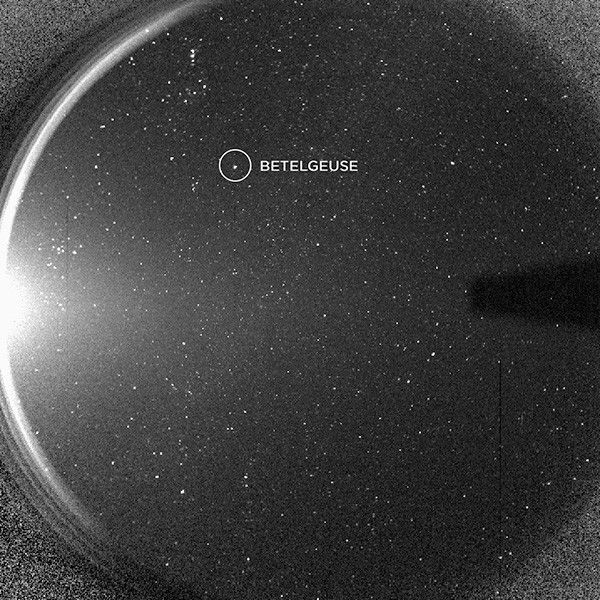
Betelgeuse is in a very late stage of stellar evolution. After running out of hydrogen in its core, the star expanded enormously as it began fusing heavier elements. Its outer layers cooled and spread outward, giving Betelgeuse its famous deep orange-red glow.
As a red supergiant, Betelgeuse is:
- Hundreds of times larger than the Sun
- Roughly 10–20 times the mass of the Sun
- Tens of thousands of times brighter
If the star replaced our Sun, its surface would extend past the orbit of Mars. This incredible size is part of why red supergiants are unstable: their outer layers are thin and easily disturbed, leading to dramatic changes in brightness.
A star that pulses, dims and surprises astronomers
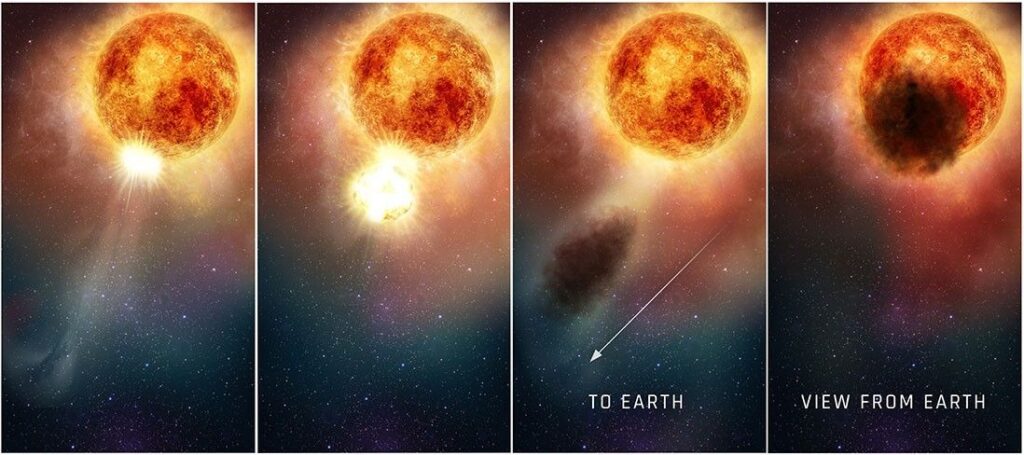
One of the most fascinating features of Betelgeuse is its variability. It expands and contracts in cycles that cause regular changes in brightness. However, in late 2019 and early 2020, the star shocked astronomers when it dimmed far more than expected. Some thought it might be on the verge of a supernova.
Later observations revealed a more ordinary explanation:
A huge cloud of dust released by the star briefly blocked its light from our viewpoint. This event showed how violently the star can shed material as it nears the end of its life.
Today, the star continues to fluctuate in brightness, giving researchers insight into the behaviour of dying massive stars.
How close is the star to going supernova?
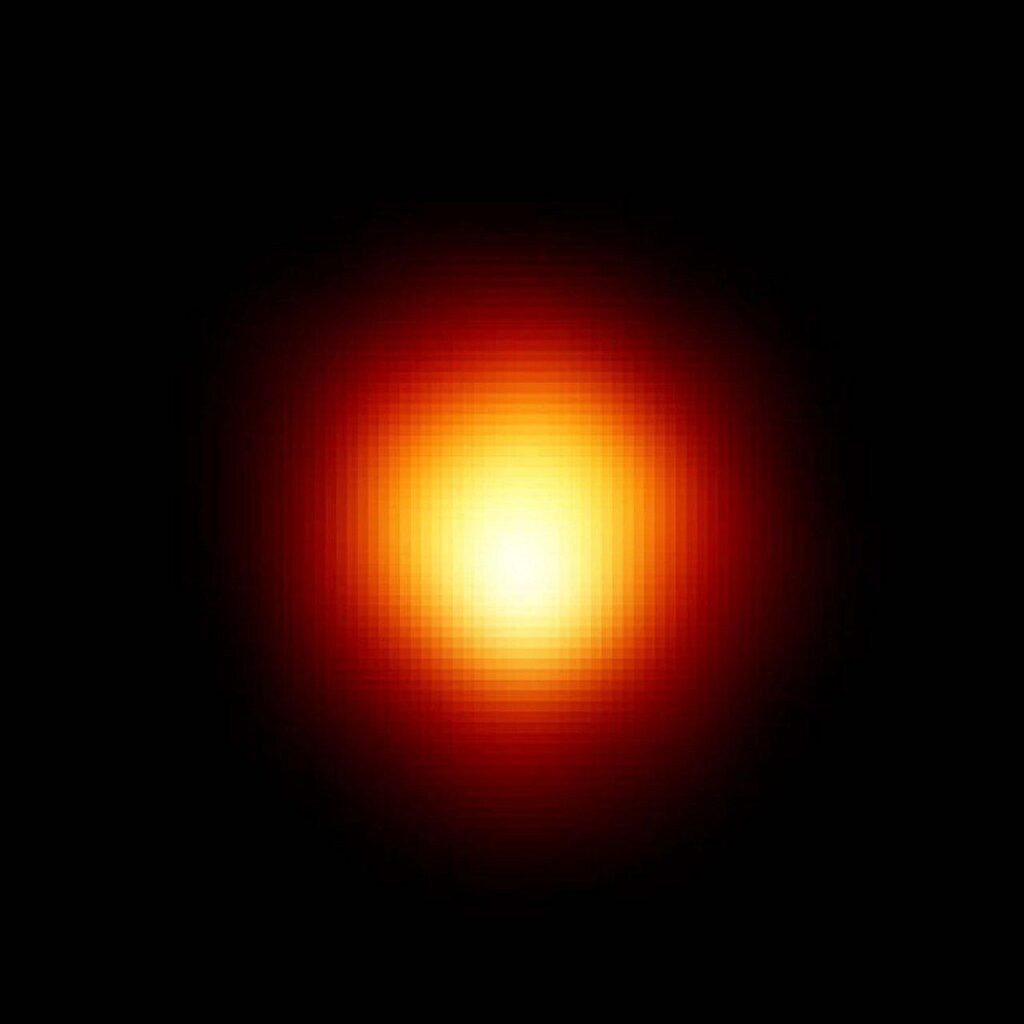
At some point, Betelgeuse will explode as a Type II supernova, one of the most energetic events in the universe. But despite the speculation, astronomers do not expect this to happen anytime soon.
While “not soon” could still mean tomorrow in cosmic terms, real estimates range from:
- 100,000 years
to - 1 million years
When the star does explode, it will not harm Earth. It is too far away, roughly 550 light-years, for the radiation or shockwave to reach us in a dangerous form. Instead, it will create a spectacular display, bright enough to be visible in the daytime sky for weeks.
Why Betelgeuse matters to astronomy
Betelgeuse gives scientists a rare opportunity to study a supergiant star in real time. It allows astronomers to:
- Observe late-stage stellar evolution
- Track massive star mass loss
- Model supernova precursors
- Understand how heavy elements are recycled into the galaxy
Because it is relatively close, the star is almost like a laboratory for studying how massive stars live and die. Few stars in the sky offer so much data, mystery and scientific excitement.
A brilliant giant nearing its final act
Betelgeuse is one of the most extraordinary stars in our sky. Enormous, unstable and rich with scientific clues, it gives us a front-row seat to the final phases of stellar evolution. Whether dimming, brightening or shedding clouds of dust, this red supergiant reminds us that even stars live dramatic lives.
When the star finally explodes, it will be a once-in-a-civilisation event. Until then, astronomers continue to watch, listen and learn from this brilliant giant.