A Hypothetical, Just-for-Fun Look at What Our Own Colony Vessel Might Be
Humanity has imagined travelling to Mars for generations, but what would a fully equipped Mars Migration Shuttle actually look like? Not a small exploration capsule or a short-duration research craft, but a true interplanetary migration vessel designed to carry people, supplies, and even living ecosystems across the vast distance to the Red Planet.
Before we begin, here’s an important disclaimer: This is a completely hypothetical concept created for fun and creative space exploration.
It is not based on any active spacecraft project, design leak or scientific proposal. We’re simply imagining what a future Mars Migration Shuttle could be, based on science-inspired speculation and a love of world-building.
With the disclaimer out of the way, let’s design humanity’s first long-distance migration vessel: engines, biodomes, habitats and all.
1. Exterior Design: The Mars Migration Shuttle (MMV-1 “Red Horizon”)
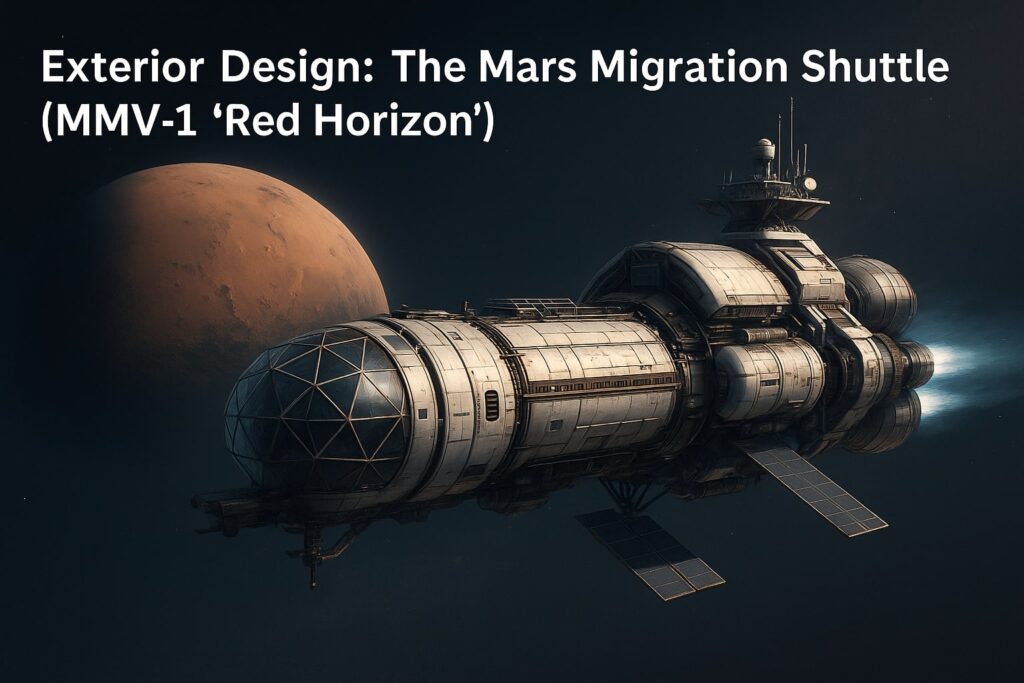
The Mars Migration Shuttle must function as both a spacecraft and a travelling settlement, capable of protecting dozens of people across months in deep space. The exterior design of the MMV-1 “Red Horizon” focuses on durability, modularity and long-range sustainability. Its elongated body is divided into reinforced segments, allowing components to be replaced, upgraded or expanded across future generations of Mars-bound missions.
The hull is built from layered composite materials engineered to withstand extreme radiation, micrometeoroid strikes and temperature fluctuations. A combination of metallic foams, carbon-reinforced polymers and hydrogen-infused shielding lines the outer shell, forming a protective barrier much thicker than anything used in low-Earth orbit. Along the centre, retractable radiator wings help regulate heat, while docking arms allow the shuttle to connect with supply vessels or orbital stations before departure.
At the nose of the Mars Migration Shuttle sits a reinforced observation dome with filtered radiation glass. It serves as both a navigational window and a symbolic forward view — a place where travellers can observe the stars and watch Mars grow closer day by day. The entire exterior balances functionality with a sense of wonder, bridging the gap between a spacecraft and a mobile home for humanity’s first interplanetary migrants.
2. Propulsion and Engines: How We Cross the Void
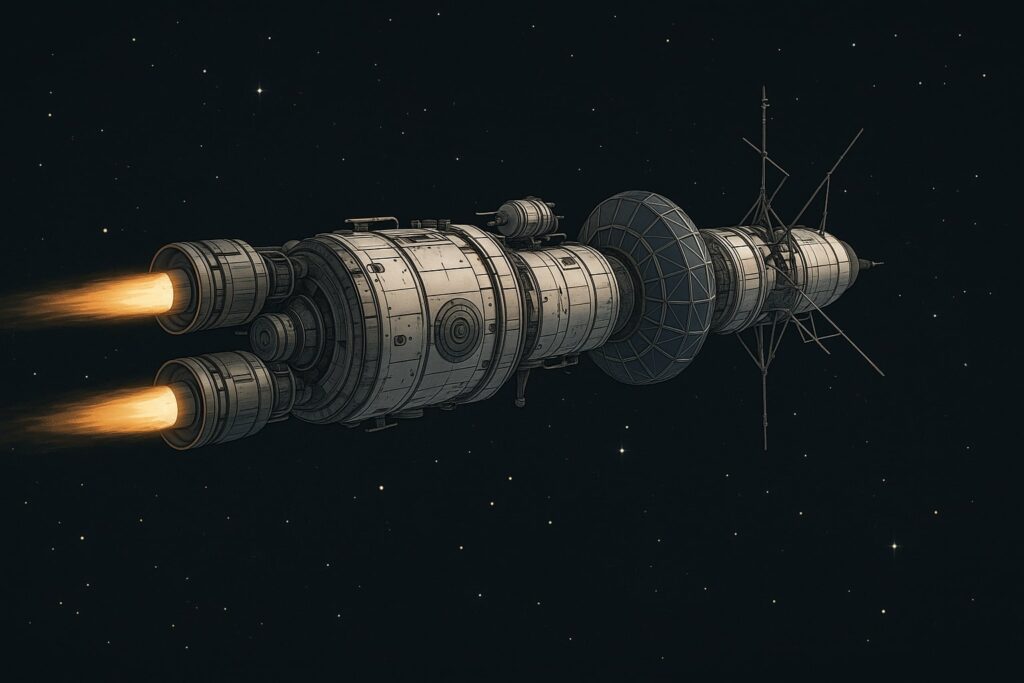
To move a vessel this large between planets, the Mars Migration Shuttle relies on a hybrid propulsion system designed for both efficiency and controlled acceleration. The primary engine array consists of fusion-assisted ion drives, combining powerful magnetic confinement with ultra-high-efficiency ion propulsion to achieve a steady, continuous thrust. While not as dramatic as cinematic rockets, this system provides reliable acceleration over months of travel, gradually building enough momentum to bridge the distance to Mars.
Backup engines include a pair of nuclear thermal boosters, reserved for major trajectory changes, emergency manoeuvres or initial escape burns from Earth orbit. These engines are heavily shielded behind a radiation barrier and positioned at the rear of the shuttle to protect living areas. Chemical thrusters, placed along the sides of the hull, provide fine attitude control and docking precision.
Fuel storage is distributed across several detachable tanks, each insulated and protected by micrometeoroid armour. This layout reduces risk and keeps the centre of mass stable throughout the journey. Combined with advanced star tracking systems and deep-space navigation computers, the engine suite of the Mars Migration Shuttle is built for reliability over spectacle, the quiet endurance needed to carry humanity safely from one world to another.
3. The Biodome Habitat: A Living Ecosystem in Space
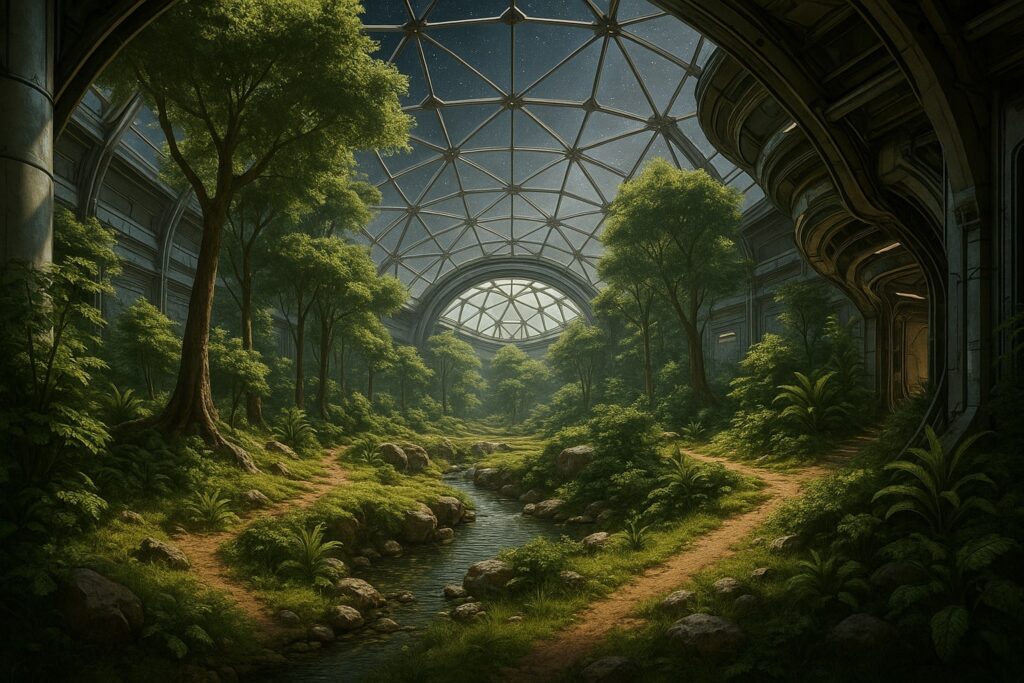
Life support on a long-distance vessel cannot rely solely on machines. To maintain air quality, nutrition and psychological well-being, the Mars Migration Shuttle features a fully integrated biodome habitat — a self-contained, carefully managed ecosystem that brings nature into deep space. This biodome forms the heart of the shuttle, stretching like a living spine through its mid-section.
Inside the dome, a combination of micro-forests, moss beds, flowering plants and edible crops work together to recycle carbon dioxide, produce oxygen and stabilise humidity. Algae-infused panels line the walls, providing additional air filtration and acting as a secondary food source. Small streams of flowing water — maintained through a closed-loop reclamation system — contribute both to moisture control and the calming sensation of being surrounded by natural sounds.
Pollinator drones manage plant reproduction, while carefully controlled lighting cycles mimic sunrise and sunset to support plant growth and maintain circadian rhythms for passengers. In addition to its biological functions, the biodome acts as a psychological sanctuary. Travellers can walk through its pathways, rest beneath simulated sunlight and experience the grounding presence of real nature, even while drifting between Earth and Mars. This living environment transforms the Mars Migration Shuttle from a sterile vessel into a moving, breathing world.
4. Living Quarters: Private Space in the Depths of Space
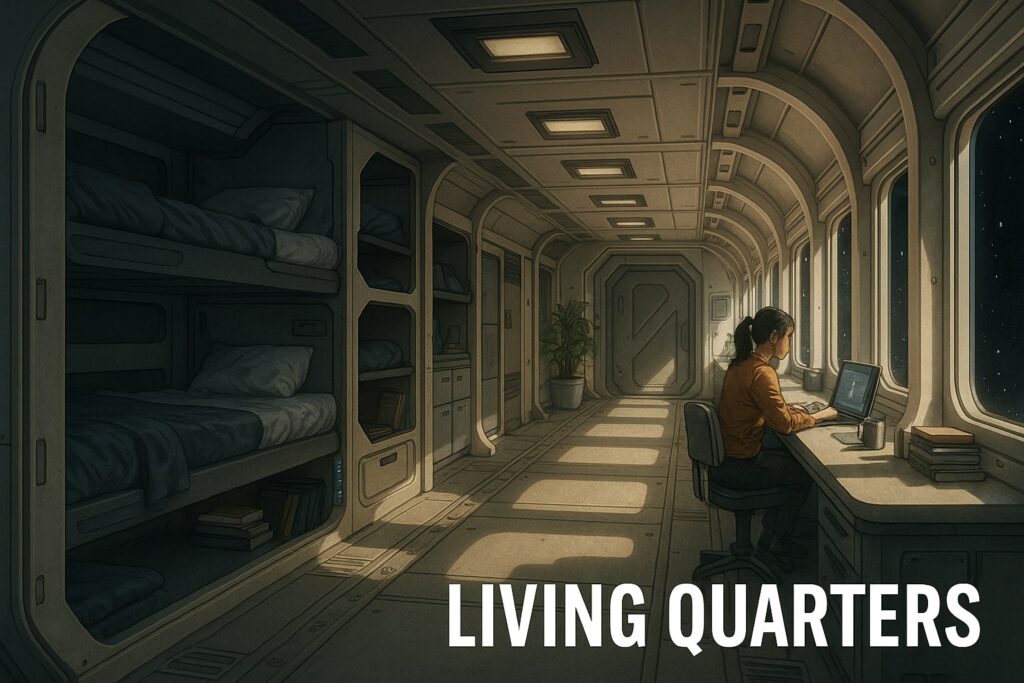
Long-duration travel requires comfort, routine and a sense of personal identity, even in the middle of interplanetary space. The living quarters aboard the Mars Migration Shuttle are designed around these needs, blending efficiency with psychological well-being. Instead of cramped bunk beds or tiny pods, the shuttle features modular cabin suites arranged along a rotating habitation ring that generates gentle artificial gravity. This helps reduce muscle atrophy, stabilises sleep cycles and creates a more familiar sense of “up” and “down” for passengers.
Each cabin includes a sleeping pod, a fold-out workstation, adjustable lighting for circadian health and a small privacy window displaying a real-time projection of either space or the biodome gardens. Sound-dampening materials built into the walls prevent noise from travelling between rooms, providing a peaceful atmosphere despite the bustle of life aboard the shuttle. Communal areas, such as lounges, fitness rooms and small social hubs, are strategically placed throughout the ring to encourage healthy interaction without overcrowding. The result is a living environment that feels safe, personal and surprisingly normal despite the vast emptiness outside the hull.
5. The Nature Centre: A Sanctuary Between Worlds
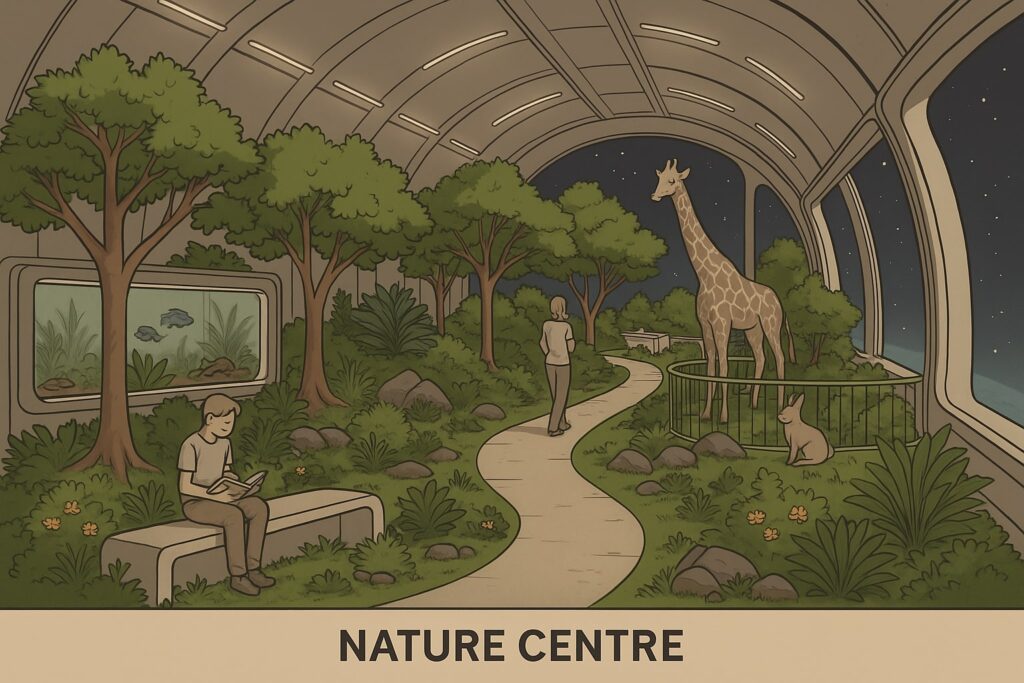
Beyond the functional biodiversity of the main biodome, the Mars Migration Shuttle includes a specialised Nature Centre designed to support emotional well-being, ecological balance and long-term psychological health for travellers. While the biodome sustains the ship, the Nature Centre sustains the human spirit. It recreates a sense of Earth that passengers can see, hear and feel, a living reminder of the world they left behind.
The centre features lush moss walls, soft forest-like walkways and bioluminescent plants that create a calming glow during the artificial night cycle. Carefully controlled airflow systems carry subtle natural scents such as pine and wild herbs, helping reduce anxiety and grounding passengers in familiar sensory experiences. Gentle humidity, filtered sunlight simulation, and ambient nature sounds further enhance the feeling of stepping into a pocket of Earth hidden within the vessel.
Small Animal Habitats: A Miniature, Responsible “Noah’s Ark”
To deepen the connection to nature, the Nature Centre houses a selection of small animals specifically chosen for their low ecological footprint and ability to thrive in controlled environments.
Tiny bird species, such as finches or canaries, live in a dedicated micro-aviary fitted with gravity-adjusted perches and gentle air cycling to let them fly safely. Their songs and movement bring a vibrant sense of life into the centre.
A small mammal habitat, home to species like hamsters or mice, provides an opportunity for research while giving passengers the comfort of observing familiar Earth animals. Clear-walled habitats allow visitors to watch natural behaviours without disturbing the animals’ routines.
A zero-gravity aquarium enhances the sense of wonder. Already tested in space environments, these sealed aquatic spheres host small fish that naturally adapt to the gentle currents generated within the tank. Their calm, drifting motion adds to the centre’s soothing atmosphere.
These carefully selected species do not exist for entertainment alone. They support the emotional resilience of the crew, help maintain simple ecological cycles and serve as early prototypes for future life-support ecosystems on Mars. Every habitat is monitored with advanced environmental controls to ensure ethical care and long-term stability.
A Space for Peace and Reflection
At the heart of the Nature Centre lies a floating observation bubble, a transparent sphere where travellers can strap in or drift freely while gazing at the stars surrounding them. This fusion of Earth-like life and the infinite cosmos creates a profound sense of perspective. In a journey defined by isolation, the Nature Centre becomes a sacred refuge; a bridge between worlds where passengers can rest, reflect and reconnect with the living beauty of the planet they are journeying so far from.
6. Dining and Nutrition Systems: Feeding a Community in Deep Space
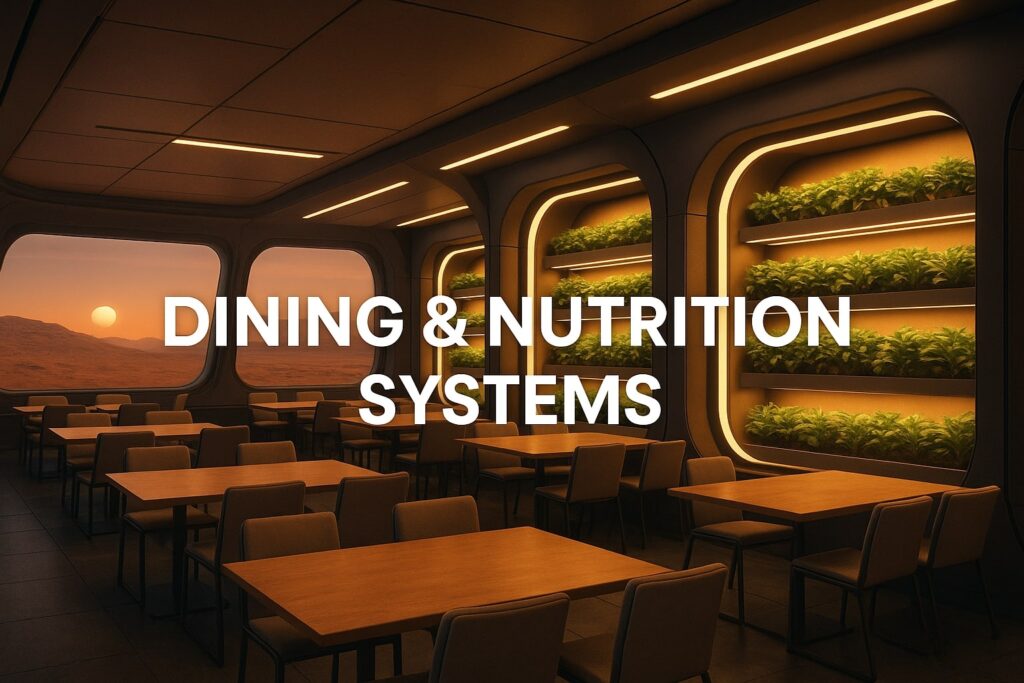
Nutrition aboard the Mars Migration Shuttle is a carefully orchestrated blend of technology, sustainability and communal design. Food comes from several integrated sources: large hydroponic farms growing leafy greens, herbs and vegetables; protein production labs cultivating insects and fungi; and algae bioreactors that generate supplemental nutrients and oxygen. These systems work together to ensure a constant, renewable food supply with minimal waste.
The dining hall itself is a bright, welcoming space designed to encourage social connection. Long tables, holographic menu boards and integrated planters create an environment that feels more like a futuristic café than a spaceship. Automated cooking stations assist with meal prep, using AI-managed recipes tailored to crew needs, dietary requirements and nutrient balance.
The hall also doubles as an important psychological anchor. a place where passengers gather daily, share conversations and reinforce the sense of community essential for a healthy journey. Eating aboard the Mars Migration Shuttle is not only about sustenance, but about preserving the rituals that make life feel human, even millions of kilometres from home.
7. Storage Modules & Cargo Architecture
A mission as long and complex as Mars migration requires a cargo system that is both spacious and meticulously organised. The Mars Migration Shuttle uses a distributed storage architecture, placing multiple cargo modules along the spine of the ship to maintain balance and minimise structural stress. Each module is pressure-sealed, climate-controlled and reinforced with impact-absorbing panels to protect equipment during acceleration or micro-debris encounters.
Supplies are divided into three major categories: survival cargo, settlement cargo and operational cargo. Survival cargo includes food reserves, medical supplies, tools, water purification systems and life-support backups. Settlement cargo holds prefabricated Mars surface structures, portable habitats, solar arrays, rovers and scientific instruments intended for long-term use after landing. Operational cargo supports the ship itself — spare components, robotic repair drones, fuel reserves and critical system replacements.
Automated rail systems move crates between modules, reducing manual labour and ensuring rapid access during emergencies. The result is a cargo framework flexible enough for decades of Mars missions and robust enough to withstand the unforgiving conditions of deep-space travel.
8. Medical, Science and Research Labs
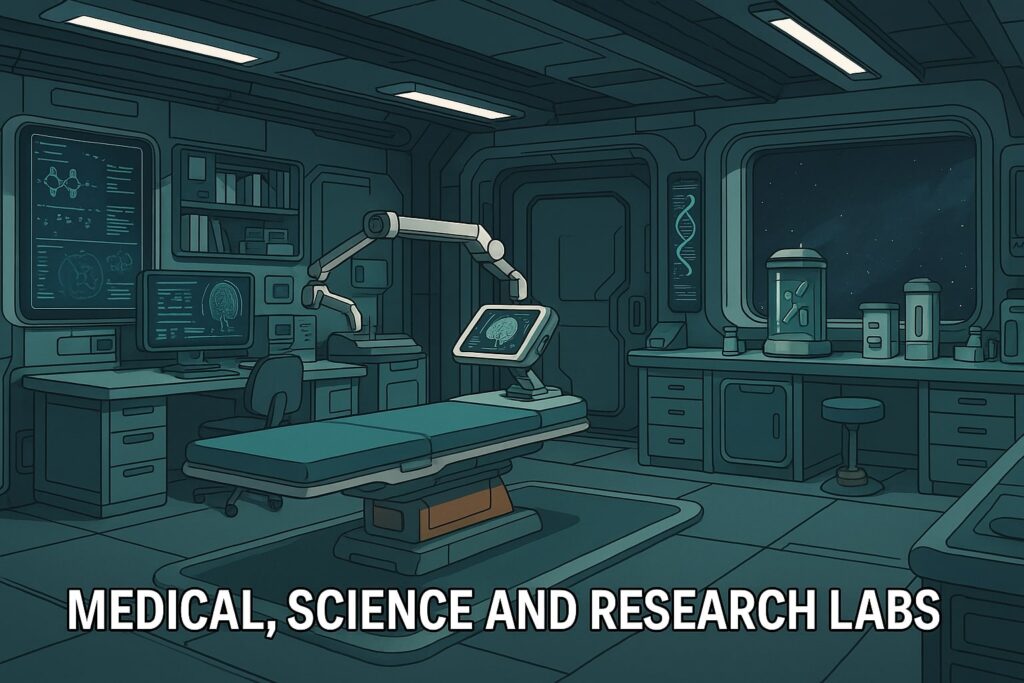
With months spent between planets, the Mars Migration Shuttle must function as a fully equipped research and medical centre. The medical bay is designed around advanced diagnostic tools and robotic assistance pods capable of performing surgery in low gravity. Walls are lined with smart storage lockers carrying emergency medication, plasma substitutes, wound gel, biological filters and portable isolation chambers.
Next to the medical bay sits the shuttle’s scientific research hub, a compact but powerful array of laboratories for the Mars Migration Shuttle. These include microbiology stations, plant-growth experiments tied to the biodome, radiation monitoring consoles and atmospheric simulation chambers for studying how Martian microbes or dust might behave. Every lab is modular, allowing experiments to be swapped or scaled depending on mission goals.
A dedicated behavioural health unit provides psychological support, sleep regulation therapies and light-cycle correction rooms to maintain mental well-being. Together, the medical and scientific facilities form the intellectual heart of the Mars Migration Shuttle, ensuring the crew can remain healthy while advancing research crucial to future colonisation.
9. Command Deck & Navigation Systems
Located at the forward section of the vessel, the Command Deck is the operational brain of the Mars Migration Shuttle. It features a panoramic radiation-shielded viewing array, holographic mapping displays and a fully redundant navigation cluster designed to withstand engine surges, solar storms and unexpected trajectory shifts.
The Mars Migration Shuttle deck is separated into three functional zones: navigation, communications and operations. The navigation zone monitors the shuttle’s propulsion systems, orbital paths and deep-space hazards using long-range scanners and autonomous star-tracking AI. The communications zone maintains contact with Earth, Mars orbital relays and other vessels travelling in convoy. The operations zone oversees internal functions: life support, security, biodome stability and emergency management.
Every console is supported by multipurpose AI copilots capable of taking over during emergencies or maintaining course while human crew rest. This combination of human judgement and advanced autonomy ensures safe travel even across millions of kilometres of empty space.
10. Safety & Emergency Systems
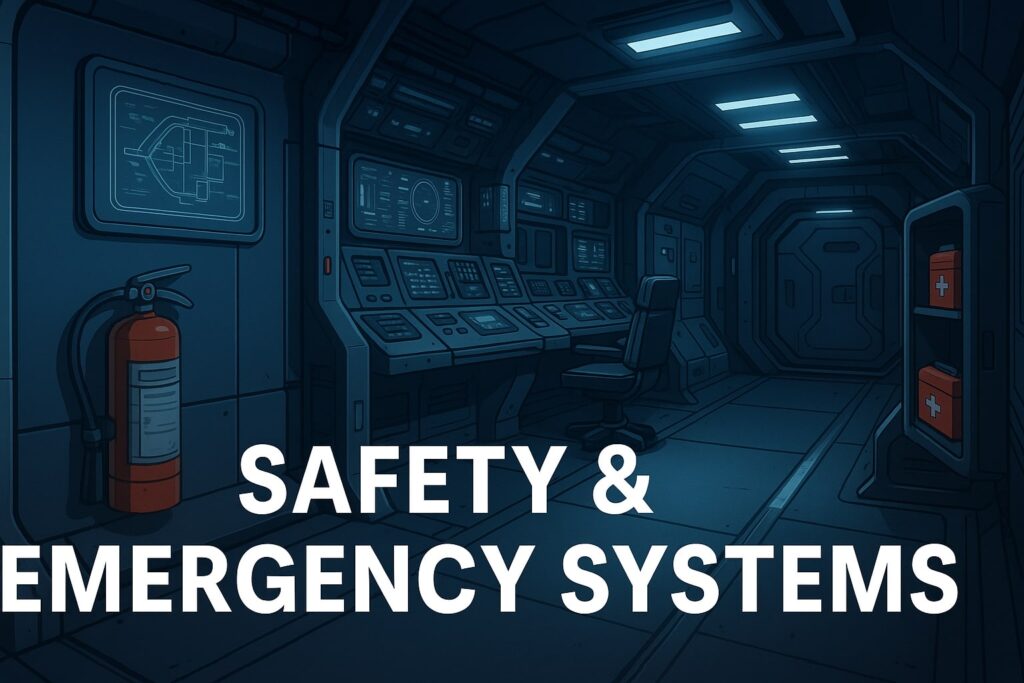
Safety aboard the Mars Migration Shuttle is built around redundancy, compartmentalisation and rapid-response automation. The vessel is divided into multiple airtight sectors with blast-resistant bulkheads that can seal instantly during hull breaches. Each sector includes independent oxygen recyclers and thermal regulators, allowing the ship to survive even if one area is compromised.
A series of Mars Migration Shuttle solar-flare shelters, heavily shielded rooms positioned near the shuttle’s core, protect passengers from intense radiation bursts. Emergency pods equipped with limited propulsion can detach from the main vessel if absolutely necessary, functioning as lifeboats until recovery.
Fire suppression relies on targeted atmosphere displacement rather than water, while repair drones roam the hull and interior corridors to patch cracks, deploy nanobarriers or reroute power around damaged systems. Layered onboard diagnostics continuously monitor structural stress, engine stability, medical needs and environmental quality. Every system aboard the Mars Migration Shuttle prioritises one thing above all: keeping every passenger alive in the most hostile environment humanity has ever travelled.
11. Military Units: Peacekeeping, Not Warfare
Although the Mars Migration Shuttle is not a warship, it carries a compact, highly trained military security unit designed for protection rather than combat. Their purpose is to maintain order, handle emergencies and respond to unforeseen threats such as piracy, sabotage or rogue debris impacts during the journey.
This unit consists of small teams trained in zero-gravity manoeuvres, containment protocols, advanced first aid and emergency response. Their armoury is limited to non-lethal weapons: magnetic restraint tools, energy-pulse disrupters, drone-jammers and reinforced riot shields. Lethal weapons are restricted to a tiny emergency vault, accessible only by dual authorisation.
The Mars Migration Shuttle military unit also oversees hull-walk inspections, security patrols, cargo protection and diplomatic interactions during rendezvous with other vessels. Their presence ensures stability and safety without turning the Mars Migration Shuttle into a militarised craft. They operate more like peacekeepers: guardians ensuring that humanity’s journey to Mars remains safe, orderly and united.
Imagining Humanity’s First Great Voyage
Designing the Mars Migration Shuttle is not about predicting the future. It is about imagining what humanity could build when survival, exploration and creativity come together. From biodomes bursting with life to advanced propulsion cores, medical labs, living quarters and robust safety systems, each section reflects our best guess at what a true interplanetary vessel might require.
Whether we one day fly something like this or follow an entirely different blueprint, one truth remains: the first ship to carry people to Mars will mark a turning point in our species’ story. It will redefine what it means to migrate, adapt and thrive beyond Earth. And until the day we see that ship standing on a launchpad, we can keep dreaming, designing and imagining the journey long before it becomes real.