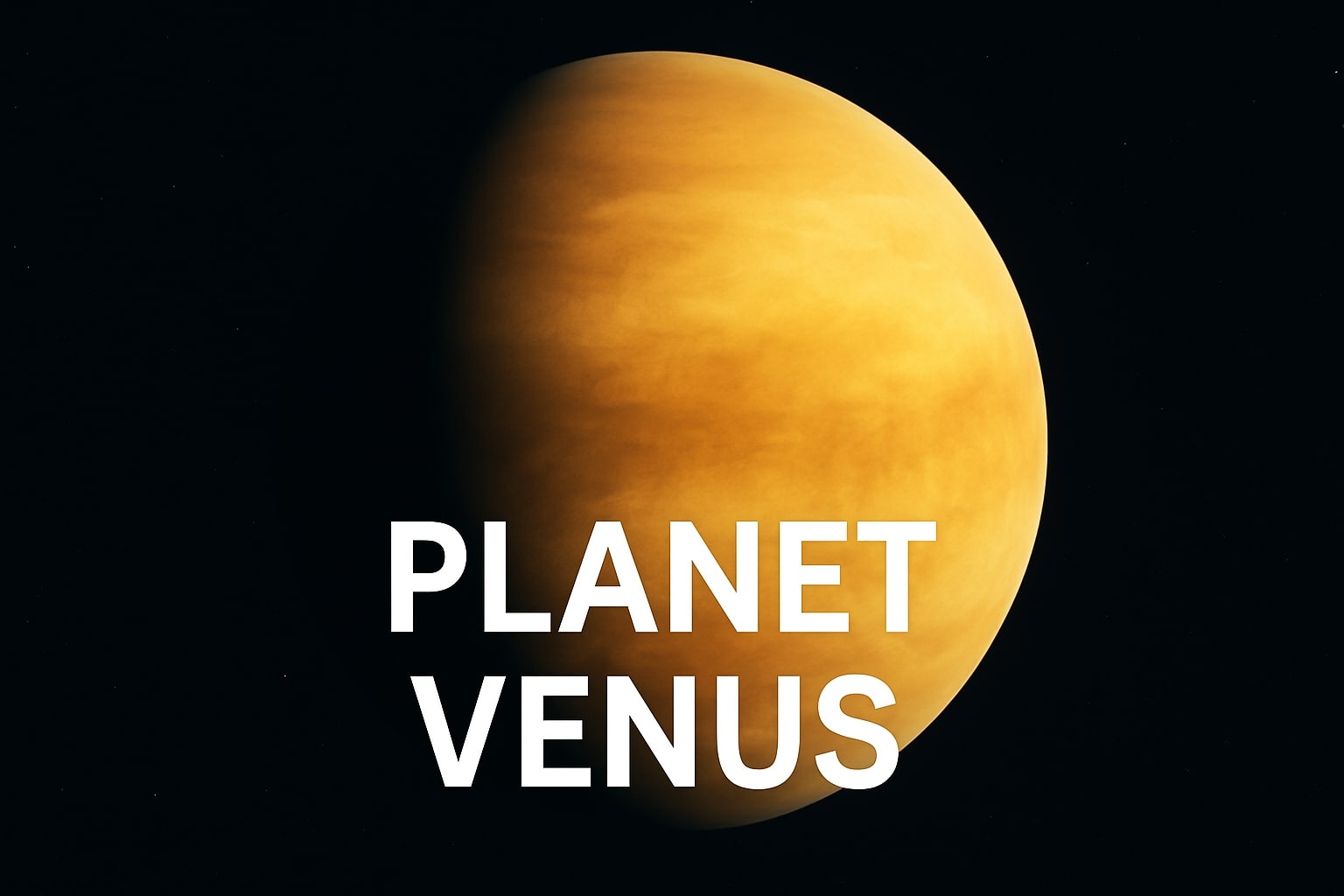

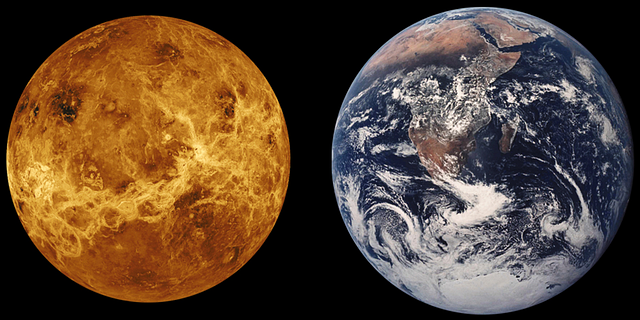
Planet Venus is often described as Earth’s sibling, but beneath its bright clouds lies one of the most extreme environments in the Solar System. Similar in size and composition to our own world, planet Venus hides a landscape of superheated plains, dense toxic clouds and volcanic terrain shaped by unimaginable pressure and heat. Despite these harsh conditions, planet Venus remains a crucial world for scientists, offering clues about planetary evolution, atmospheric chemistry and why two neighbouring planets can follow such different paths.
This guide explores the mysteries and mechanics of planet Venus, from its unusual rotation and cloud-shrouded atmosphere to its volcanic activity, climate and ongoing exploration.
Table of Contents
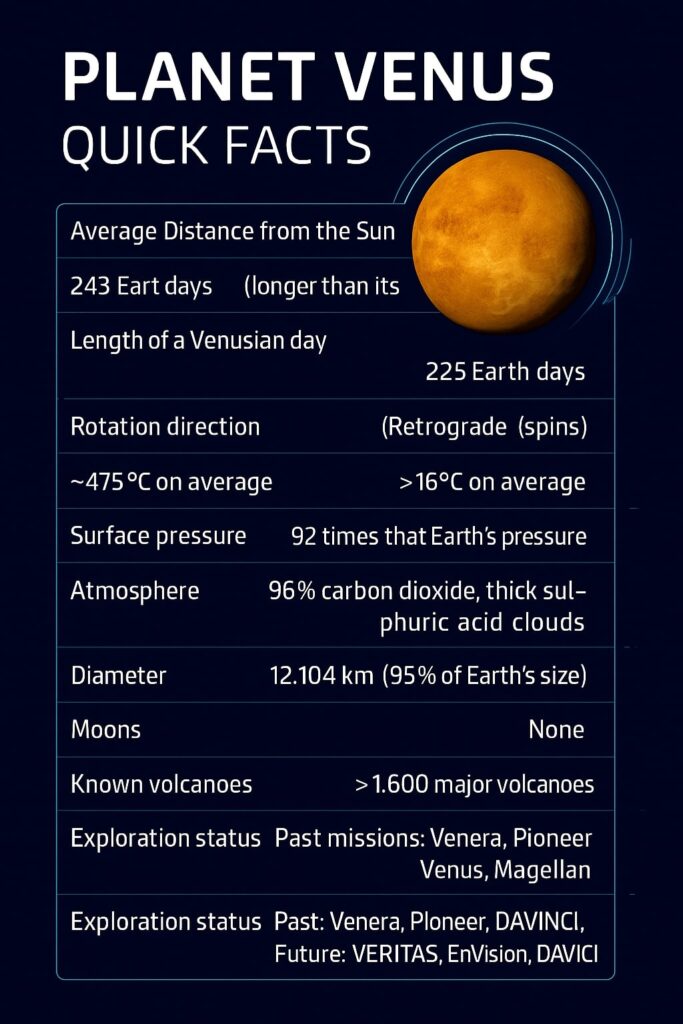
Quick Stats: Planet Venus
| Category | Stat |
|---|---|
| Average distance from the Sun | 108 million km |
| Length of a Venusian day | 243 Earth days (longer than its year) |
| Length of a Venusian year | 225 Earth days |
| Rotation direction | Retrograde (spins backwards) |
| Surface temperature | ~475°C on average |
| Surface pressure | 92 times Earth’s pressure |
| Atmosphere composition | 96% carbon dioxide, thick sulphuric acid clouds |
| Diameter | 12,104 km (95% of Earth’s size) |
| Moons | None |
| Known volcanoes | Over 1,600 major volcanoes |
| Exploration status | Past missions: Venera, Pioneer Venus, Magellan. Future: VERITAS, EnVision, DAVINCI. |
Venus’s Position in the Solar System
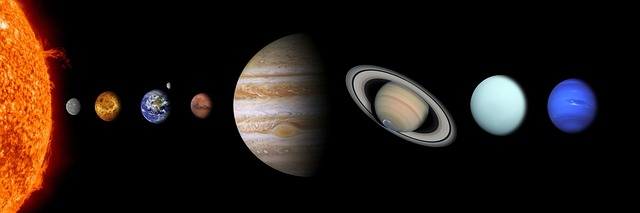
Planet Venus orbits the Sun at an average distance of about 108 million kilometres, placing it between Mercury and Earth. Because of this location, planet Venus is often described as Earth’s closest planetary neighbour, and in many ways, its motion and brightness have made it one of the most recognisable objects in our night sky. From Earth, planet Venus appears as either the Morning Star or the Evening Star, depending on where it sits in its orbit. These brilliant appearances contributed to centuries of cultural significance long before astronomers understood its true nature.
The orbit of the planet in our Solar System is more circular than most other planets, and it completes a journey around the Sun in just 225 Earth days. Yet despite this relatively short year, planet Venus rotates incredibly slowly on its axis. It spins backwards compared to most planets, a unique retrograde rotation that results in a Venusian day being longer than its year. This unusual motion is one of the many reasons scientists find planet Venus so interesting when studying planetary evolution and the forces that shape a world over time.
Surface Features: Volcanoes, Highlands and Hidden Landscapes
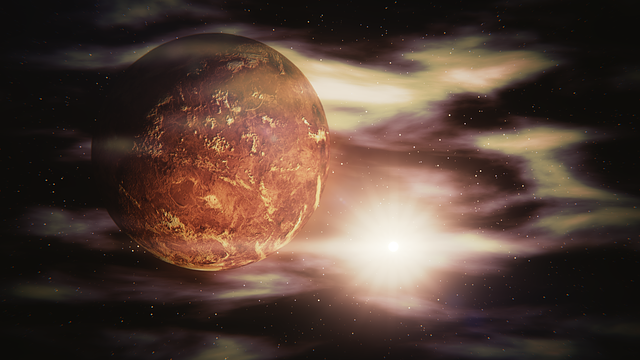
Unlike Mercury, whose bare rocky crust is easy to observe, the planet hides its surface beneath thick layers of cloud. To explore what lies below, scientists rely on radar mapping to reveal mountains, plains and dramatic geological structures. Planet Venus contains vast volcanic fields, enormous lava plains and shield volcanoes stretching across its surface. Many of these features appear relatively young, suggesting that planet Venus may still be geologically active.
One of the most striking regions is Ishtar Terra, a highland area comparable in size to Australia. It contains Maxwell Montes, the tallest mountain on planet Venus, rising over 11 kilometres high. Elsewhere, the surface is shaped by enormous lava flows, pancake domes and coronae, circular features formed by upwelling magma. These dramatic landscapes make planet Venus a dynamic world, even if its true appearance remains hidden beneath its thick atmosphere.
A Runaway Greenhouse: Temperatures, Clouds and Atmospheric Extremes
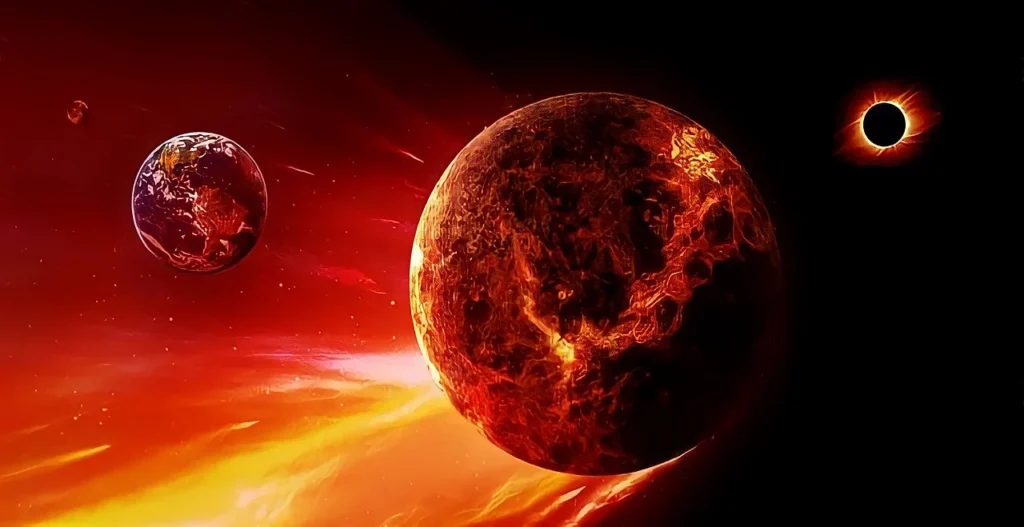
The atmosphere of planet Venus is one of the most extreme environments in the Solar System. Made up of 96 percent carbon dioxide with thick sulphuric acid clouds, the atmosphere traps heat so efficiently that surface temperatures reach around 475 degrees Celsius. This intense heat makes the planet the hottest planet in the Solar System, even hotter than Mercury, despite being further from the Sun.
The pressure on Venus is equally hostile, reaching 92 times that of Earth’s sea level pressure. To put this into perspective, standing on the surface would be like being almost a kilometre underwater. Winds in the upper atmosphere move far faster than the planet itself rotates, creating a phenomenon known as super-rotation. These powerful winds carry the cloud layers around Venus in just a few days, shaping its weather patterns in ways very different from the storms we know on Earth.
Inside Venus: Clues to a Turbulent Geological Past
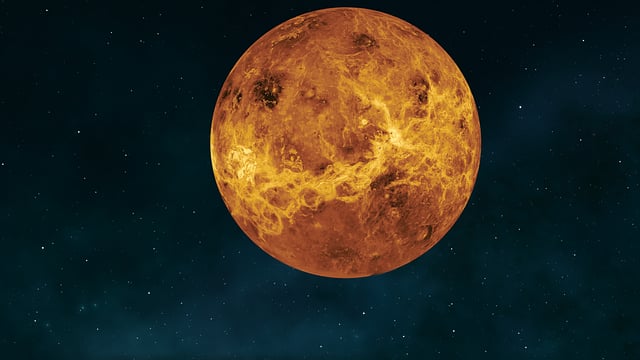
Understanding what lies beneath the surface helps reveal how planet Venus evolved. Scientists believe that planet Venus has a core, mantle and crust similar to Earth, but its interior behaves far differently. The absence of plate tectonics suggests that heat is released through periods of massive volcanic resurfacing rather than slow, continuous movement. This theory is supported by the relatively youthful appearance of many of the planet’s geological features.
Recent studies have revealed hints that volcanic activity may still be happening today. Venus has hotspots and fluctuating gas emissions that suggest active processes within its mantle. These signs are crucial for understanding why planet Venus and Earth, two worlds with similar beginnings, developed so differently. By studying its interior and geological activity, researchers hope to uncover the forces that shaped the planet into the extreme world we see now.
Exploring Venus: Past Missions, Radar Mapping and Future Plans
Planet Venus has been the target of many historical space missions, beginning with the Soviet Venera programme. Several Venera landers successfully reached the surface, returning the only photographs ever taken from planet Venus before being destroyed by its crushing heat and pressure. NASA’s Pioneer Venus and Magellan missions later used radar to map the surface, revealing its mountains, plains and volcanic regions for the first time.
Future missions promise even greater discoveries. NASA’s VERITAS and DAVINCI missions aim to explore the geology and atmosphere of planet Venus in unprecedented detail, while the European Space Agency’s EnVision mission will study volcanic activity and surface changes. Together, these missions may finally answer long standing questions about the true nature of planet Venus and why it became such a hostile world while Earth remained habitable.
Why Planet Venus Remains One of Astronomy’s Greatest Mysteries
Planet Venus continues to captivate astronomers because it is both familiar and alien at the same time. Its size and composition resemble Earth, yet its climate and atmosphere are among the most extreme of any planet. These contradictions make planet Venus essential for understanding how planets evolve and how quickly conditions can change. By studying Venus, scientists gain insights into greenhouse effects, climate change, volcanic activity and atmospheric chemistry.
There is still much we do not know. The possibility of past oceans, the true nature of its volcanic activity and the mysteries of its atmospheric chemistry continue to intrigue researchers. Each new mission brings us closer to understanding why planet Venus became a scorching, cloud covered world while Earth remained a place where life could thrive. For astronomers and planetary scientists, Venus is a reminder that even our closest neighbours can hold deep and unexpected mysteries.