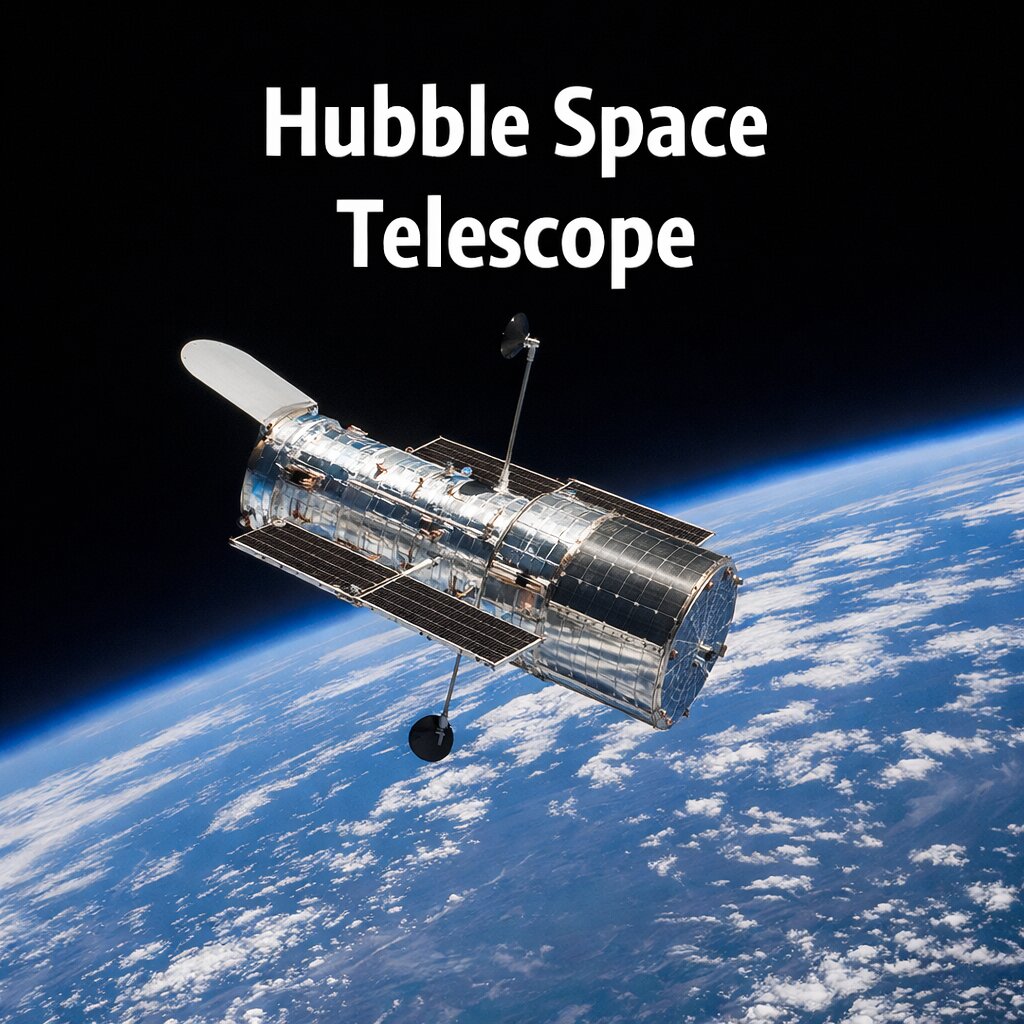

The Hubble Space Telescope is one of the most famous and influential observatories ever built. Orbiting above Earth’s atmosphere, it has provided humanity with some of the clearest and most detailed images of the universe, transforming our understanding of space, time, and cosmic evolution.
From capturing breathtaking images of distant galaxies to helping determine the age of the universe, the Hubble Space Telescope remains a cornerstone of modern astronomy decades after its launch.
What is the Hubble Space Telescope?
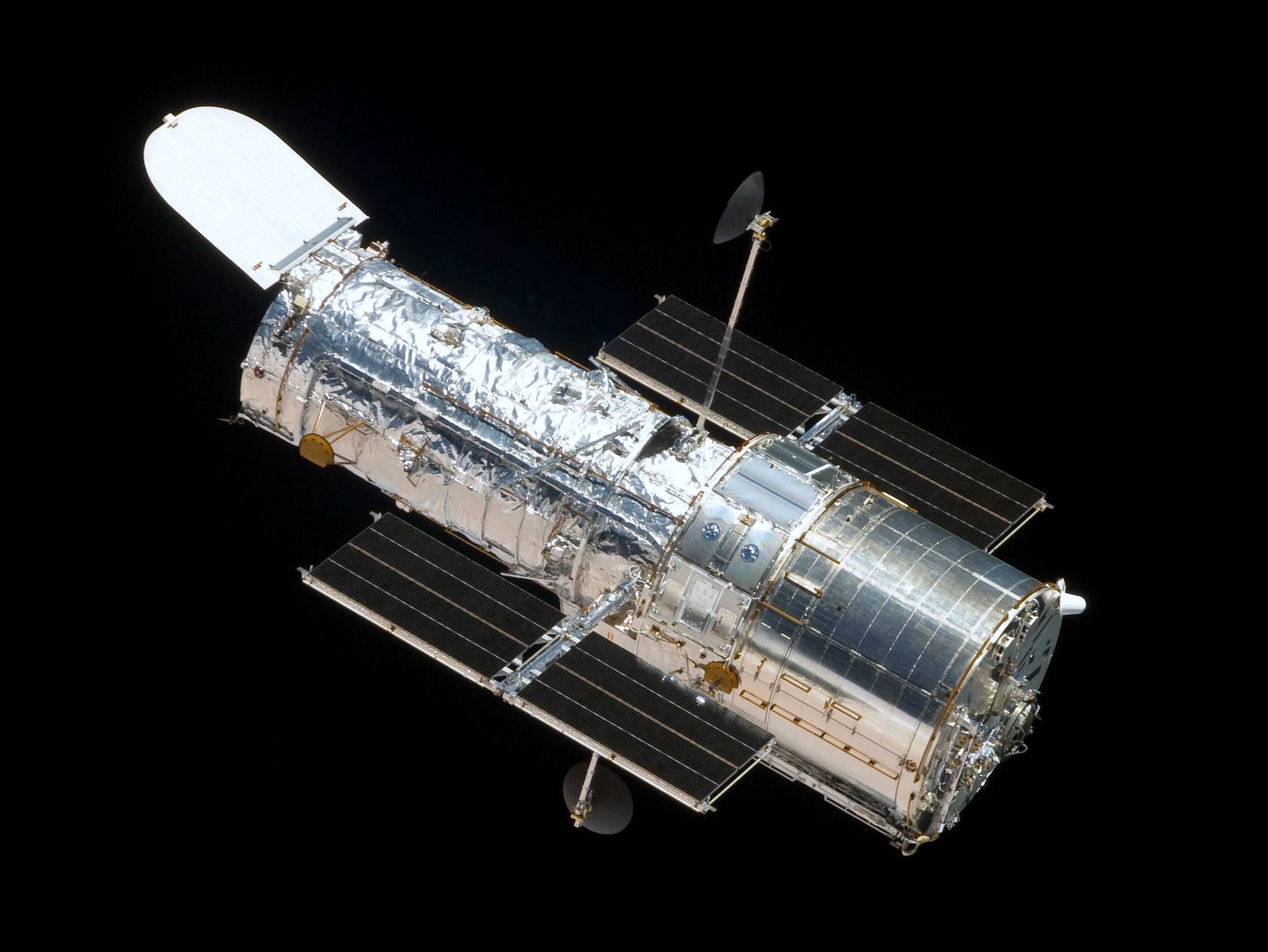
The Hubble Space Telescope is a large space-based observatory launched into low Earth orbit in 1990. Unlike ground-based telescopes, it operates above the distorting effects of Earth’s atmosphere, allowing it to capture incredibly sharp and detailed images across visible, ultraviolet, and near-infrared wavelengths.
The Hubble Space Telescope is equipped with a 2.4-metre primary mirror and a suite of scientific instruments that can be upgraded over time. This adaptability has allowed it to remain relevant for more than three decades.
Astronomers use the Hubble Space Telescope to study a wide range of cosmic phenomena, including:
- Distant galaxies and galaxy clusters
- Star birth and stellar evolution
- Exoplanets and planetary systems
- Nebulae and interstellar gas clouds
- Dark matter and cosmic expansion
Where is the Hubble Space Telescope Located?

The Hubble ST orbits Earth at an altitude of approximately 547 kilometres. Positioned in low Earth orbit, it travels around the planet at a speed of about 28,000 kilometres per hour, completing one orbit roughly every 95 minutes.
Being above the atmosphere is one of the Hubble Space Telescope’s greatest advantages. Earth’s atmosphere distorts incoming light and blocks certain wavelengths, especially ultraviolet light. By operating in space, Hubble avoids these limitations entirely.
This location allows the Hubble Space Telescope to deliver images with exceptional clarity and to observe phenomena that are difficult or impossible to detect from the ground.
History and Development

The Hubble ST was launched on 24 April 1990 aboard the Space Shuttle Discovery. It was named after astronomer Edwin Hubble, whose work revolutionised our understanding of the expanding universe.
Shortly after launch, scientists discovered a flaw in the telescope’s primary mirror, which caused blurry images. However, this issue was successfully corrected during a servicing mission in 1993, marking one of NASA’s most famous repair efforts.
Over the years, multiple servicing missions upgraded the Hubble Space Telescope with new instruments, improved cameras, and enhanced capabilities. These upgrades extended its lifespan and ensured it remained one of the most powerful observatories ever built.
Important Discoveries and Contributions

The Hubble Space Telescope has contributed to some of the most significant discoveries in astronomy:
Measuring the Age of the Universe
Hubble helped refine the value of the Hubble constant, allowing scientists to estimate the age of the universe at approximately 13.8 billion years.
Deep Field Observations
The Hubble Deep Field images revealed thousands of galaxies in tiny patches of sky, demonstrating the vast scale and richness of the universe.
Dark Matter and Dark Energy
Observations from the Hubble Space Telescope provided evidence for dark energy and helped map the distribution of dark matter through gravitational lensing.
Star Formation and Stellar Life Cycles
Hubble’s detailed images of nebulae, such as the famous Pillars of Creation, have provided insights into how stars are born and evolve.
Why the Hubble Space Telescope Still Matters
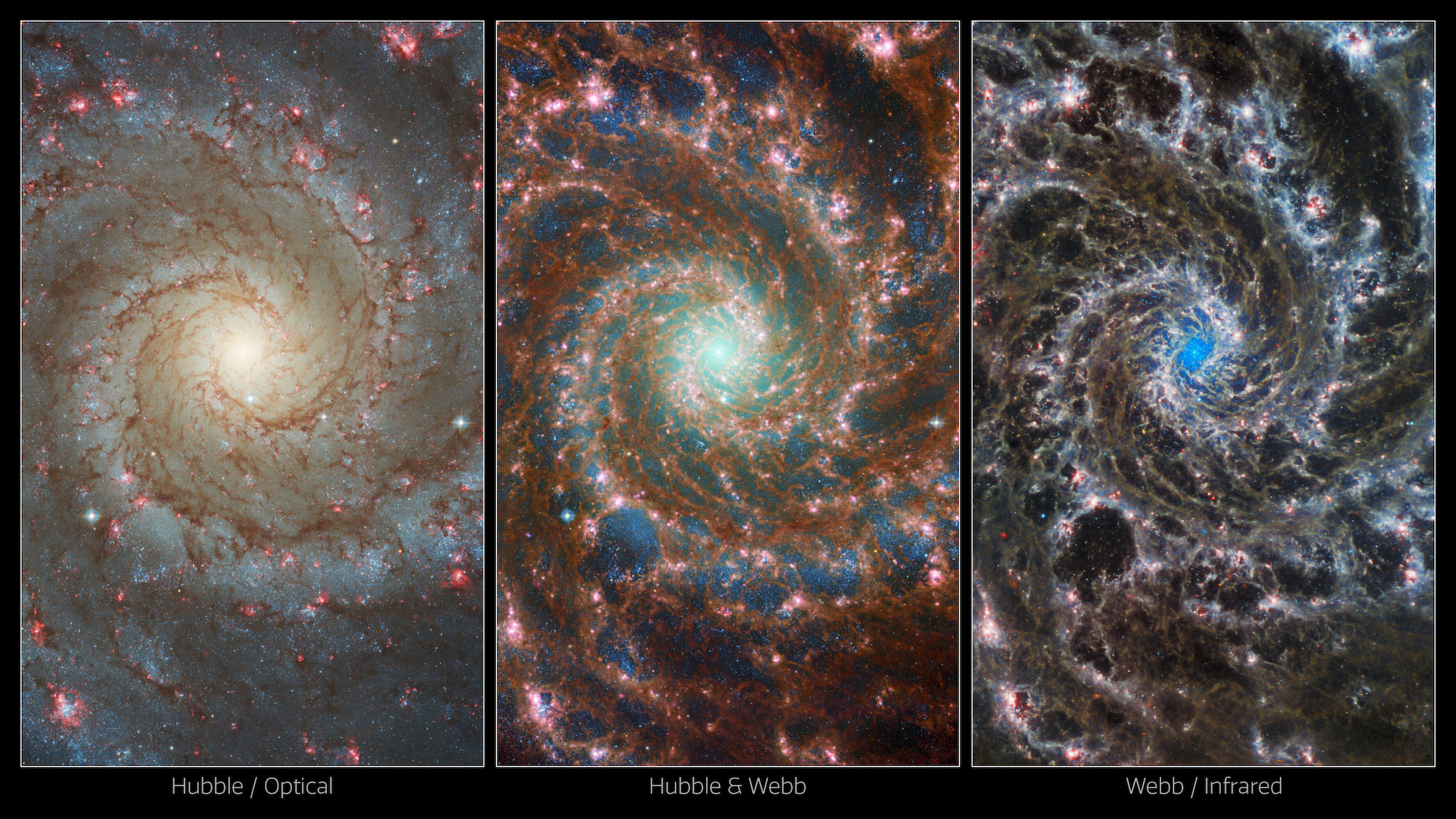
Even with newer observatories like the James Webb Space Telescope, the Hubble ST continues to play a vital role in astronomy. Its ability to observe in ultraviolet and visible wavelengths complements the infrared focus of newer telescopes.
The Hubble Space Telescope also benefits from decades of archived data, allowing scientists to compare past and present observations to track changes in the universe over time.
In addition, the Hubble Space Telescope supports rapid observations of transient events such as supernovae and comet activity, providing critical data for time-sensitive research.
As part of a broader network of observatories, the Hubble Space Telescope remains essential in the era of multi-messenger astronomy, helping scientists piece together a more complete picture of the cosmos.
A Window Into the Universe That Changed Everything
The Hubble Space Telescope is more than just a scientific instrument. It is a symbol of human curiosity and discovery. Its images have inspired millions, bringing the wonders of the universe closer to Earth than ever before.
From revealing the structure of distant galaxies to deepening our understanding of cosmic history, the Hubble Space Telescope continues to shape the future of astronomy while reminding us how much there is still to explore.