One of the most important planetary science missions ever attempted may never be completed.
NASA’s Mars Sample Return mission, designed to bring carefully selected Martian rock samples back to Earth, is facing serious uncertainty. Despite years of exploration and billions of dollars invested, the samples collected by the Perseverance rover could remain on Mars indefinitely.
Why these Mars samples matter
Since landing in Jezero Crater in 2021, Perseverance has been collecting rock cores from regions that once hosted flowing water. Scientists believe these ancient environments were among the most promising places on Mars to search for signs of past microbial life.
One standout sample comes from a rock nicknamed Cheyava Falls. This rock contains iron-rich minerals and organic compounds that, on Earth, are often linked to microbial activity. While these features do not confirm life on Mars, they represent the strongest clues found so far.
Critically, instruments on Mars are not powerful enough to determine whether these features are biological in origin. That level of analysis requires advanced laboratories on Earth, which is why returning the samples is considered essential.
The return mission is in jeopardy
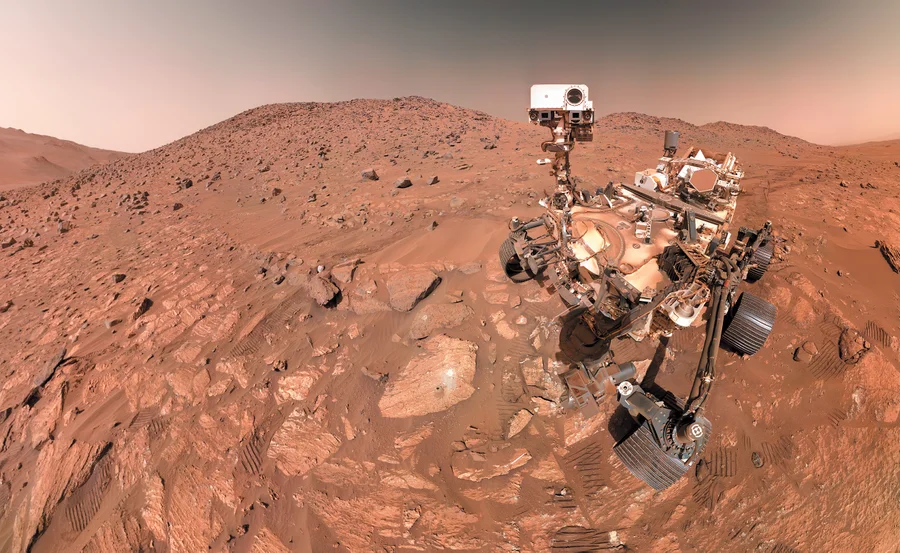
Mars Sample Return was planned as a multi-stage effort involving NASA and the European Space Agency. Perseverance would collect samples, a follow-up mission would retrieve them, and another spacecraft would deliver them safely to Earth.
However, cost overruns and technical complexity have put the project at risk. Estimates suggest the original plan could exceed its budget by several billion dollars and push timelines into the 2040s. As a result, NASA abandoned its initial architecture and began exploring alternative, lower-cost approaches.
The situation worsened when the proposed 2026 U.S. budget called for canceling the return portion of the mission altogether. The final decision now rests with the U.S. Congress.
What happens if Mars Sample Return is canceled?
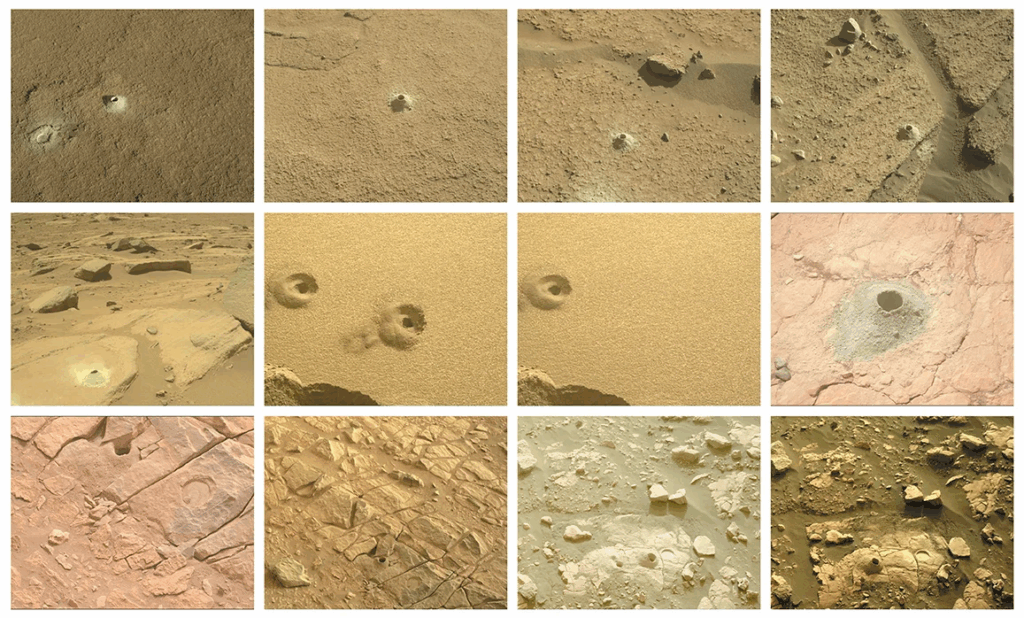
If the mission is canceled or delayed too long, the samples may never come home. Perseverance can store its sealed sample tubes for decades, but its nuclear power source has a limited lifespan. If a retrieval mission is not launched in time, the rover may be forced to deposit the samples on the Martian surface in the hope that a future mission retrieves them.
There is also growing concern that another country could return samples first. China has announced plans for its own Mars sample return mission, potentially launching later this decade.
A pivotal moment for planetary science
Scientists widely agree that Mars Sample Return is one of the most important planetary science goals of this generation. Returning these samples could answer fundamental questions about Mars’s history, climate, and habitability, and potentially reveal whether life ever existed beyond Earth.
For now, Perseverance continues exploring and collecting samples, even as uncertainty hangs over their fate. Whether these rocks ever reach Earth may shape the future of Mars exploration and our understanding of life in the universe.