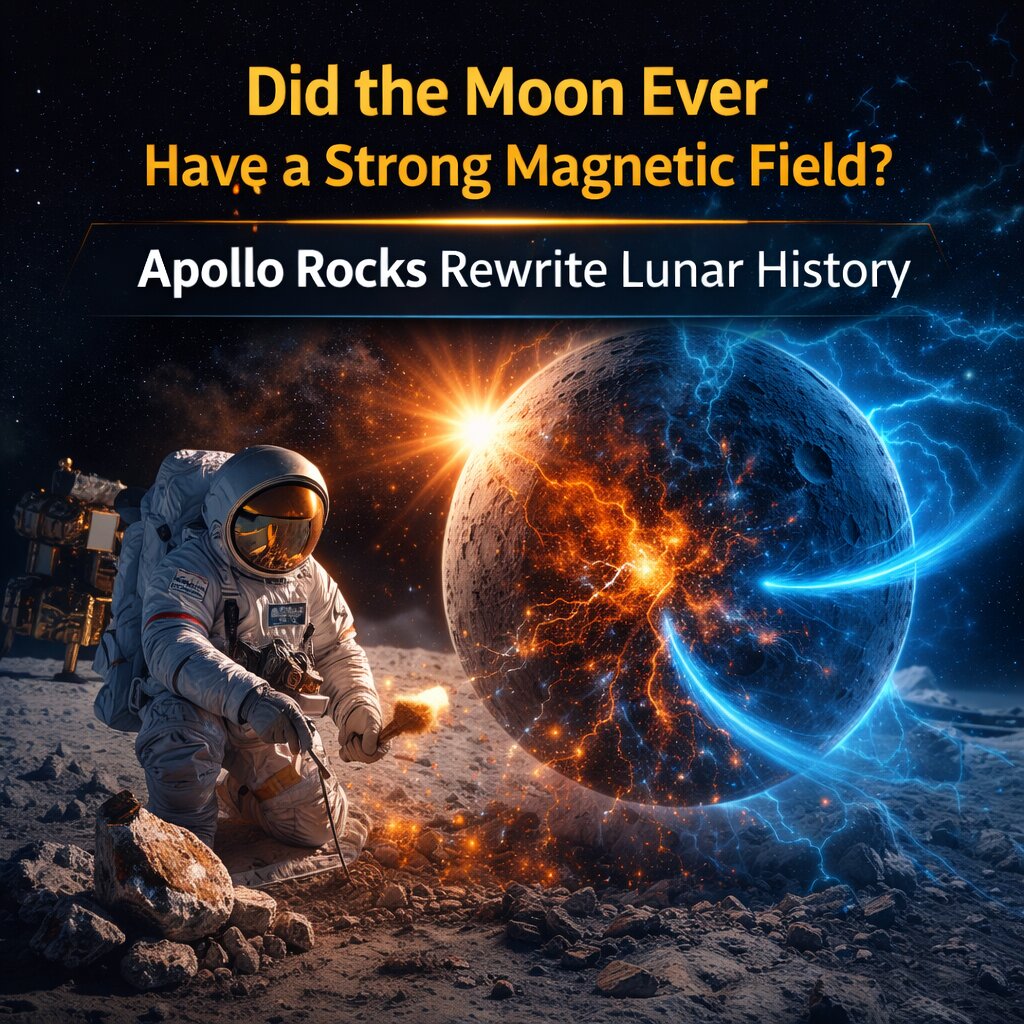

For decades, lunar scientists have wrestled with a puzzling question: Did the Moon once generate a powerful magnetic field like Earth’s, or was it always magnetically weak?
Now, a fresh reanalysis of Apollo-era moon rocks suggests the answer may be more nuanced, and far more dramatic. Instead of sustaining a long-lived global magnetic field, the Moon may have experienced brief magnetic “superstorms” early in its history, triggered by deep internal processes.
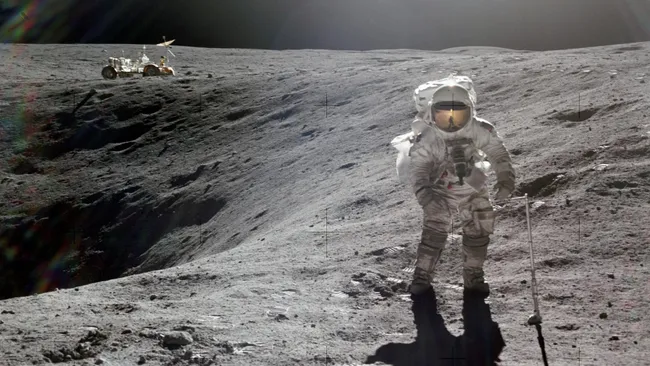
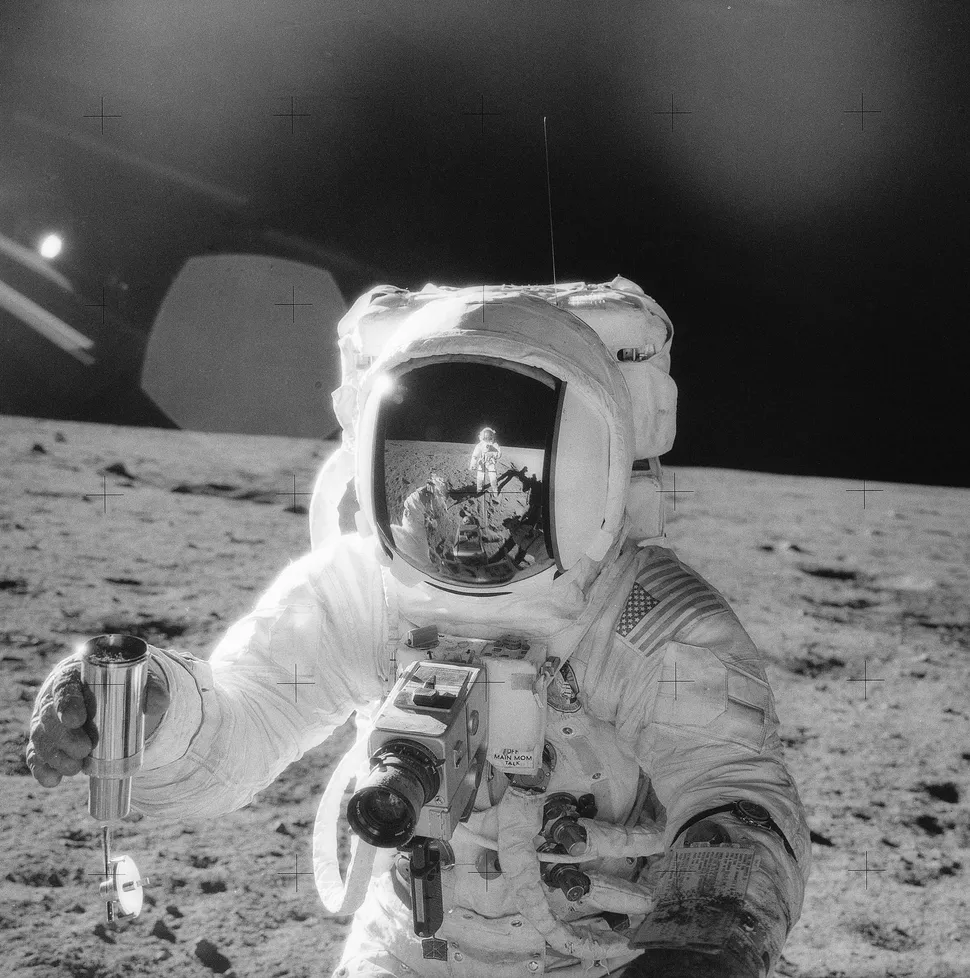
The rocks collected by Apollo astronauts between 1969 and 1972 continue to reshape our understanding of lunar evolution more than 50 years later. And this time, they may be settling a mystery that has lingered for generations.
The Magnetic Mystery of the Moon
Earth’s magnetic field is powered by a churning, molten iron core that generates a geodynamo. For a long time, scientists believed the Moon might once have had something similar.
Some Apollo samples appeared strongly magnetised, suggesting the Moon once hosted a powerful magnetic shield billions of years ago. But there was a problem: the Moon is small. Its core cooled relatively quickly. Maintaining a strong magnetic field for hundreds of millions of years seemed physically unlikely.
This contradiction created a scientific tension. Either the Moon had an unexpectedly active internal engine — or something else was responsible for the magnetisation recorded in those rocks.
A Titanium Clue Hidden in Lunar Basalts
The key may lie in titanium-rich lunar rocks.
Most Apollo missions landed on dark, flat lava plains called maria — regions rich in titanium-bearing basalt formed from ancient volcanic activity. When researchers compared titanium content with magnetic strength in the samples, a pattern emerged.
Rocks containing higher concentrations of titanium showed stronger magnetisation. Lower-titanium rocks showed weak magnetic signatures.
This suggests the Moon did not sustain a continuous strong magnetic field. Instead, brief internal melting events — possibly at the boundary between the core and mantle — may have generated intense but short-lived magnetic bursts.
Think of it less as a steady magnetic engine, and more like sudden electrical flares deep within the lunar interior.
Magnetic “Outbursts” in the Moon’s Early History
If this interpretation holds, the Moon’s magnetic history may have looked like this:
Between roughly 4 billion and 3.5 billion years ago, melting of titanium-rich materials deep within the Moon triggered short-lived magnetic intensifications. These bursts may have lasted thousands of years — possibly even just decades — before fading.
For the remaining billions of years, the Moon’s magnetic field likely remained weak.
That would reconcile two competing observations: why some Apollo rocks are strongly magnetised, and why the Moon today lacks any global magnetic shield.
Why This Matters
Understanding the Moon’s magnetic history is more than academic curiosity.
A strong magnetic field protects a planet or moon’s surface from charged particles streaming from the Sun. If the Moon once had a stronger field — even temporarily — it could have influenced how its surface weathered, how its crust evolved, and how solar particles interacted with lunar material.
It also reshapes our understanding of planetary dynamos in general. If a small body like the Moon can generate intense but brief magnetic outbursts, similar processes might occur in other rocky worlds.
This research helps refine models for early Mars, Mercury, and even exoplanets.
The Apollo Legacy Continues
The Apollo missions landed in relatively similar regions near the lunar equator. For years, scientists questioned whether the limited landing zones skewed our understanding of the Moon’s magnetic history.
Now, instead of disproving the Apollo data, new analysis appears to contextualise it.
The rocks were telling the truth — just not the full story. They recorded moments of magnetic intensity, not a permanent global field.
More than half a century later, the Moon rocks brought home by astronauts like Charles Duke continue to answer questions we did not even know how to ask in 1972.
And that might be the most remarkable part of all.