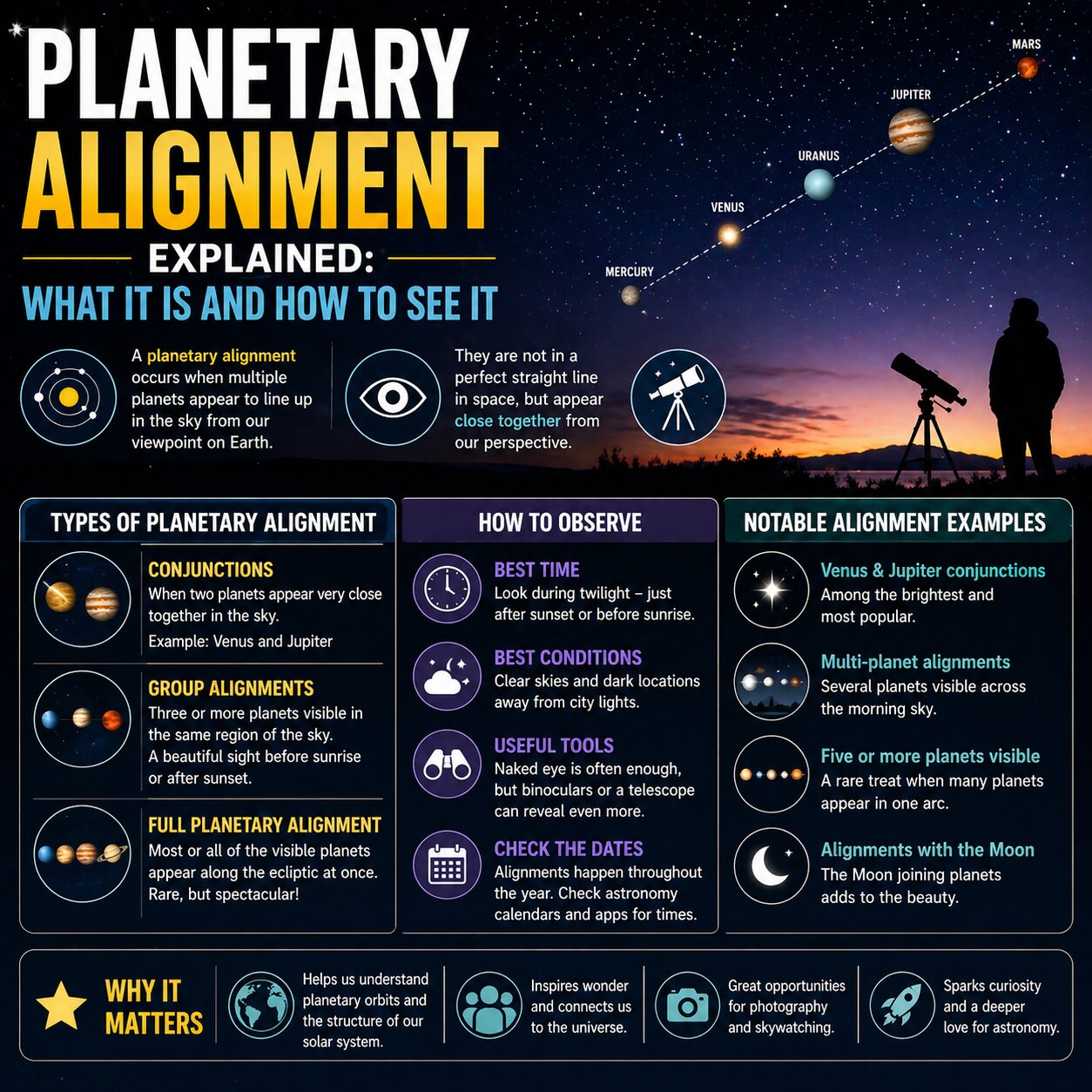

Planetary alignment is one of the most fascinating celestial events you can observe in the night sky. While it may sound like all the planets line up perfectly in a straight line, the reality is a bit more nuanced and just as exciting to understand.
In this guide, we explore what planetary alignment really means, how it occurs, the different types of alignments, and when you can see them from Earth.
What is planetary alignment
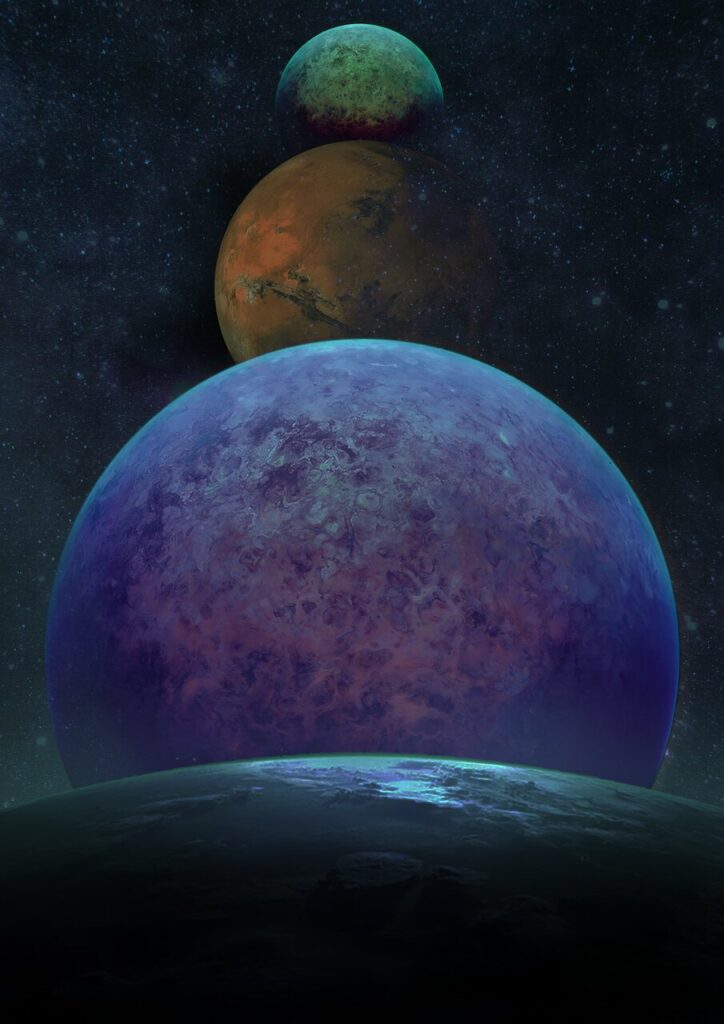
A planetary alignment occurs when multiple planets appear to line up in the sky from our viewpoint on Earth. This happens because the planets in our solar system orbit the Sun along a similar flat plane known as the ecliptic.
Since they all follow roughly the same path, there are times when several planets appear close together in the sky. However, they are not actually aligned in a perfect straight line in space. Instead, it is an optical effect based on our perspective.
These events can involve two planets, known as a conjunction, or multiple planets forming a visible arc across the sky.
Types of planetary alignment
Not all alignment events are the same. Astronomers classify them based on how many planets are involved and how closely they appear together.
Conjunctions
A conjunction is the simplest form of planetary alignment. This occurs when two planets appear very close to each other in the sky. For example, Venus and Jupiter often create bright and striking conjunctions visible to the naked eye.
Group alignments
Sometimes three or more planets gather in the same region of the sky. These group alignments are more visually impressive and can create a stunning display just before sunrise or after sunset.
Full planetary alignment
A rare form of planetary alignment involves most or all of the visible planets appearing along the ecliptic at the same time. While not perfectly straight, this alignment creates a sweeping line of planets across the sky.
How to observe planetary alignment
Observing a planetary alignment does not require expensive equipment. In many cases, you can see these events with the naked eye, especially when bright planets like Venus, Mars, and Jupiter are involved.
The best time to observe is during twilight, either just after sunset or before sunrise, when the sky is dark enough to see planets but not completely black. Clear skies and minimal light pollution will improve your viewing experience.
Using binoculars or a small telescope can enhance the view, allowing you to see more detail and spot fainter planets like Uranus or Neptune.
Notable planetary alignment events
Planetary alignments occur periodically, but some stand out due to the number of planets involved or their visibility.
- Alignments featuring Venus and Jupiter, often the brightest and easiest to spot
- Multi-planet alignments visible before sunrise across several days
- Rare events where five or more planets are visible in a single arc
- Alignments that include the Moon, adding to the visual spectacle
These events are widely followed by amateur astronomers and skywatchers around the world.
Why planetary alignment matters
While planetary alignment events do not have any direct physical effect on Earth, they are important for understanding how our solar system works. They provide insight into planetary orbits and the structure of the ecliptic plane.
They also offer a chance for people to connect with astronomy in a practical and visual way. Seeing multiple planets in the sky at once can spark curiosity and inspire deeper exploration of space science.
Watching the sky come alive
A planetary alignment is a reminder that the solar system is always in motion. These events give us a rare opportunity to see that movement in action, right from our own backyard.
Whether you are a beginner or an experienced skywatcher, keeping an eye out for planetary alignments can be a rewarding experience. With a little planning and the right conditions, you can witness one of the most beautiful natural displays in the night sky.