
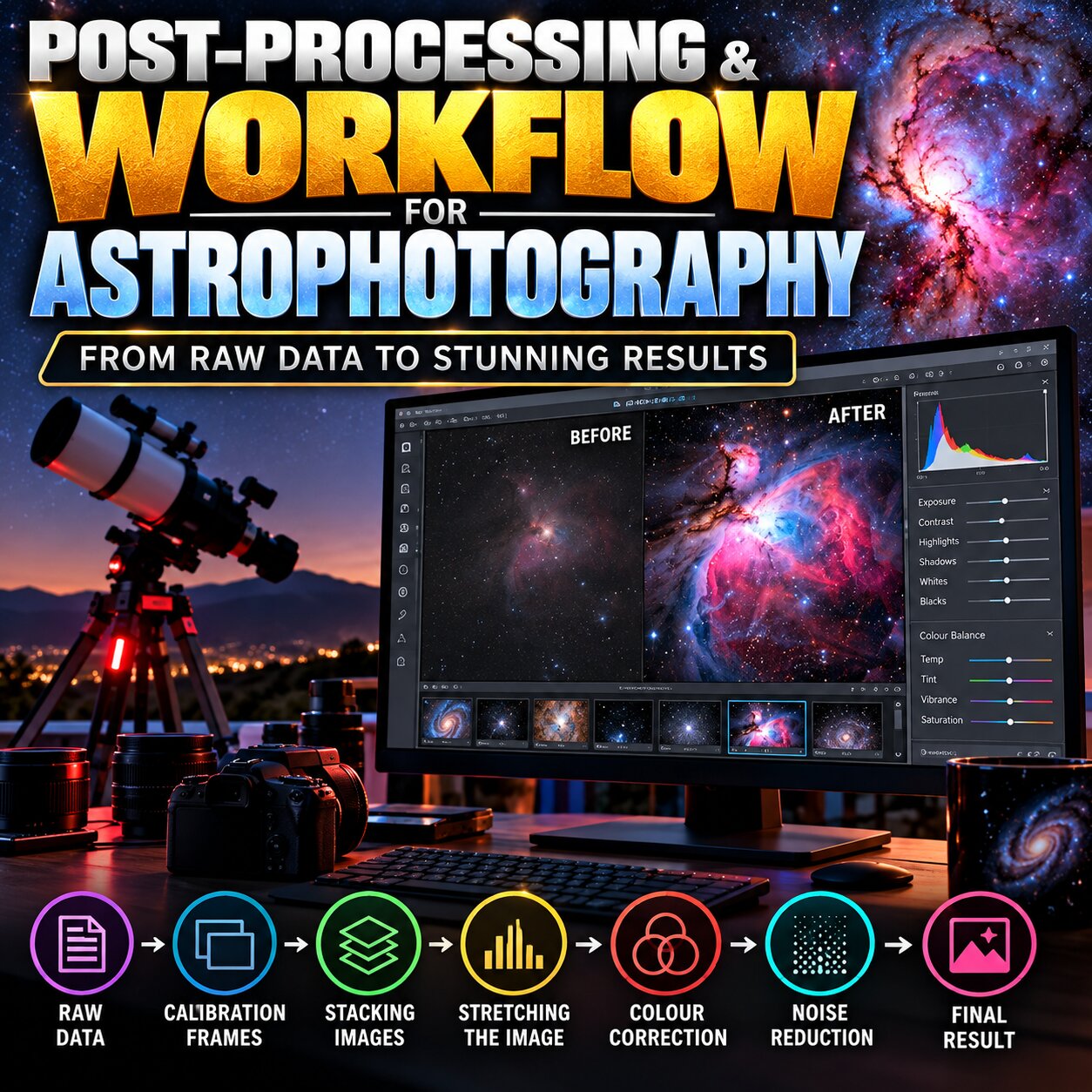

Capturing an astrophotograph is only the beginning. The raw image recorded by a camera often looks surprisingly different from the spectacular finished photographs of galaxies, nebulae, star clusters and the Milky Way that we see online.
Much of that transformation happens during post-processing for astrophotography.
Post-processing isn’t simply about making space photographs prettier. It can reveal faint details hidden within the original data, reduce noise, correct imperfections and combine multiple exposures into a clearer representation of the target.
As part of our Casual Astronomer Tech & Equipment series, let’s explore the typical astrophotography workflow from raw exposures to the final image.
Start with the Raw Image Data
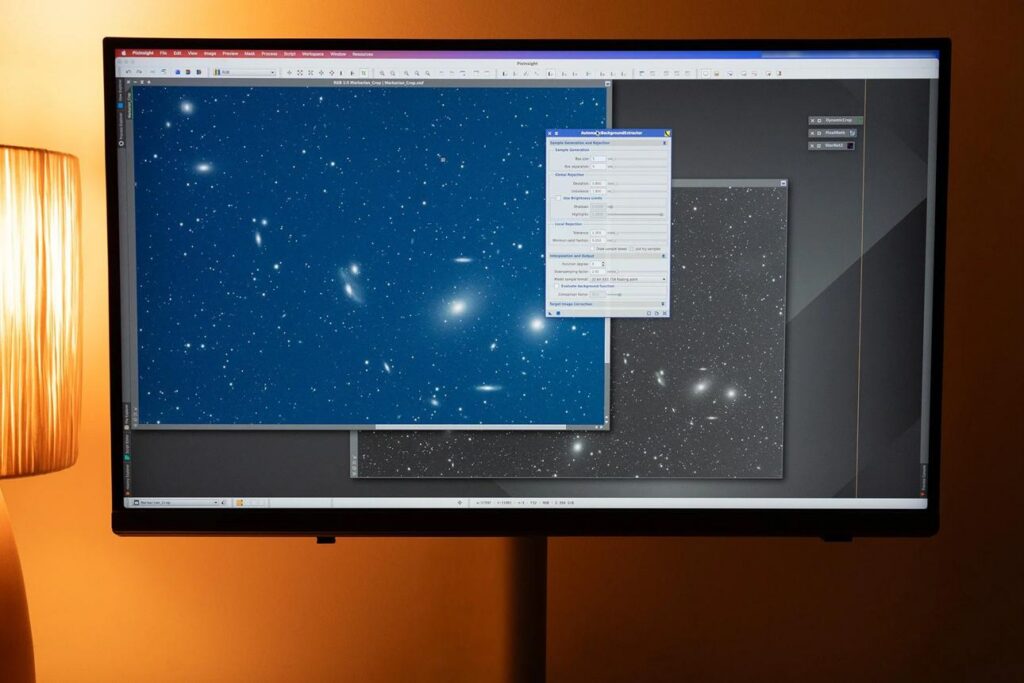
Whenever possible, astrophotographers capture images using a raw file format rather than compressed JPEG images. Raw files preserve considerably more of the information recorded by the camera sensor, providing greater flexibility during processing.
An individual exposure may initially appear dark, noisy or lacking in colour. That’s normal. Faint astronomical targets can produce relatively weak signals, and the purpose of the workflow is to extract useful information without destroying genuine detail.
Protect your original files before beginning any processing. Keeping an organised archive means you can return to the data as your processing skills improve.
Calibration Frames
Astrophotographers often capture additional images specifically to correct imperfections within their main exposures.
Dark frames can help identify thermal noise and hot pixels. Flat frames can compensate for issues such as vignetting and dust shadows within the optical system. Bias or other calibration frames may also form part of a workflow depending on the equipment and processing method being used.
These images aren’t photographs of the astronomical target. Instead, they provide information that processing software can use when calibrating the actual exposures.
Stacking Multiple Exposures
One of the most important concepts in post-processing for astrophotography is stacking.
Rather than relying on a single extremely long exposure, astrophotographers commonly capture numerous individual exposures of the same target. Software aligns the stars and combines these images.
The objective is to improve the signal-to-noise ratio. Genuine astronomical information remains consistent across the exposures, while random noise behaves differently. Combining sufficient good-quality data can therefore produce a cleaner image and reveal faint structures that were difficult to see in an individual frame.
Stretching the Image
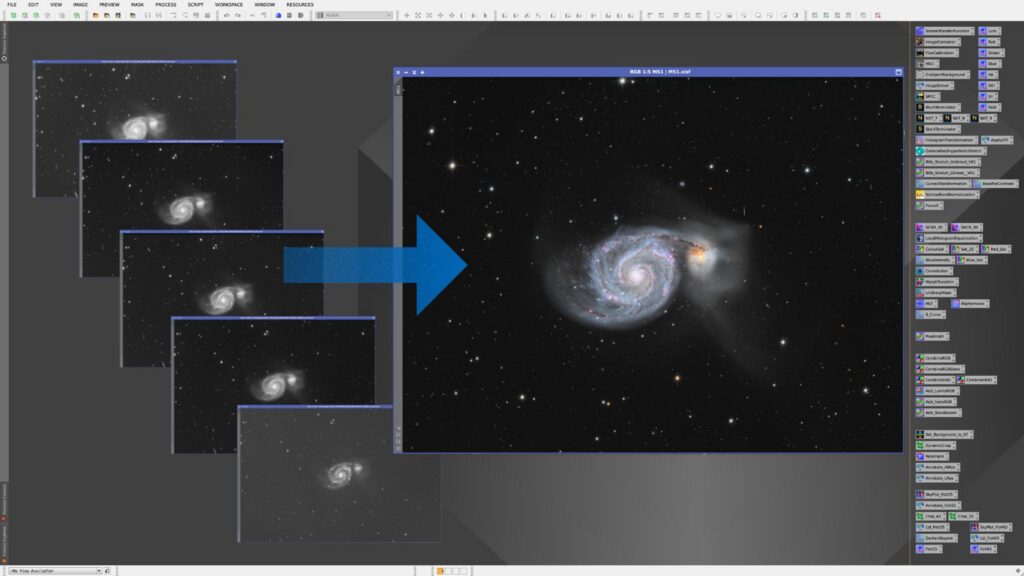
After calibration and stacking, the resulting image may still appear surprisingly dark.
Much of the information is present but compressed into a relatively narrow portion of the available brightness range. Stretching redistributes that information so faint structures become more visible.
This stage can dramatically transform an image. Nebulosity, dust structures and faint stars that were barely noticeable can suddenly become prominent.
Care is required, though. Excessive stretching can blow out bright areas, exaggerate noise and produce an unnatural-looking background.
Colour, Contrast and Noise Reduction
Once the underlying data has been revealed, attention can shift towards refining the photograph.
Colour balancing can correct unwanted colour casts and help create a more consistent background. Contrast adjustments can make structures easier to distinguish, while careful noise reduction can improve the appearance of darker areas.
Sharpening may reveal additional structure, but aggressive processing can create artificial-looking detail. The challenge is finding a balance between revealing information and introducing processing artefacts.
Astrophotography processing is therefore both technical and creative.
A Practical Astrophotography Workflow
Individual workflows differ according to the target, equipment and software, but the basic process often follows a recognisable sequence.
A typical workflow might include:
- Organising and backing up the original exposures
- Calibrating the light frames
- Inspecting and rejecting poor exposures
- Aligning and stacking the usable images
- Stretching the combined data
- Correcting colour and gradients
- Reducing noise and refining detail
- Applying final adjustments and exporting the finished photograph
Not every photograph requires every stage, and different astrophotographers develop their own preferred techniques over time.
Choosing Astrophotography Processing Software
There are numerous software options available for astrophotography, ranging from general photo editors to programs specifically designed for astronomical image processing.
Some applications handle calibration and stacking, while others specialise in processing the resulting image. More advanced astrophotographers may use several programs during a single workflow.
Beginners don’t necessarily need the most complicated software available. Understanding what calibration, stacking, stretching and noise reduction actually accomplish is more valuable than simply applying tools without understanding their purpose.
From Telescope Data to Finished Astrophotograph
Good post-processing for astrophotography cannot rescue completely unusable data, but it can reveal an extraordinary amount of information hidden inside well-captured exposures.
The telescope, mount and camera collect the photons. Calibration helps correct imperfections. Stacking strengthens the useful signal. Stretching reveals faint structures, while careful colour and detail adjustments produce the final presentation.
Learning this workflow can initially feel almost as challenging as learning to operate the astrophotography equipment itself. With practice, however, processing becomes another fascinating part of exploring the night sky.
The photograph isn’t necessarily finished when you close the camera shutter. In astrophotography, that’s often when the image is only beginning to emerge.



Leave a Reply