What is a comet?
A comet is a small icy object that orbits the Sun and forms a glowing coma and tail when its surface heats up near the Sun.
A comet is a small celestial object made mostly of ice, dust, and rocky material that orbits the Sun. When a comet travels from the outer reaches of the Solar System toward the inner regions, heat from the Sun causes its icy surface to vaporise, creating the glowing features that make comets so distinctive in the night sky.
Because of this transformation, comets are often described as “dirty snowballs” or “icy relics” from the formation of the Solar System. Observing a comet is like seeing a preserved fragment of the early cosmic environment from billions of years ago.
Let’s learn more about what is a comet. If you like videos more than text, here is a video that explains more about what a comet is.
The basic structure of a comet
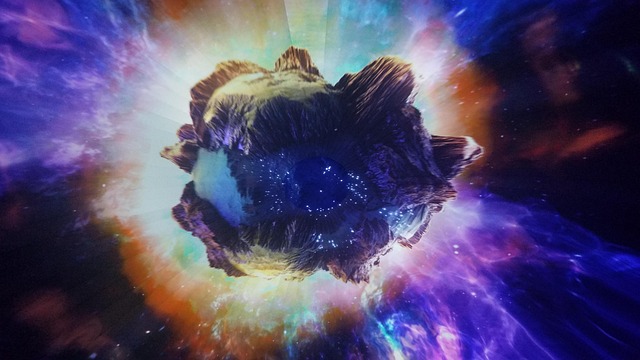
What is a comet? Well, a comet has three main parts. At its centre is the nucleus, a solid core made of frozen gases such as water, carbon dioxide, and ammonia mixed with dust and rock. The nucleus itself is usually only a few kilometres across.
As the comet approaches the Sun, the nucleus heats up and releases gas and dust, forming a surrounding cloud called the coma. Solar radiation and the solar wind then push this material away from the comet, creating one or more tails that can stretch millions of kilometres across space.
Why do comets have tails?
One of the most fascinating things when asking what is a comet is learning about its tail. A comet can have two distinct tails: a dust tail and an ion tail. The dust tail reflects sunlight and often appears curved, while the ion tail glows faintly and points directly away from the Sun due to interactions with charged particles.
A key detail many people do not realise is that a comet’s tail always points away from the Sun, not behind the comet’s direction of travel. This behaviour helps astronomers study solar wind and magnetic activity in space.
Where comets come from
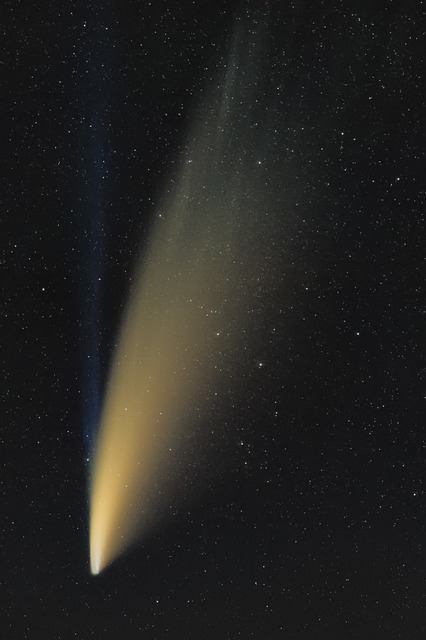
Most comets originate from the outer regions of the Solar System. Short-period comets usually come from the Kuiper Belt, a vast disk of icy objects beyond Neptune. These comets orbit the Sun frequently, sometimes every few decades.
Long-period comets are thought to come from the Oort Cloud, a distant, spherical region far beyond the Kuiper Belt. These comets may take thousands or even millions of years to complete a single orbit, making their appearances rare and unpredictable.
How comets differ from asteroids and meteors
Comets are often confused with asteroids and meteors, but they are very different objects. Asteroids are primarily rocky or metallic and do not develop comas or tails. Meteors, on the other hand, are the streaks of light produced when small particles burn up in Earth’s atmosphere.
What sets comets apart is their high ice content and dramatic visual behaviour near the Sun. This combination makes them some of the most visually striking celestial objects visible from Earth.
Can comets be seen without a telescope?
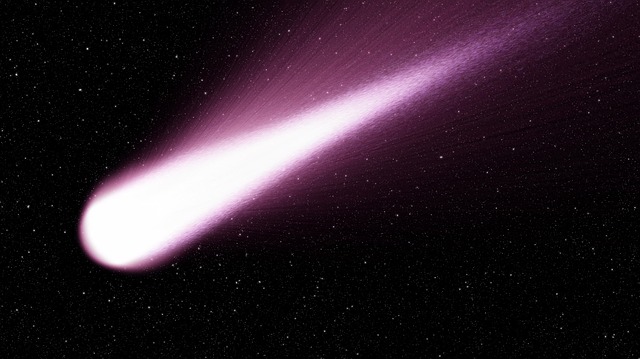
Some comets become bright enough to be seen with the naked eye, especially when they pass close to the Sun and Earth. These are sometimes referred to as “great comets” and can dominate the night sky for weeks.
Most comets, however, require binoculars or small telescopes to observe clearly. Dark skies, patience, and knowing when to look are often more important than expensive equipment.
Why comets matter to science
Comets are scientifically valuable because they preserve material from the early Solar System. By studying their composition, astronomers gain insight into how planets formed and how water and organic compounds may have been delivered to Earth.
Some scientists believe that comet impacts may have contributed to the presence of water and even the building blocks of life on our planet, making comets relevant not just to astronomy but to understanding Earth’s history as well.
Explore comets and other celestial events
Now you know the answer to the question: What is a comet? Comets are just one type of celestial event that can be observed from Earth. Each has its own causes, behaviours, and viewing techniques that make it unique.
To continue exploring the night sky, browse the celestial event categories below to learn more about meteors, eclipses, planetary alignments, conjunctions, supermoons, and auroras, and discover how each event reveals something different about our universe.