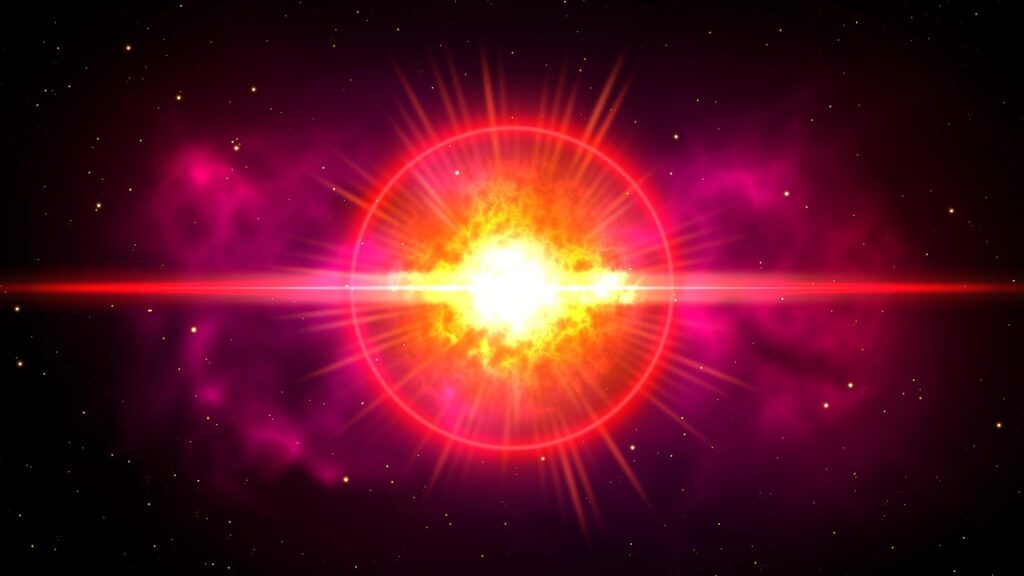
A supernova is one of the most powerful and dramatic events in the universe. It marks the violent death of a star, releasing an enormous amount of energy in a matter of seconds and briefly shining brighter than an entire galaxy. For a short time, a single exploding star can outshine billions of others combined.
Despite their destructive reputation, supernovae are essential to the universe as we know it. They create and scatter the elements that form planets, stars, and even life itself.
How Does a Supernova Happen?
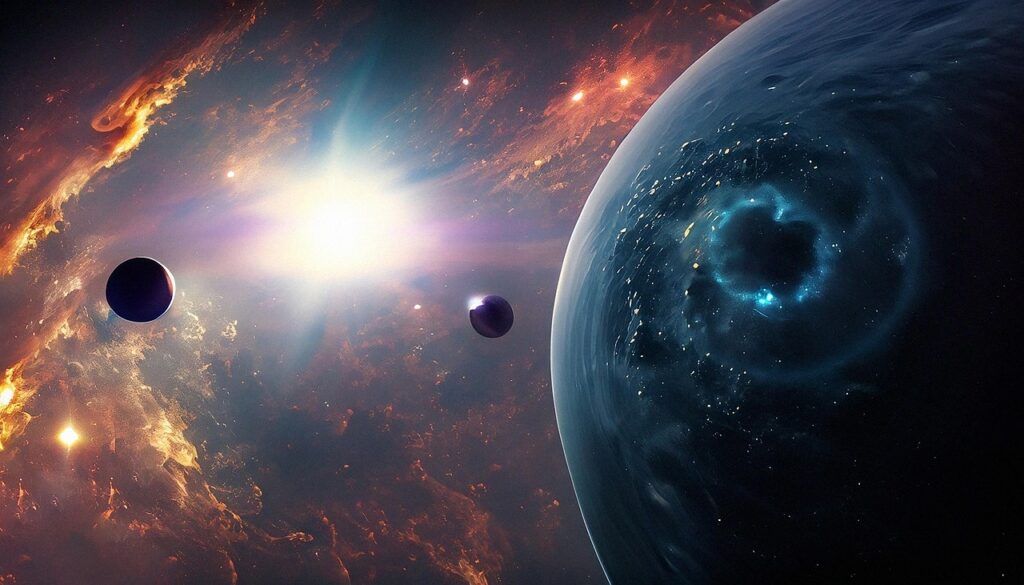
Not all stars die the same way. A supernova occurs when a star can no longer maintain the balance between gravity pulling inward and energy pushing outward.
When that balance fails, gravity wins, and the result is catastrophic.
There are two main ways this can happen, depending on the type of star involved.
Core-Collapse Supernovae
Core-collapse supernovae occur when massive stars, typically more than eight times the mass of the Sun, reach the end of their lives.
As these stars age, they fuse heavier and heavier elements in their cores. Eventually, iron builds up at the centre. Iron fusion does not release energy, so the star loses its ability to support itself.
The core collapses in a fraction of a second, triggering a massive shockwave that tears the star apart.
What remains behind depends on the star’s original mass:
- A neutron star if the core is compressed but stable
- A black hole if gravity overwhelms everything completely
Type Ia Supernovae
Type Ia supernovae happen in binary star systems, where a dense white dwarf star steals material from a companion star.
As the white dwarf gains mass, it approaches a critical limit. Once it crosses that threshold, it undergoes a runaway nuclear reaction and explodes entirely, leaving nothing behind.
These supernovae are especially important to astronomers because they explode with nearly identical brightness every time, making them valuable tools for measuring cosmic distances.
Why Are Supernovae Important?
Supernovae are not just spectacular explosions, they are cosmic creators.
Elements heavier than iron, including gold, silver, and uranium, are forged during these violent events. The shockwaves then scatter those elements into space, enriching gas clouds that will later form new stars and planets.
Every atom of calcium in your bones and iron in your blood was created in the heart of a star and distributed by a supernova.
Can Supernovae Affect Earth?
A supernova would need to occur very close to Earth to pose a serious threat, and no known stars near our solar system are likely to explode anytime soon.
If one did occur nearby, it could damage Earth’s ozone layer and increase radiation levels. Fortunately, supernovae are rare events on a human timescale, happening only a few times per century in a galaxy like the Milky Way.
Famous Supernova Remnants
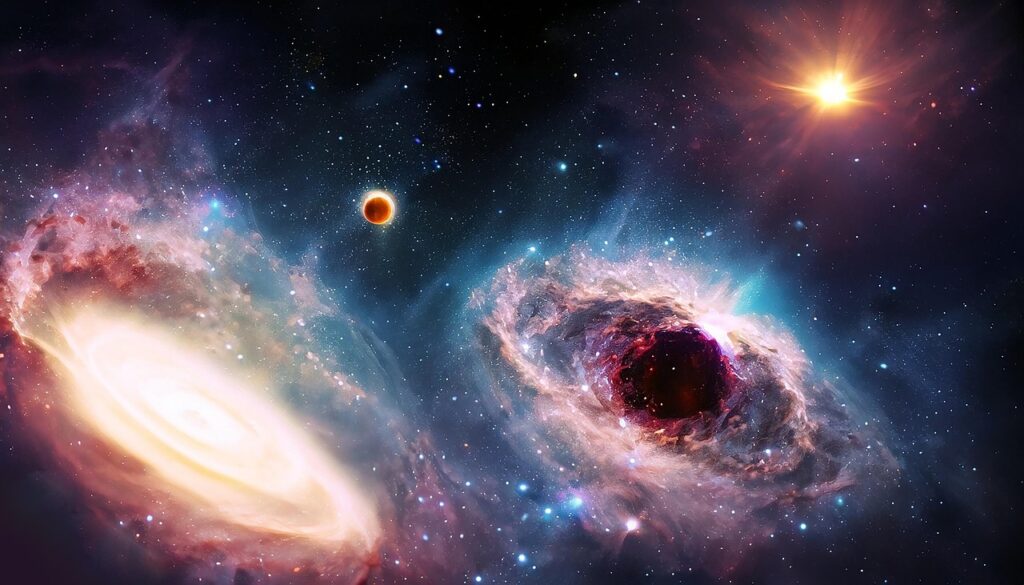
Even long after the explosion fades, supernovae leave behind stunning remnants that astronomers continue to study.
Some well-known examples include:
- The Crab Nebula, the remains of a supernova observed in 1054
- Cassiopeia A, one of the youngest known remnants in the Milky Way
- SN 1987A, the closest observed supernova in modern times
These remnants help scientists understand stellar evolution, particle acceleration, and the origins of cosmic rays. Astronomers continue to learn a great deal from the glowing debris fields left behind after massive stellar explosions. These expanding clouds of gas and dust act as natural laboratories, revealing how shockwaves travel through space and how heavy elements mix into the surrounding interstellar medium. Each remnant carries a unique structure shaped by the original star, the force of the blast, and the environment it expanded into.
One of the most studied examples is the Crab Nebula, whose tangled filaments and energetic core have helped scientists understand pulsars and high-energy radiation. Cassiopeia A, another well-known remnant in our galaxy, offers insight into how rapidly expanding material cools and interacts with nearby gas clouds. Meanwhile, the debris from SN 1987A continues to evolve in real time, giving researchers a rare opportunity to observe how these structures change over decades rather than centuries.
By analysing these remnants across different wavelengths, from radio to X-rays, astronomers can reconstruct the final moments of massive stars and better understand the processes that shape galaxies over cosmic time.
The Death That Creates Life
A supernova may signal the end of a star, but it also marks a new beginning for the universe. These explosions reshape galaxies, seed future star systems, and make complex chemistry possible.
In a very real sense, we are here because stars exploded long before the Sun ever existed. The explosive death of a star is one of the universe’s most transformative moments. In just a brief flash, vast amounts of energy are released, space is reshaped, and the raw ingredients for future worlds are scattered across the cosmos. What looks like pure destruction is, in reality, part of a much larger creative cycle that has been unfolding for billions of years.
These stellar catastrophes influence how galaxies evolve, trigger the formation of new stars, and enrich interstellar clouds with complex elements. Without them, rocky planets, oceans, and even living organisms would never have had the building blocks needed to exist. Every generation of stars owes something to the violent end of earlier ones.
Studying these events allows astronomers to better understand gravity, nuclear physics, and the life cycles of stars themselves. They remind us that the universe is not static or gentle, but dynamic and constantly changing. In that sense, the story of cosmic explosions is also part of our own story, written into the atoms that make us who we are.