What happens to the human body in space may soon change how doctors treat disease on Earth.
A newly launched research centre, the Trivedi Institute for Space and Global Biomedicine, aims to turn the extreme conditions of spaceflight into a powerful laboratory for understanding ageing, chronic disease, resilience, and medical care in resource-limited environments. Backed by a major investment and led by former astronauts and space biologists, the institute represents one of the boldest attempts yet to bridge space science and everyday human health.
A new frontier for biomedical research
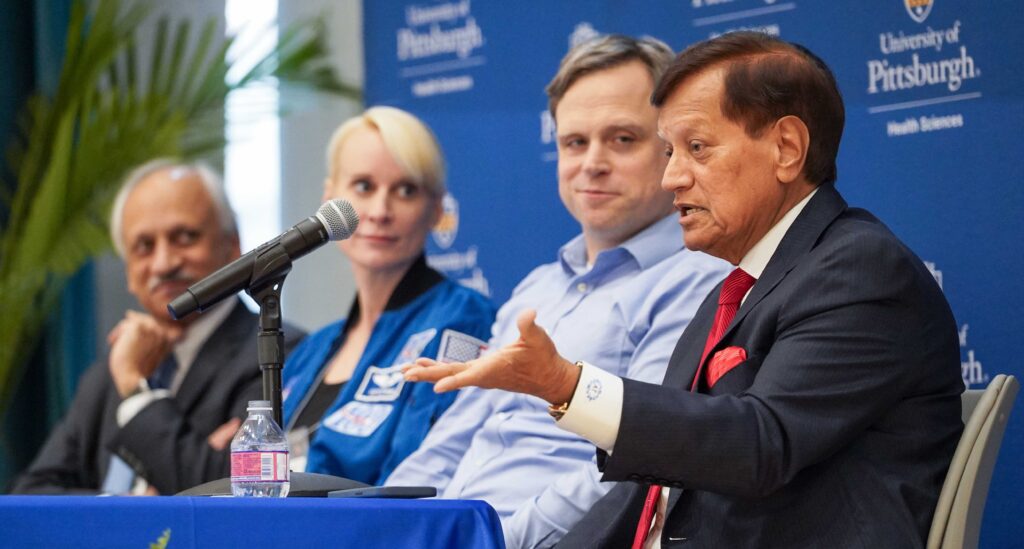
Announced on 29 January 2026, the Trivedi Institute is based at the University of Pittsburgh and funded through a $25 million joint investment from the Trivedi Family Foundation and the university itself. University leaders described the initiative as a leap into one of the most ambitious directions in modern biomedical science.
The institute focuses on a simple but radical idea: space is not just a place to explore, but a unique environment where biological systems reveal their limits faster than they ever could on Earth. Microgravity, radiation exposure, and constrained resources force the human body to adapt rapidly, exposing processes linked to ageing, muscle loss, immune decline, and recovery.
News Source: University of Pittsburgh
Why space is a biological stress test
Few people understand this better than Kate Rubins, the institute’s inaugural director. A former NASA astronaut with two long-duration missions and nearly a year spent in orbit, Rubins has experienced firsthand how quickly the human body changes in space.
In microgravity, bone density drops at accelerated rates, muscles weaken, and immune systems degrade. Yet remarkably, astronauts often recover rapidly once they return to Earth. According to Rubins, this combination of fast decline and fast recovery creates an unprecedented window into understanding ageing, chronic disease, and biological resilience in otherwise healthy individuals.
That insight lies at the heart of the institute’s mission: studying how the body responds under extreme conditions so those lessons can be applied to medicine on Earth.
Medicine when resources are scarce
The Trivedi Institute is not only focused on spaceflight itself, but on what Rubins calls “austere environments.” These include disaster zones, rural healthcare settings, and remote regions where medical infrastructure is limited.
One striking example comes from diagnostics in space. Astronauts rely almost entirely on ultrasound, yet there are no ultrasound technicians aboard spacecraft. Instead, astronauts learn to perform scans themselves, guided remotely by specialists on Earth. The same approach could revolutionise healthcare delivery in underserved areas where trained specialists are scarce.
The institute’s guiding principle is clear: discoveries made when humans leave Earth should directly benefit the people who stay behind.
A hub for space medicine and innovation
Serving as deputy director is Chris Mason, a genomics researcher and space biologist known for his role in NASA’s landmark Twins Study. That research compared astronaut Scott Kelly during a year in space with his identical twin, Mark Kelly, on Earth, revealing how spaceflight alters human biology at the molecular level.
Mason envisions the Trivedi Institute as a connective hub for space medicine and technology development across the northeastern United States. Beyond pure research, the institute aims to support entrepreneurship, technology transfer, and training programmes for the next generation of scientists, clinicians, and innovators.
Building Earth-based space environments
One of the institute’s most ambitious goals is to recreate space conditions on Earth. Planned facilities include specialised environmental chambers that simulate the radiation and atmospheric conditions found aboard space stations. According to researchers, no existing facility currently combines these factors in a single controlled environment.
Future expansions could include vacuum chambers designed to mimic the surfaces of the Moon and Mars using real regolith materials, allowing engineers and scientists to test equipment, medical tools, and biological systems under realistic extraterrestrial conditions.
The institute also plans to replicate the racking systems used aboard space stations, enabling experiments to be designed, tested, and adapted for both government and commercial orbital platforms before launch.
Partnerships beyond Earth
The Trivedi Institute will collaborate closely with NASA through formal agreements that allow knowledge exchange, facility use, and experiment deployment. At the same time, the institute is actively forming partnerships with commercial space companies, reflecting the rapidly expanding private space sector.
This dual approach ensures that research can move quickly from laboratory concepts to orbital experiments and, ultimately, to practical medical tools.
Why this moment matters
According to Rubins, there has never been a better time to launch biomedical experiments into space. With new commercial stations coming online and increased access to orbital platforms, researchers now have opportunities that were unthinkable just a decade ago.
By uniting spaceflight biology, advanced engineering, artificial intelligence, and medical science, the Trivedi Institute positions space not as a distant frontier, but as a catalyst for solving some of humanity’s most pressing health challenges.
In the coming years, the effects of this work may be felt not only by astronauts orbiting Earth, but by patients in hospitals, clinics, and remote communities around the world.