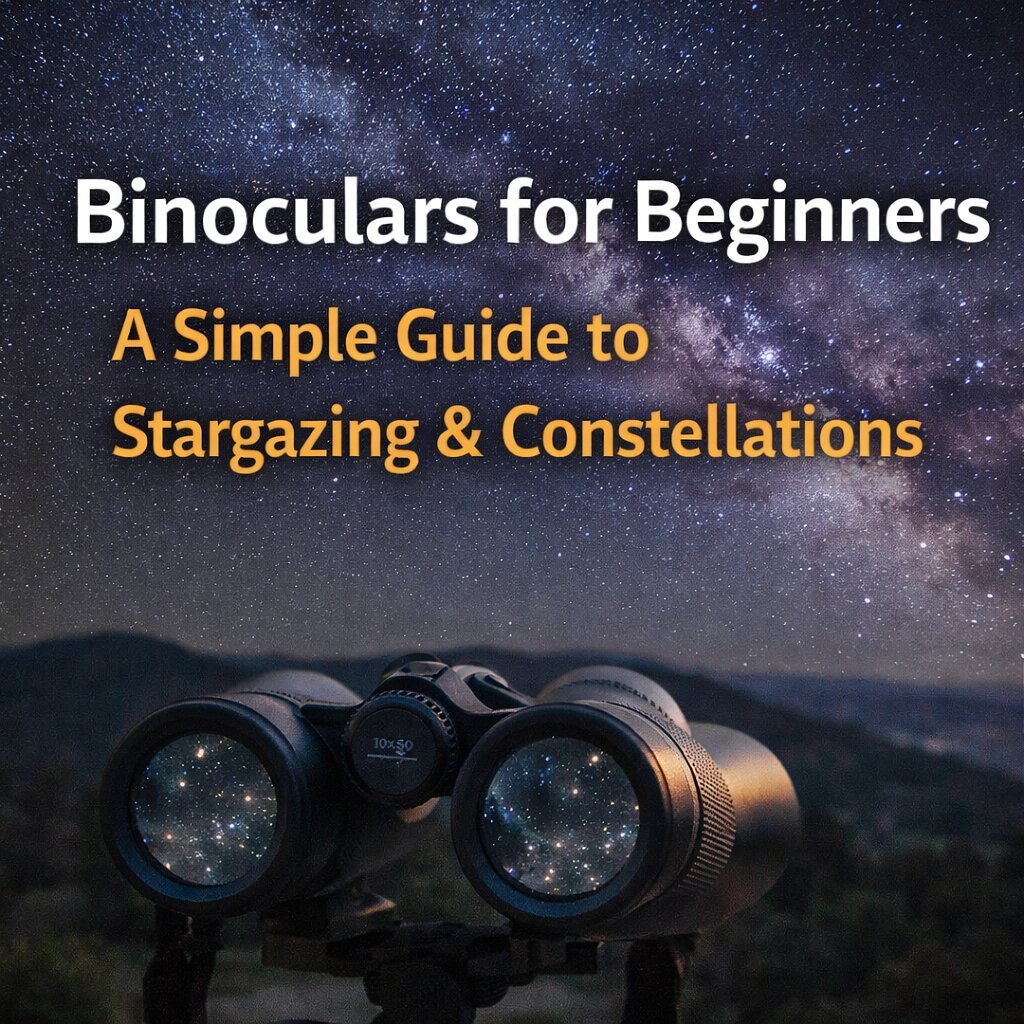

When people first become interested in astronomy, they often assume they need a telescope. In reality, binoculars for beginners are one of the best ways to start exploring the night sky.
Binoculars are affordable, portable, easy to use, and require no complex setup. There are no tripods to assemble, no alignment procedures, and no confusing optics to calibrate. You simply step outside, look up, and begin exploring.
For beginners learning the constellations, star clusters, and brighter deep-sky objects, binoculars for beginners offer a wide field of view that actually makes navigation easier than using a telescope.
What makes binoculars good for stargazing?
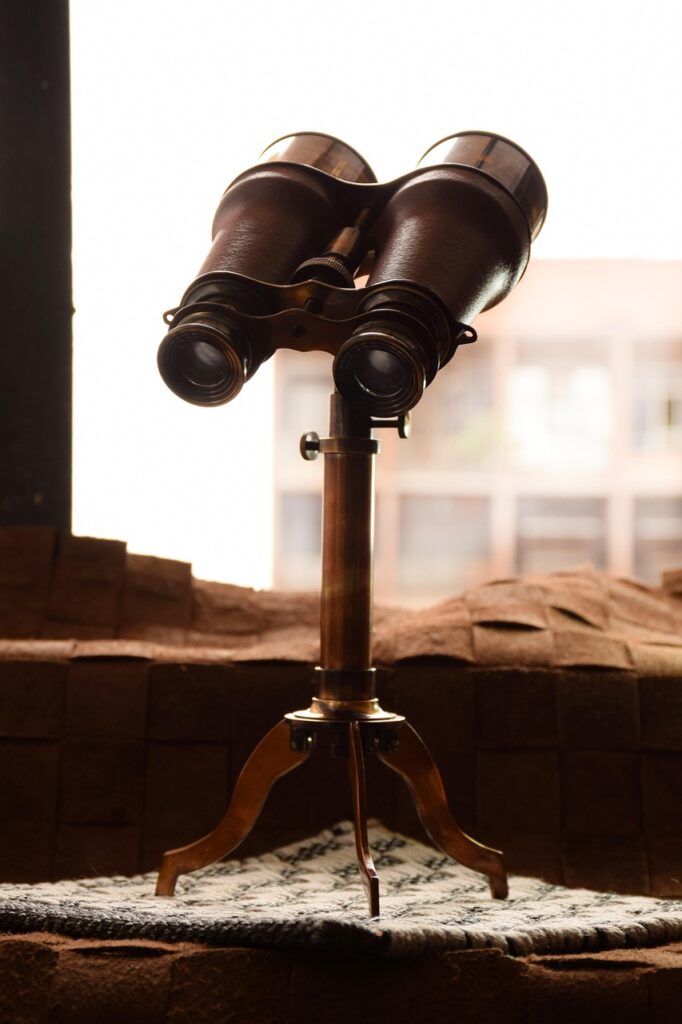
Not all binoculars are ideal for astronomy. When choosing binoculars for beginners, there are two key numbers to understand: magnification and aperture.
You’ll often see something like 7×50 or 10×50.
The first number refers to magnification. The second number refers to the diameter of the front lenses in millimetres.
For binoculars for beginners, 7×50 or 10×50 are excellent choices. They provide enough magnification to reveal detail while still keeping a wide field of view. Larger magnification may sound appealing, but it can make the image shaky and harder to control without a tripod.
A wider aperture, such as 50mm, gathers more light. This is crucial for stargazing because you are observing faint objects against a dark background.
What can you see with binoculars for beginners?
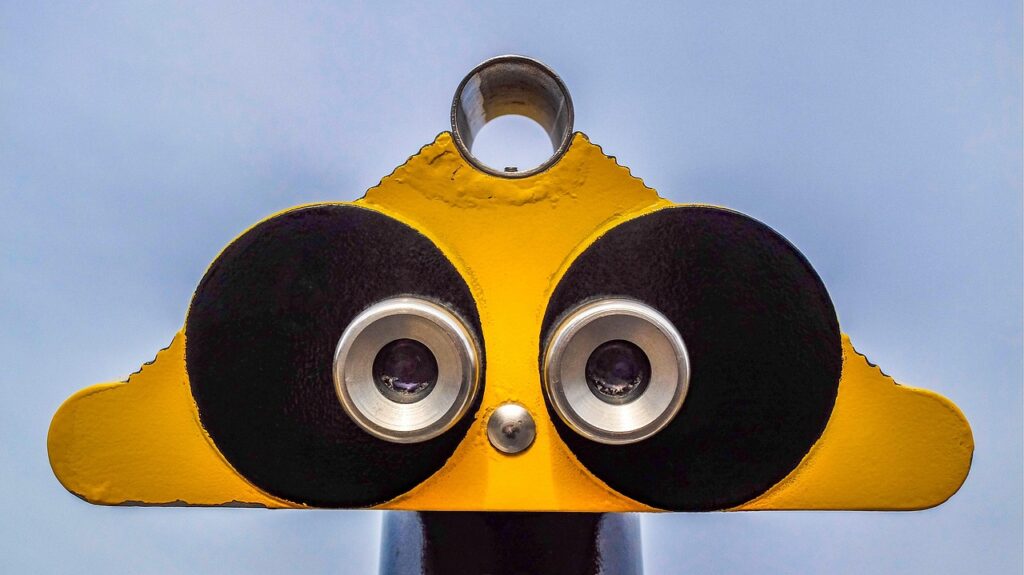
Many people are surprised at what binoculars for beginners can reveal. With a good pair under dark skies, you can observe:
- The Moon in stunning detail, including craters and mountain ranges along the terminator line.
- Bright planets like Jupiter, where you may even spot its four largest moons as tiny points of light.
- Saturn, which appears elongated, hinting at its rings.
- Star clusters such as the Pleiades, which look breathtaking through binoculars.
- The Orion Nebula, visible as a faint glowing cloud beneath Orion’s belt.
Even sweeping across the Milky Way becomes an unforgettable experience. Binoculars for beginners make this wide-field exploration incredibly immersive.
Learning constellations with binoculars
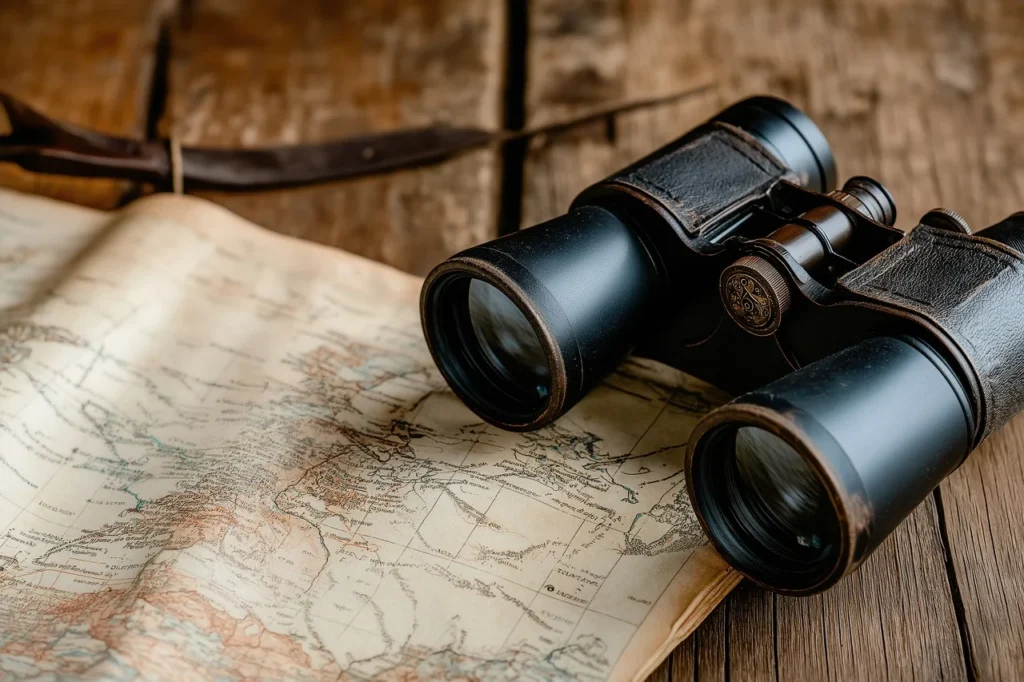
One of the greatest advantages of binoculars for beginners is how they help you learn the sky.
Because they offer a broader field of view than telescopes, they allow you to move from constellation to constellation without losing context. You can trace the shape of Orion, follow the curve of Scorpius, or explore the Southern Cross while still seeing surrounding stars.
For beginners in South Africa, binoculars make it easier to navigate prominent southern hemisphere constellations and locate bright asterisms.
This builds confidence and familiarity, which are essential foundations for deeper astronomy later on.
Portability and spontaneity

Another reason binoculars for beginners are so powerful is their portability.
You don’t need a dedicated observatory or backyard setup. A pair of binoculars can travel with you to campsites, beaches, or mountain viewpoints. If the sky suddenly clears, you can be observing within seconds.
For young learners or families introducing children to astronomy, binoculars for beginners remove technical barriers and keep the experience accessible.
Sometimes the best astronomy sessions are the simplest ones.
Starting your journey under the stars
If you are new to astronomy, binoculars for beginners are the ideal first step. They allow you to build sky familiarity, develop observation skills, and appreciate the beauty of constellations and deep-sky objects without the complexity of advanced equipment.
Stargazing does not have to be expensive or complicated. A clear night, a dark location, and the right pair of binoculars are often all you need to begin.
The universe is closer than you think.