
At Casual Astronomer, we spend a lot of time discussing real stars, real galaxies, and the physics that governs our universe. We explore nebulae, exoplanets, stellar evolution, and the mysteries of black holes. But sometimes, science fiction provides a fascinating bridge between imagination and astrophysics.
That bridge is about to expand.
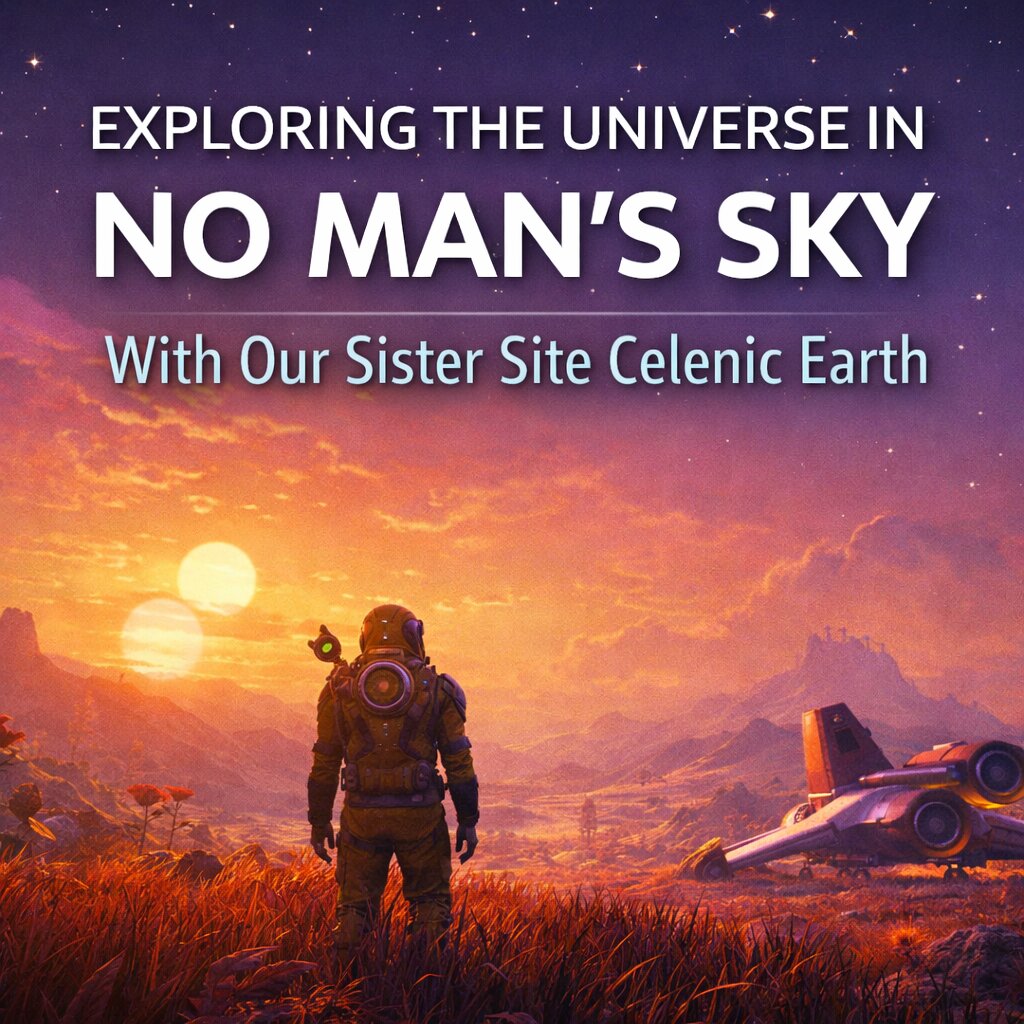
Our sister site, Celenic Earth Publications, will soon begin streaming dedicated sessions of No Man’s Sky, and we believe this is the perfect opportunity to blend gaming, science, and cosmic curiosity.
While the streams will be hosted through Celenic Earth, we will be approaching them with the same sense of exploration that defines Casual Astronomer: examining planetary systems, stellar types, and cosmic environments through both a scientific and imaginative lens.
Why No Man’s Sky fits perfectly with astronomy

Few games attempt to simulate the scale of the universe the way No Man’s Sky does. Procedurally generated star systems, diverse planetary biomes, exotic atmospheres, and binary star configurations make it an extraordinary sandbox for space enthusiasts.
Although the game is fictional, many of its concepts are grounded in real astrophysical ideas. Star classification systems resemble real stellar categorisation. Planetary diversity mirrors what we now observe in exoplanet research. Even the presence of extreme worlds (frozen wastelands, scorched desert planets, toxic atmospheres) reflects real planetary science possibilities.
For Casual Astronomer readers and viewers, this No Man’s Sky experience creates a compelling intersection.
Through these streams, we will not only explore the game’s mechanics, but also connect what we see to real science. What would a planet orbiting a red dwarf actually experience? How stable are binary star systems in reality? Could certain biomes plausibly exist under specific atmospheric conditions?
This is where science meets simulation.
A collaboration across sister platforms
Celenic Earth Publications has been expanding its live streaming presence, covering survival games, horror demos, and creative partner titles. Recently, viewers requested structured sessions of No Man’s Sky, asking for clear explanations of how No Man’s Sky works and how to navigate its massive universe.
That request aligns perfectly with our interests.
As the sister platform focused on real-world astronomy, Casual Astronomer sees this as an opportunity to add depth to the experience. While the gameplay will unfold through Celenic Earth’s streaming channel, we will support and amplify the sessions from an astronomical perspective.
Expect discussions around stellar evolution in No Man’s Sky when encountering different star systems. Expect commentary on planetary formation when discovering ringed worlds. Expect comparisons between in-game physics and real astrophysics.
This is not just gameplay. It is guided exploration.
Understanding the science behind the simulation
One of the most fascinating aspects of No Man’s Sky is its procedural universe. The game generates vast numbers of star systems algorithmically, creating variation at an unimaginable scale.
In real astronomy, we are only beginning to catalogue the diversity of exoplanets. From hot Jupiters orbiting perilously close to their stars, to rogue planets drifting alone through interstellar space, the universe is stranger than we once imagined.
When we encounter extreme environments in-game, we can use them as discussion points. What would surface gravity feel like on a super-Earth? Could a thick toxic atmosphere trap heat the way Venus does? How would plant life adapt under different stellar radiation levels?
These are the types of questions that bring science to life.
Through this streaming collaboration, Casual Astronomer readers can enjoy entertainment while deepening their understanding of astrophysics.
Learning how the game works

Beyond the scientific curiosity, there is also a practical goal. Many players find No Man’s Sky overwhelming at first. The systems are layered: resource gathering, crafting, base building, fleet management, exploration, and interstellar travel.
Celenic Earth will break down these systems step by step during live sessions from PS5, explaining mechanics clearly for newcomers. Casual Astronomer will echo that clarity by discussing the astronomical concepts represented within the game.
This dual approach ensures accessibility.
Whether you are a gamer interested in science, or a space enthusiast curious about the simulation, the series will provide value.
The universe may be fictional, but curiosity is real.
A special reward among the stars
There is also something symbolic happening within these streams.
No Man’s Sky allows players to discover and name planets. Through Celenic Earth’s streaming initiative, Tier 3 and 6-month subscribers will have the opportunity to have planets named after them.
From a scientific perspective, this mirrors a long-standing human tradition. Throughout history, astronomers have named celestial bodies, constellations, and features on the Moon and Mars. Naming represents discovery. It represents presence.
While these in-game planets are not officially recognised astronomical bodies, the gesture carries meaning. It reflects community involvement in exploration.
For space enthusiasts, seeing your name attached to a distant world — even within a simulation — captures something fundamentally human: our desire to leave a mark among the stars.
Why this matters for space education
Astronomy can sometimes feel abstract. Light-years, parsecs, stellar lifecycles — these are vast concepts that are difficult to visualise.
Interactive environments make them tangible.
By exploring fictional star systems in real time, viewers can grasp scale, variation, and environmental diversity more intuitively. When combined with scientific commentary, this approach turns entertainment into informal education.
Casual Astronomer has always aimed to make space accessible and engaging. Supporting this No Man’s Sky streaming initiative aligns with that mission.
The game becomes a gateway.
A doorway into questions about real astrophysics, planetary science, and the structure of our universe.
Where imagination meets reality
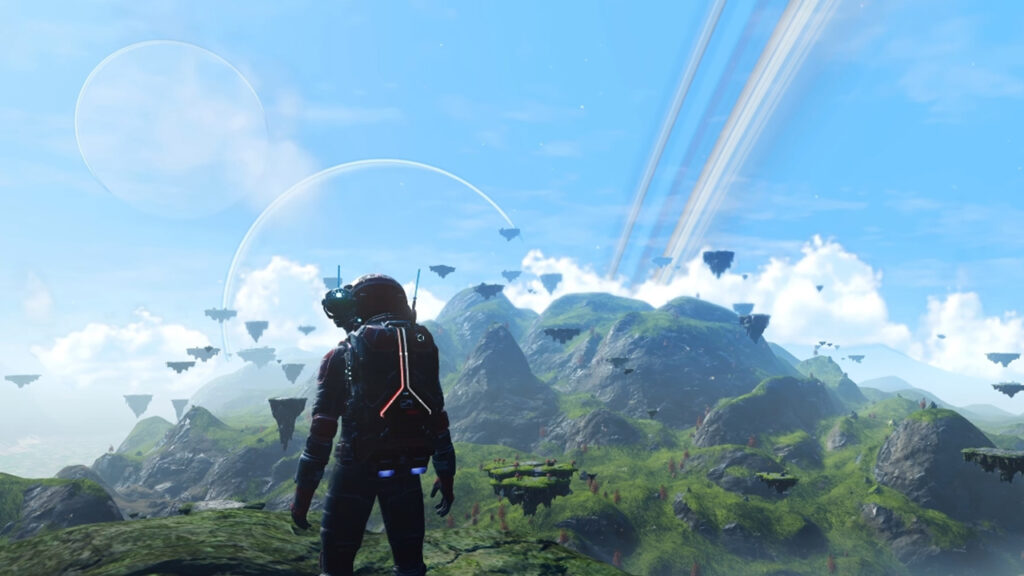
There is something powerful about standing on a procedurally generated alien world, watching twin suns set over the horizon, and asking: could this exist somewhere in the real universe?
Modern astronomy suggests that reality may be even more astonishing than fiction. Thousands of exoplanets have already been confirmed, with many more awaiting discovery.
The collaboration between Casual Astronomer and Celenic Earth Publications invites you to explore both worlds — the simulated and the scientific.
One feeds imagination. The other feeds understanding.
Together, they inspire curiosity.
The engines are warming. The star maps are loading. And soon, we will begin exploring not just a digital galaxy, but the questions it sparks about our own universe.
See you among the stars. 🌌✨